










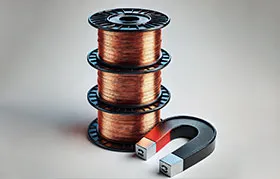
Hello, this is your senior engineer from Eptahub. Let’s tackle one of the most common questions I get from designers and even experienced engineers: “Is copper magnetic?”
The short, simple answer that will serve you 99% of the time is tidak. If you take a piawai refrigerator magnet and try to stick it to a pure copper pipe or sheet, it will fall right off. For all practical intents and purposes in a typical machine shop or assembly line, copper is a non-magnetic material.
But for an engineer, “no” is never a satisfying answer. The real answer is far more fascinating and has profound implications for everything from the motors that drive our world to the life-saving imaging of an MRI machine. The truth is that copper does have a magnetic property, but it’s a strange and counter-intuitive one called diamagnetism. More importantly, copper’s relationship with changing magnetic fields is one of the most powerful and useful phenomena in all of physics and engineering.
A Quick Guide to Magnetism: The Three Personalities of Materials
To understand copper, we must first understand that “magnetic” isn’t a single property. Materials respond to magnetic fields in three distinct ways: ferromagnetism, paramagnetism, and diamagnetism.
1. Ferromagnetism: The “Strong” Magnetism
This is what people mean when they say something is “magnetic.” Ferromagnetic materials are strongly attracted to magnets and, critically, can be magnetized to become permanent magnets themselves.
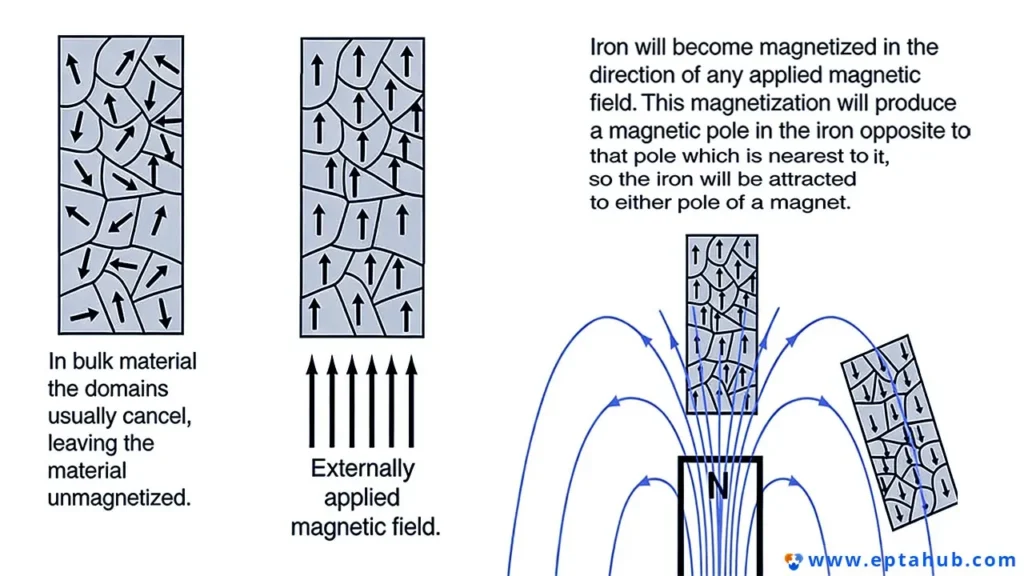
- What’s Happening: Atoms in these materials act like tiny individual magnets (due to electron spin). In the presence of an external magnetic field, large groups of these atoms, called “magnetic domains,” align their magnetic moments with the field. This alignment is strong and can persist even after the external field is removed.
- Key Players: The list is surprisingly short: Iron (Fe), Nikel (Ni), Cobalt (Co), and some rare-earth elements like Neodymium and Samarium (which are the basis for super-strong magnets).
- Engineering Relevance: This is the bedrock of electric motors, generators, transformers, relays, solenoids, data storage (hard drives), and any application where you need to hold, move, or sense something with a strong magnetic force.
2. Paramagnetism: The “Weak” Attraction
Paramagnetic materials are also attracted to magnetic fields, but the attraction is incredibly weak—thousands or even millions of times weaker than ferromagnetism. You cannot feel this force by hand.
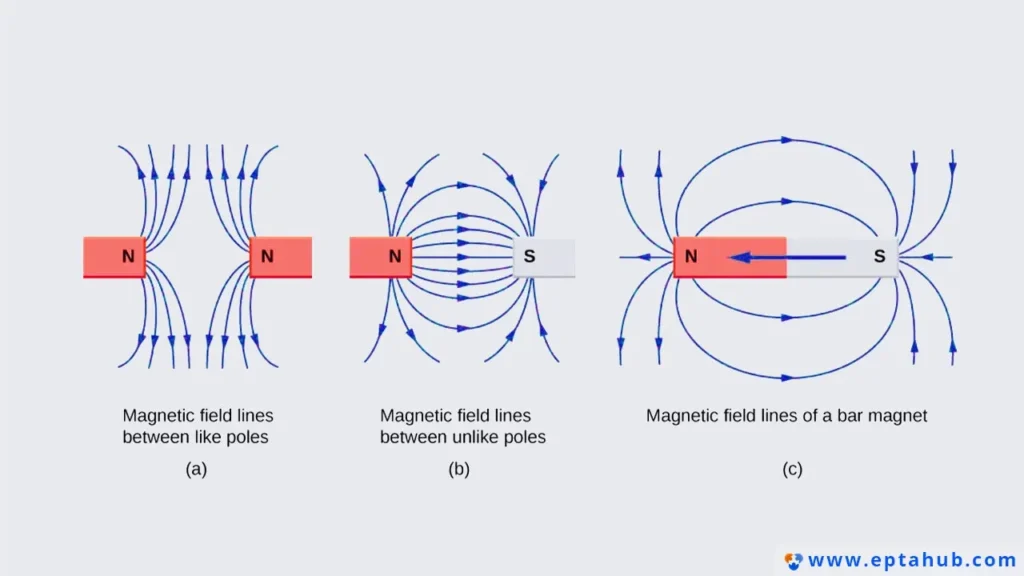
- What’s Happening: These materials have atoms with unpaired electrons, which gives each atom a small magnetic moment. When an external field is applied, these atoms tend to align with it, creating a weak net attraction. However, this alignment is temporary and disappears the moment the external field is removed. They cannot be permanently magnetized.
- Key Players: Aluminium, Titanium, Magnesium, Platinum.
- Engineering Relevance: For most mechanical designs, paramagnetism is so weak that these materials are considered non-magnetic. However, in extremely sensitive scientific instruments or high-field MRI environments, even this minuscule attraction must be accounted for.
3. Diamagnetism: The “Weak” Repulsion
This brings us to copper. Diamagnetic materials are not attracted to magnetic fields; they are weakly repelled by them. This force is even weaker than paramagnetism and is completely imperceptible in everyday life.
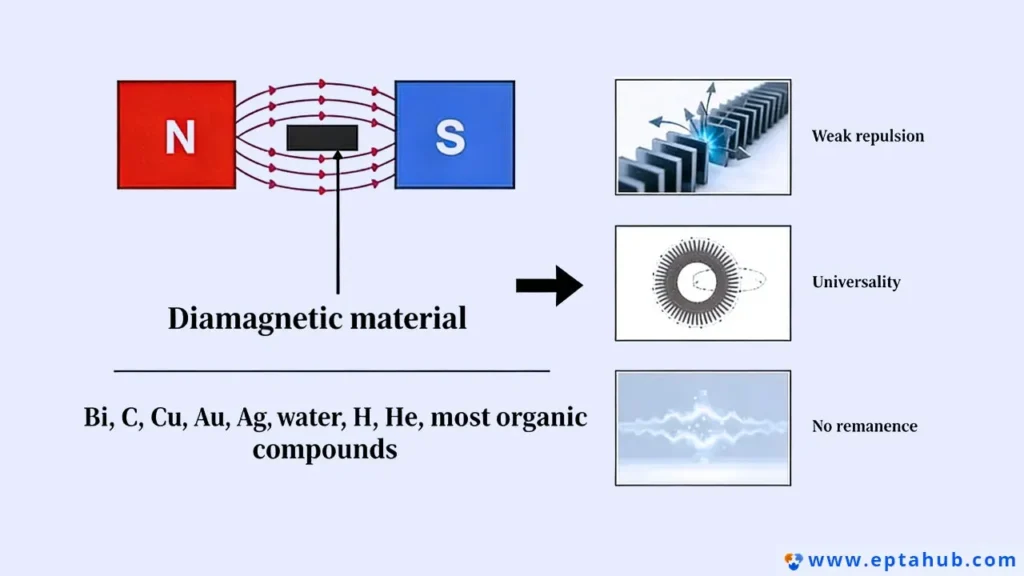
- What’s Happening: This property exists in all materials, but it’s only observable when ferromagnetism and paramagnetism are absent. In diamagnetic materials, all electrons are paired. According to Lenz’s Law (which we will explore in a moment), when an external magnetic field is applied, it induces a tiny electrical current within the atoms themselves. This current creates an opposing magnetic field, resulting in a net repulsion.
- Key Players: Tembaga, Gold, Silver, Bismuth, Graphite, and even Water. Bismuth and graphite are among the strongest diamagnets.
- Engineering Relevance: The repulsive force itself is rarely used, except in niche applications like magnetic levitation demonstrations. However, the underlying principle—the creation of opposing currents—is the absolute key to understanding copper’s true importance.
Table 1: The Three Types of Magnetism at a Glance
| Hartanah | Ferromagnetism | Paramagnetism | Diamagnetism (Copper’s World) |
|---|---|---|---|
| Interaction | Strong Attraction | Very Weak Attraction | Very Weak Repulsion |
| Stick to Magnet? | Yes | No (too weak to overcome gravity) | No (it’s repulsive) |
| Can be Magnetized? | Yes, permanently. | Tidak. | Tidak. |
| Atomic Reason | Aligned magnetic domains of atoms with unpaired electrons. | Randomly oriented atoms with unpaired electrons align weakly with a field. | Paired electrons create an opposing field when a field is applied. |
| Example Materials | Iron, Nickel, Cobalt | Aluminum, Titanium, Platinum | Copper, Gold, Bismuth, Water |
At the Atomic Level: Why Copper is Diamagnetic
The magnetic personality of an element is written in its electron configuration. A copper atom has 29 electrons. The key to its behavior lies in its outermost shells. The electron configuration of copper ends in 3d¹⁰ 4s¹.
While it has one unpaired electron in its 4s orbital (which should theoretically make it paramagnetic), the physics is more complex. In the metallic crystal lattice, this 4s electron is delocalized into a “sea” of electrons that allows for conduction. The crucial part is the completely filled 3d shell. This shell contains 10 electrons, meaning they are all perfectly paired up.
It is this dominance of paired electrons in the stable, filled d-shell that gives rise to copper’s diamagnetic character. When a magnetic field comes near, these paired electrons adjust their orbital motion to create a tiny, opposing magnetic field. There is no large-scale domain alignment as in iron. There is only a universal, weak repulsion.
The Real Magic: Copper and Changing Magnetic Fields
So, copper is weakly repelled by a magnet. Case closed? Not even close.
The most important interaction between copper and magnetism occurs not when things are static, but when they are moving. This is where we move from materials science to electrical engineering, governed by two fundamental laws:
- Faraday’s Law of Induction: This law states that a changing magnetic field passing through a conductor will induce an electric current in that conductor. “Changing” can mean the magnet is moving, the conductor is moving, or the magnetic field itself is pulsing in strength.
- Lenz’s Law: This law provides the direction. It states that the induced current will flow in a direction that creates its own magnetic field, and this new field will oppose the change that created it.
Let’s put this together in a famous and mind-bending demonstration: dropping a strong magnet down a thick copper pipe.
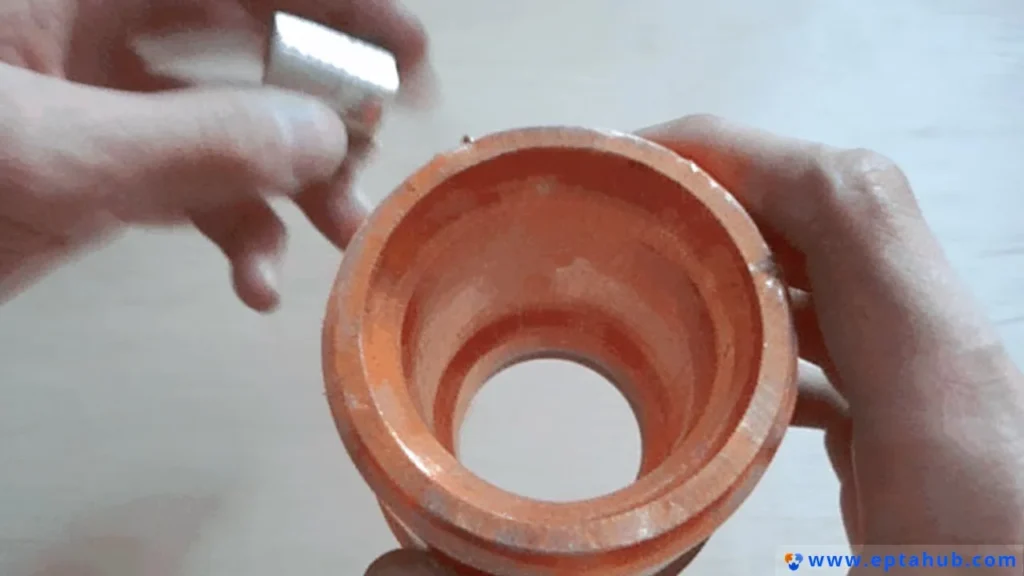
- Persediaan: You have a copper pipe (a conductor) and a powerful neodymium magnet that just fits inside without touching the sides.
- The Expectation: You’d expect the magnet to fall through the pipe at the speed of gravity, just as it would through a plastic pipe.
- Realitinya: The magnet slows down dramatically, appearing to float down the pipe in slow motion. It can take 10-20 times longer to emerge from the bottom.
What is happening?
As the magnet falls, the copper below it experiences an increasing magnetic field. By Faraday’s Law, this induces swirling electrical currents in the copper pipe, known as eddy currents.
Now, Lenz’s Law kicks in. These eddy currents create their own magnetic field. Because they were caused by the approaching south pole of the magnet, they will create a new magnetic field with a south pole pointing upward to oppose the change. This upward-pointing magnetic field repels the falling magnet, acting as a brake.
Simultaneously, the copper di atas the falling magnet is experiencing a decreasing magnetic field. This also induces eddy currents, but they flow in the opposite direction. They create a magnetic field with a north pole pointing downward, which attracts the south pole of the magnet that is moving away.
The net effect is a powerful, velocity-dependent braking force. The faster the magnet tries to fall, the stronger the eddy currents become, and the stronger the opposing magnetic force. The magnet quickly reaches a terminal velocity where the magnetic braking force perfectly balances the force of gravity, and it descends at a constant, slow speed.
This is not diamagnetism. This is electromagnetism in its purest form. The copper itself is not magnetic, but it is an exceptional conductor, allowing these powerful eddy currents to form. This effect is the basis for incredible technologies and also a critical consideration for engineers designing systems with moving magnets and conductors.
The Number One Question: “Why is My Copper Magnetic?”
This is one of the most frequent troubleshooting questions I encounter, and the answer is almost always the same: It’s not pure copper. If you have a part that is supposed to be copper, but a magnet sticks to it, you are dealing with one of two scenarios: contamination or misidentification.
Scenario 1: Ferrous Contamination
This is the most likely culprit, especially in a machining or fabrication environment.
- Plating: The most common reason is that the part is not solid copper but is actually a steel part that has been copper-plated. Copper plating is frequently used as an undercoat for other metals like nickel or chrome, or for specific electrical or thermal reasons. The magnet is not sticking to the thin copper layer; it is being strongly attracted to the ferromagnetic steel substrate underneath. This is a critical check when sourcing components—always verify if the specification is for solid copper atau copper-plated steel.
- Embedded Contaminants: During machining or grinding operations, microscopic particles of iron or steel from tools, fixtures, or nearby workstations can become embedded in the surface of a softer metal like copper. While the copper itself is not magnetic, a strong neodymium magnet might be able to pick up the part due to the cumulative attraction of these tiny embedded ferrous particles.
Scenario 2: Misidentified Alloy (Copper-Nickel)
While most common copper alloys are non-magnetic, there is a major exception: the copper-nickel (Cupronickel) family.
- The Role of Nickel: Nickel is one of the few ferromagnetic elements. When alloyed with copper, it can impart magnetic properties to the resulting alloy.
- The Critical Threshold: The magnetic properties of cupronickel alloys are highly dependent on the nickel content.
- Alloys with less than ~60% copper (i.e., more than 40% nickel), such as Monel 400 (which is roughly 67% Ni, 30% Cu), are typically ferromagnetic at room temperature.
- Alloys with more than ~60% copper, such as C70600 (90% Cu, 10% Ni) and C71500 (70% Cu, 30% Ni), are generally non-magnetic (or very weakly paramagnetic). These are widely used in marine applications for their exceptional corrosion resistance.
So, if a “copper” part is strongly magnetic, it could be a high-nickel alloy like Monel. This is a common material substitution error that can be quickly identified with a magnet.
What About Copper’s Children? Brass and Bronze
Is Brass Magnetic? No.
Brass is an alloy of copper and zinc. Both copper and zinc are diamagnetic. Therefore, all common brass alloys (e.g., C360 “Free-Cutting Brass,” C260 “Cartridge Brass”) are non-magnetic. Just like copper, they will not stick to a magnet.
- The Exception: Similar to copper, if a brass part is magnetic, it is almost certainly steel that has been brass-plated for a decorative finish, or it has been contaminated with ferrous particles.
Is Bronze Magnetic? Generally No.
Bronze is an alloy of copper, traditionally with tin as the main alloying element. Both copper and tin are non-magnetic. Therefore, traditional tin bronzes are non-magnetic.
- The Complications: The term “bronze” is used more broadly today to describe many different copper alloys.
- Aluminum Bronze (copper + aluminum) is non-magnetic.
- Silicon Bronze (copper + silicon) is non-magnetic.
- The Exception: Nickel-Aluminum Bronze. Some high-strength marine propeller alloys contain significant amounts of nickel and iron. For example, C95500 can contain up to 5% nickel and 5% iron. This addition of ferromagnetic elements can make the alloy weakly magnetic. This is a specialized case but an important one in naval engineering.
Table 2: Magnetic Properties of Common Copper-Based Materials
| Bahan | Composition | Magnetic Type | Will a Magnet Stick? | Key Engineering Note |
|---|---|---|---|---|
| Pure Copper (C110) | 99.9% Cu | Diamagnetic | No | The baseline. Weakly repelled. |
| Brass (C360) | ~61% Cu, 36% Zn, 3% Pb | Diamagnetic | No | Both base metals are non-magnetic. |
| Tin Bronze (C907) | ~89% Cu, 11% Sn | Diamagnetic | No | Classic non-magnetic bearing material. |
| Aluminum Bronze (C954) | ~85% Cu, 11% Al, 4% Fe | Non-magnetic | No | The iron content is usually not enough to create strong magnetism. |
| Cupronickel (C706) | 90% Cu, 10% Ni | Paramagnetic | No | The low nickel content does not impart ferromagnetism. |
| Monel 400 | ~67% Ni, 30% Cu | Ferromagnetic | Yes | High nickel content makes it strongly magnetic. |
| Copper-Plated Steel | Steel Core, Copper Surface | Ferromagnetic | Yes | Magnet is attracted to the steel core. The most common “fake.” |
Case Study: The Overheating MRI Gradient Coil
- Senario: A medical device company was designing a new gradient coil assembly for an MRI machine. These coils are pulsed with massive currents to create the precise, changing magnetic fields needed for imaging. The coil windings themselves were, of course, made of high-purity copper. The entire assembly was housed within a G-10 fiberglass composite structure, held together with various brackets and fasteners.
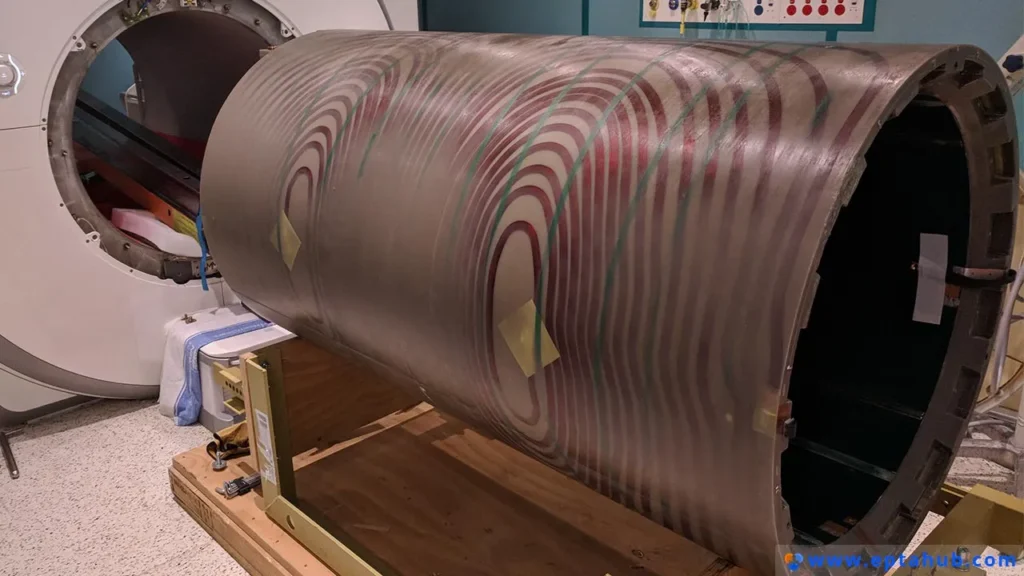
- The Requirement: The environment inside an MRI bore is one of the most electromagnetically hostile places on Earth. There is a massive, static magnetic field (the main B₀ field) and powerful, rapidly pulsing gradient fields. A primary design rule is: No ferromagnetic materials anywhere near the imaging volume. Any magnetic material would distort the field and ruin the image quality.
- Kesilapannya: A junior design engineer was responsible for specifying the fasteners for the coil support structure. The spec called for a high-strength, non-magnetic fastener. The engineer specified a “Bronze” bolt from a catalog, knowing that bronze is non-magnetic. However, the catalog was for general marine hardware, and the high-strength “bronze” bolt they selected was actually a Nickel-Aluminum Bronze alloy containing about 5% iron and 5% nickel to achieve its strength rating. The part number was correct, but the material’s specific composition was overlooked.
- Akibat Bencana: During the first high-power tests of the prototype, the system kept tripping on an over-temperature alarm. After several frustrating days of troubleshooting, an infrared camera was pointed at the assembly during a pulse sequence. It revealed that the heads of the “bronze” bolts were glowing red-hot. The bolts were heating up so intensely that they were beginning to melt the G-10 composite structure around them.
- Punca Utama: The bolts, being weakly ferromagnetic, were not the main problem. The key was their electrical conductivity combined with the rapidly changing magnetic fields. The pulsing gradient fields were inducing massive eddy currents within the bolts themselves. Because the bolts had electrical resistance (even though they were conductors), these swirling currents generated enormous amounts of I²R heating, turning each fastener into a miniature induction heater. The design team’s focus on “non-magnetic” (meaning non-ferromagnetic) caused them to overlook the equally important principle of eddy current heating in any conductive material placed in a strong, changing magnetic field.
- Penyelesaiannya: The metallic bolts were replaced with high-strength ceramic (Zirconia) or PEEK polymer fasteners, which are both electrical insulators. No eddy currents could be induced, the heating problem vanished, and the design was successful. The lesson was expensive: in an electromagnetic environment, “non-magnetic” is not enough; you must also consider “non-conductive” if you want to avoid eddy current heating.
Engineering Applications: Where Copper’s Properties Shine
Copper’s unique combination of being non-ferromagnetic dan sebuah superior electrical conductor makes it indispensable in a vast range of applications.
1. Advantage: Eddy Current Braking
The slow-falling magnet in the pipe is not just a demo; it’s a technology.
- Permohonan: Magnetic brakes in high-speed trains and roller coasters. Large electromagnets are positioned next to a solid aluminum or copper fin attached to the wheel assembly. To brake, the electromagnets are energized. This induces massive eddy currents in the moving fin, creating a powerful drag force that smoothly and silently slows the vehicle without any physical contact or wear.
2. Challenge: Induction Heating
The MRI case study demonstrates the downside of eddy currents.
- Permohonan: Induction cooktops use a rapidly changing magnetic field to induce eddy currents directly in the bottom of a ferromagnetic (iron or steel) pan. The resistance of the pan causes it to heat up and cook the food. You cannot use a pure copper or aluminum pan on a standard induction cooktop because while eddy currents are induced, these materials are too conductive. Their low resistance means there is very little I²R heating. (Note: Some special “all-metal” cooktops use much higher frequencies to make this work).
3. Advantage: Non-Sparking Safety Tools
- Permohonan: In explosive or flammable atmospheres, like oil rigs, munitions plants, or grain elevators, a single spark from a steel tool hitting a steel surface can cause a catastrophe. Tools made from Copper-Beryllium (BeCu) atau Aluminum Bronze are used because they are non-ferromagnetic and are much less likely to produce a hot spark on impact.
4. Advantage: Electromagnetic Shielding (RFI/EMI)
- Permohonan: Sensitive electronic circuits need to be protected from stray electromagnetic interference. A conductive enclosure made of copper (often called a Faraday cage) will have eddy currents induced in it by any incoming radio waves. These currents create an opposing field that cancels out the incoming wave, protecting the electronics inside. Copper’s high conductivity makes it extremely effective for this purpose.
5. Advantage: Use in and around Strong Magnets
- Permohonan: Anywhere a strong, static magnetic field is present, you cannot use ferromagnetic materials that would be forcefully pulled toward the magnet. This includes MRI machines, particle accelerators, and fusion reactors (tokamaks). Copper and its non-magnetic alloys are the default choice for electrical windings, cooling pipes, and structural components in these environments, precisely because they will not be violently attracted to the main field magnets.
Conclusion: A Simple Question, A Complex and Vital Answer
So, is copper magnetic?
- To a magnet on your fridge? Tidak.
- To a physicist? Yes, it is weakly diamagnetic.
- To an engineer? It is a non-ferromagnetic, superior electrical conductor whose interaction with changing magnetic fields is one of the most powerful and useful tools in our arsenal—and also one of the most significant hazards if misunderstood.
The next time you specify a copper component, you are choosing a material defined by this dual identity. You are selecting it for its ability to carry current without being violently attracted to a nearby motor (a ferromagnetic property), and you are simultaneously designing around the fact that if that motor’s field is changing, it will induce currents and forces within your copper part (an electromagnetic property).
Understanding this distinction is the mark of a seasoned engineer. It’s how we at Eptahub ensure that the materials we source are not only correct by their name, but are fundamentally suited for the complex physical environment in which they must perform.
Rujukan
1.Copper Development Association (CDA), “Properties of Copper and Copper Alloys”. https://www.copper.org/
2.Schenck, J. F., “The role of magnetic susceptibility in magnetic resonance imaging: MRI of calcification, iron, and hemorrhage,” Medical Physics, 23(6), 1996.