










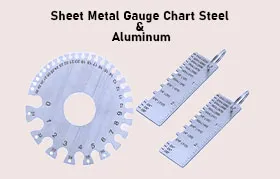
Hello, this is your senior engineer from Eptahub. Let’s talk about one of the most dangerously misunderstood terms in manufacturing: Gauge.
A quick search for “gauge size chart” throws you into a world of chaos. You’ll find charts for body piercings, injection needles, electrical wire, and shotgun shells. This is the first and most critical lesson: Sheet metal gauge is a completely separate and distinct system from all of these. Mixing them up is not just confusing; it’s a recipe for disaster in an engineering context.
The second lesson, and the one you must burn into your memory before you ever write another RFQ, is this:
In sheet metal, a SMALLER gauge number means a THICKER sheet. A LARGER gauge number means a THINNER sheet.
So, 10 gauge steel is much thicker and heavier than 20 gauge steel. This counter-intuitive rule is the single greatest source of errors, and we are going to dismantle it completely.
Why Does This Bizarre System Even Exist?
The gauge system is an archaic remnant of the early industriel revolution, long before the widespread use of precise digital calipers and micrometers. It was born from a practical need to classify sheet metal based on a property that was easier to measure at the time than thickness: weight.

The system was based on the weight of the material per a given surface area. For example, the “Manufacturer’s Standard Gauge for Sheet Steel” is based on the weight of a square foot of iron. A specific gauge number was assigned to a sheet that had a specific weight. Since a thicker sheet of the same size is heavier, it was given a smaller gauge number. Why? The logic is lost to time, but it’s the system we’ve inherited.
This weight-based origin is the key to understanding the entire problem. It immediately explains why there isn’t one universal gauge chart. Different materials have different densities. A square foot of steel weighs much more than a square foot of aluminum. Therefore, to get sheets of comparable weight, their thicknesses must be different. This forced the creation of separate gauge systems for different materials.
This is the engineering truth of gauge: Gauge is not a unit of measurement. It is a name, a designation, a label from an arbitrary, material-specific list. It’s like ordering a “large” drink in three different countries; the name is the same, but the volume you receive will be completely different.
The Three Gauge Systems You MUST Know
In modern metal fabrication, you will primarily encounter three distinct and non-interchangeable gauge systems for sheet metal. Using the wrong one is a catastrophic error.
1. Manufacturer’s Standard Gauge (MSG) – For Uncoated Steel
This is the most common gauge system you will encounter. It is used for standard carbon steel, and it’s often what people mean when they vaguely refer to “gauge.” It’s sometimes called the “U.S. Standard Gauge,” though MSG is the more precise term.
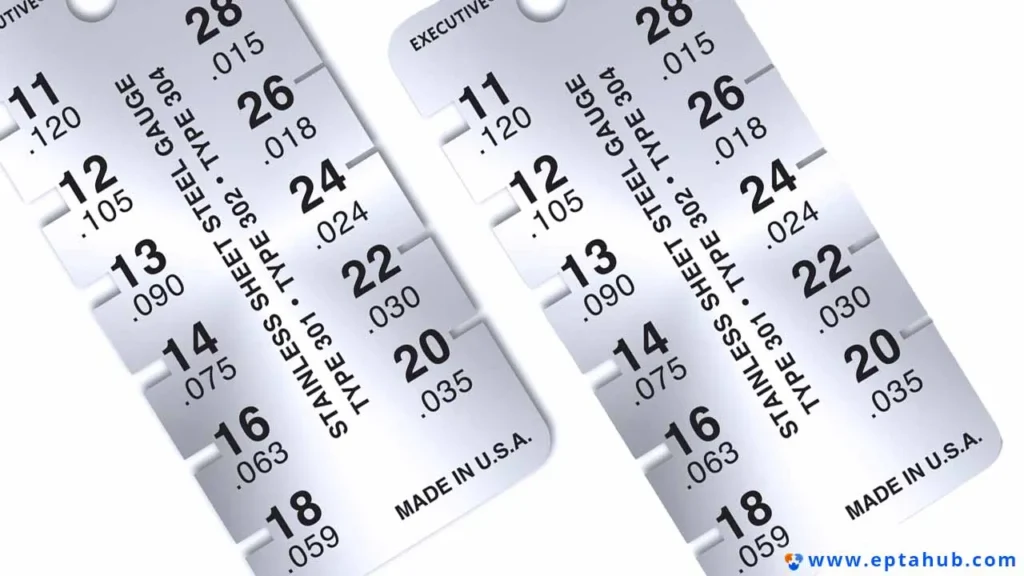
The system is defined by the standard ASTM A366/A366M. Here is a truncated chart showing the critical relationship between the gauge number and its actual, measurable thickness.
Table 1: Manufacturer’s Standard Gauge (MSG) for Uncoated Sheet Steel
| Gauge # | Thickness (Inches) | Thickness (Millimeters) |
|---|---|---|
| 3 | 0.2391 | 6.073 |
| 7 | 0.1793 | 4.554 |
| 10 | 0.1345 | 3.416 |
| 11 | 0.1196 | 3.038 |
| 12 | 0.1046 | 2.657 |
| 14 | 0.0747 | 1.897 |
| 16 | 0.0598 | 1.519 |
| 18 | 0.0478 | 1.214 |
| 20 | 0.0359 | 0.912 |
| 22 | 0.0299 | 0.759 |
| 24 | 0.0239 | 0.607 |
| 28 | 0.0149 | 0.378 |
Notice the dramatic thickness drop between 10 gauge (3.4mm) and 20 gauge (0.9mm).
2. Galvanized Steel Gauge (GSG) – For Zinc-Coated Steel
This is where the first major RFQ error happens. A buyer specifies “16 gauge steel,” and the supplier, knowing the part will be used outdoors, quotes for 16 gauge galvanized steel. The part arrives and it’s slightly thinner than the prototype. Why?
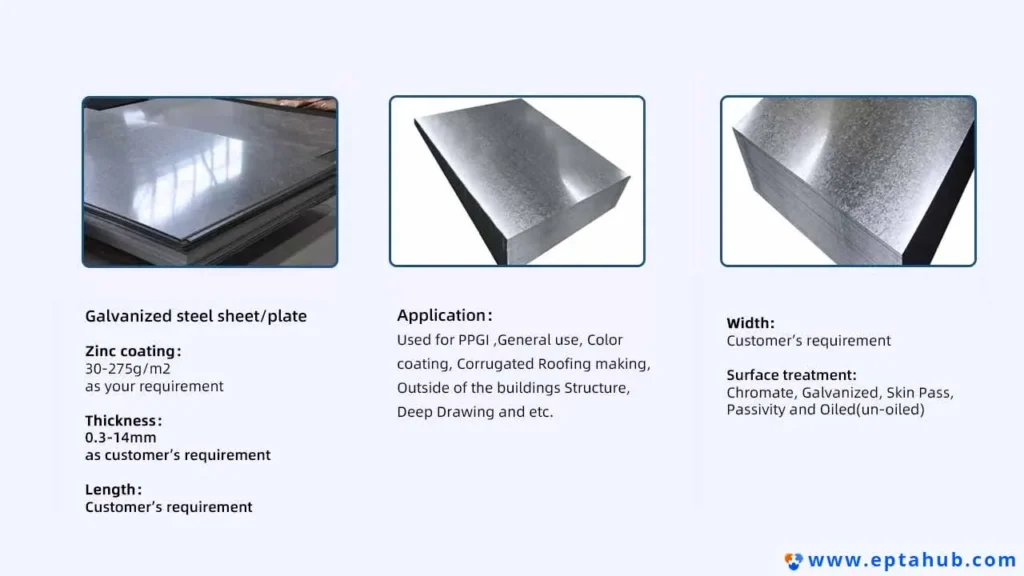
The Galvanized Steel Gauge is designed to account for the thickness and weight of the zinc coating applied during the galvanization process. To achieve the same target weight as the MSG standard, the base steel of a galvanized sheet must be slightly thinner.
Table 2: Galvanized Steel Gauge (GSG)
| Gauge # | Thickness (Inches) | Thickness (Millimeters) |
|---|---|---|
| 10 | 0.1382 | 3.510 |
| 12 | 0.1084 | 2.753 |
| 14 | 0.0785 | 1.994 |
| 16 | 0.0635 | 1.613 |
| 18 | 0.0516 | 1.311 |
| 20 | 0.0396 | 1.006 |
| 22 | 0.0336 | 0.853 |
| 24 | 0.0276 | 0.701 |
Let’s compare: 16 gauge MSG steel is 1.519mm. 16 gauge Galvanized steel is 1.613mm. In this case, the galvanized sheet is slightly thicker overall, but its base steel is thinner than a solid sheet of 16 gauge MSG. The systems are close, but they are not the same.
3. Aluminum Gauge – The Browne & Sharpe System
This is where the errors become catastrophic. Aluminum, being much less dense than steel, uses a completely different system. The standard for aluminum sheet is the Browne & Sharpe (B&S) gauge, which is the same as the American Wire Gauge (AWG) system used for electrical wires. It has no direct relationship to the steel gauge systems.
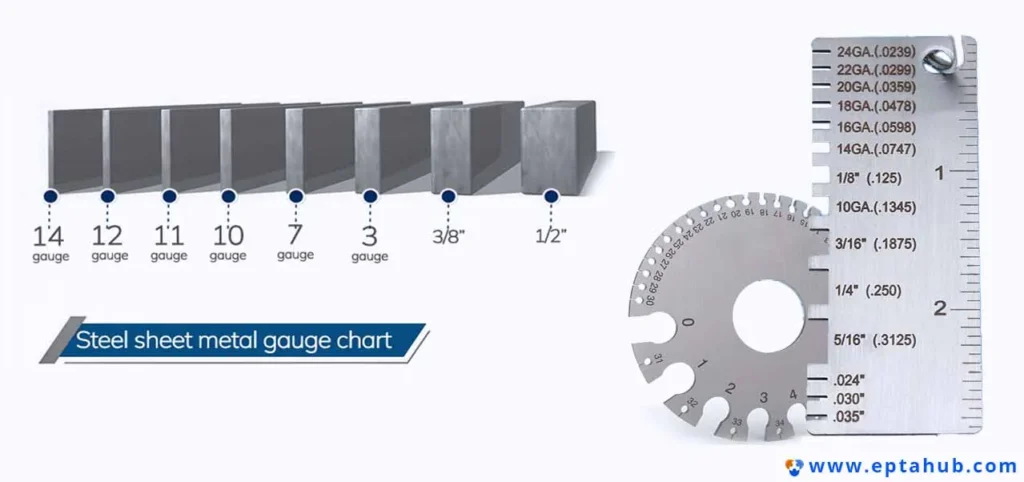
Table 3: Browne & Sharpe (B&S) Gauge for Aluminum Sheet
| Gauge # | Thickness (Inches) | Thickness (Millimeters) |
|---|---|---|
| 10 | 0.1019 | 2.588 |
| 12 | 0.0808 | 2.052 |
| 14 | 0.0641 | 1.628 |
| 16 | 0.0508 | 1.290 |
| 18 | 0.0403 | 1.024 |
| 20 | 0.0320 | 0.813 |
| 22 | 0.0253 | 0.643 |
| 24 | 0.0201 | 0.511 |
The Critical Comparison: Why “Just Saying Gauge” Fails
Now let’s put it all together. Imagine you write an RFQ for a simple bracket and you specify “16 gauge metal.” You send it to three suppliers: one who works with steel, one who works with galvanized, and one who specializes in aluminum. Without any further clarification, here is the thickness of the part they will quote you:
Table 4: The Danger of Ambiguity – A Comparison of 16 Gauge
| Material System | Thickness (Inches) | Thickness (Millimeters) | % Difference from Steel |
|---|---|---|---|
| Steel (MSG) | 0.0598″ | 1.519 mm | – |
| Galvanized Steel (GSG) | 0.0635″ | 1.613 mm | +6.2% |
| Aluminum (B&S) | 0.0508″ | 1.290 mm | -15.1% |
The aluminum part would be over 15% thinner than the steel part. For a component where stiffness is critical, like an electronics enclosure panel, that 0.23mm difference could be the difference between a solid, professional-feeling product and a flimsy piece of junk that flexes when you touch it. And you, the buyer, would have no recourse, because the supplier delivered exactly what you vaguely asked for: “16 gauge metal.”
This is the trap. The numbers look similar, the term is the same, but the physical reality is worlds apart. The gauge system is a minefield, and the only way to navigate it safely is to be explicit.
The Engineer’s Balancing Act: Gauge vs. Cost, Strength, and Weight
Le selection of a material gauge is a classic engineering trade-off. There is rarely a single “perfect” answer, but rather an optimal choice that balances competing requirements.
1. Cost:
This is the most straightforward relationship. Metal is sold by weight. A thicker sheet (smaller gauge number) contains more material and is therefore more expensive per unit of area. The cost increase is not always linear. Thicker materials may require more powerful machinery to cut and bend, adding to the processing cost.
- The Rule of Thumb: When designing, always start with the thinnest gauge possible that still meets your strength and stiffness requirements. “Over-engineering” by choosing an unnecessarily thick gauge is one of the most common ways costs spiral out of control on sheet metal projects. For example, moving an electronics enclosure from 16 gauge steel to 14 gauge steel might increase the material cost by over 25% for a negligible perceived benefit.
2. Strength and Stiffness:
This is the primary driver for gauge selection.
- Force refers to the material’s ability to resist breaking under a load (e.g., a mounting bracket holding a heavy component).
- Rigidité refers to the material’s ability to resist bending or flexing under a load (e.g., a large, flat panel on a machine door).
For many applications, stiffness is the more critical factor. A thin, flimsy panel feels cheap and unprofessional, even if it’s technically strong enough not to break. Stiffness is a function of both the material’s elastic modulus and, crucially, the cube of its thickness (t³). This means that doubling the thickness of a sheet increases its stiffness by a factor of eight. This is a powerful relationship. A small increase in gauge can produce a massive increase in rigidity.
3. Weight:
In applications like automobile, aerospace, or portable electronics, weight is paramount. Thicker gauge means more weight. This is where the choice between steel and aluminum becomes critical.
- Exemple: A 16 gauge (1.519mm) steel panel weighs approximately 12.1 kg/m². A 16 gauge (1.290mm) aluminum panel, while being thinner, weighs only 3.5 kg/m². Even if you increase the aluminum’s thickness to match the steel’s stiffness, it will almost always be lighter. This weight savings comes at a higher material cost.
DFM: How Gauge Dictates Manufacturing
Your choice of gauge directly impacts what the fabrication shop can do with the metal. This is the essence of Design for Manufacturability (DFM).
1. Bending and Forming
When you bend sheet metal, the material on the outside of the bend stretches, and the material on the inside compresses.
- The Minimum Bend Radius Rule: You cannot create a perfectly sharp 90-degree corner. Every bend has an inside radius. Attempting to bend a sheet with too small of a radius will cause cracking on the outside of the bend. This minimum allowable bend radius is directly proportional to the material thickness.
- The DFM Guideline: A very safe rule of thumb is that the minimum inside bend radius should be at least equal to the material thickness. For 16 gauge (1.5mm) steel, you should design for a minimum inside bend radius of 1.5mm. Trying to specify a 0.5mm radius on this material is asking for trouble. Thicker gauges require larger bend radii. Always consult your fabricator, as their tooling may have specific limitations.
2. Welding
Gauge thickness dictates the appropriate welding process and preparation.
- Thin Gauge (22-26 gauge / <0.8mm): Extremely difficult to weld without burning through. Requires a highly skilled operator using TIG welding at low amperage or specialized laser/spot welding. Often, designing with tabs, slots, or riveting is a better joining strategy.
- Medium Gauge (12-20 gauge / 0.9mm – 2.6mm): The sweet spot for both TIG and MIG welding. The material is thick enough to manage heat input but thin enough that special edge preparation (like beveling) is usually not required.
- Thick Gauge (<10 gauge / >3.4mm): Requires higher amperage and often a groove or bevel ground into the joint edge to allow for full weld penetration. MIG or Flux-Cored welding is often preferred over TIG for speed and efficiency.
Case Study: The Failing Server Rack Shelf
- Le scénario : A company designed a standard 1U server rack shelf. The prototype was made from 16 gauge (0.0598″) steel and passed all load tests, comfortably holding the required equipment without significant flexing. The design was approved for mass production.
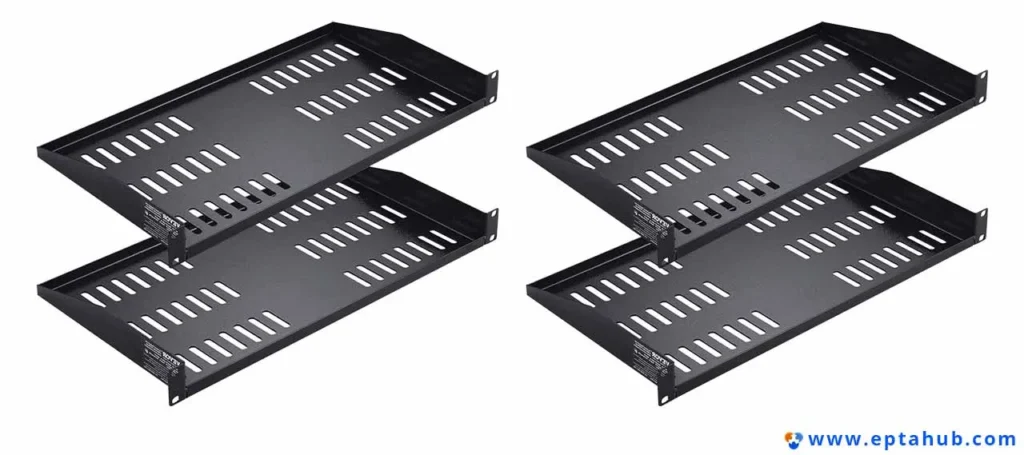
- L'erreur : To save costs on the first production run, a junior buyer was tasked with sourcing the material. They saw the drawing callout for “16 gauge,” but found a supplier offering a significant discount on 18 gauge (0.0478″) steel. The thickness difference was only 0.012 inches (0.3mm)—less than the thickness of three sheets of paper. It seemed like a negligible change and an easy way to meet cost-down targets.
- Le résultat désastreux : The first batch of shelves was produced and shipped. Customer complaints flooded in almost immediately. The shelves were visibly sagging under the weight of the equipment, feeling flimsy and unsafe. In some cases, the flexing was so severe that it caused the front mounting tabs to bend over time.
- L'analyse des causes profondes : The buyer failed to understand the physics of stiffness. The stiffness of the shelf is proportional to the cube of its thickness. Let’s do the math:
- Stiffness of 16ga shelf ∝ (0.0598)³ ≈ 0.000214
- Stiffness of 18ga shelf ∝ (0.0478)³ ≈ 0.000109
- The ratio is 0.000109 / 0.000214 ≈ 0.51
- The seemingly tiny 20% reduction in thickness resulted in a nearly 50% reduction in the shelf’s stiffness. The “negligible” change had catastrophically compromised the product’s primary function. The entire production run had to be recalled and scrapped, wiping out the initial cost savings a hundred times over and severely damaging the company’s reputation.
The Eptahub Protocol: How to Specify Sheet Metal with Zero Ambiguity
To prevent the failures described above, you must be ruthlessly precise in your documentation. Never rely on the word “gauge” alone.
The Golden Rule: Specify the Decimal Thickness.
Your engineering drawing and your RFQ should always state the required thickness as a decimal number (in inches or millimeters). The gauge number can be included as a reference, but the decimal value is the legally binding specification.
Example of an Unambiguous RFQ Callout:
Material: Cold Rolled Steel, ASTM A1008 CS Type B
Thickness: 0.0598" (1.52 mm) [16 Gauge MSG Ref.]
Let’s break down why this works:
Material: Cold Rolled Steel...: You’ve explicitly defined the material type.Thickness: 0.0598" (1.52 mm): This is the critical, non-negotiable dimension. Your supplier must provide material that falls within the standard tolerance for this nominal thickness. There is no room for interpretation.[16 Gauge MSG Ref.]: You’ve included the gauge as a reference only. This helps the supplier’s estimator quickly understand the general class of the material, but it’s not the controlling dimension. It also clarifies which gauge system you are referencing (MSG).
On an Engineering Drawing:
The material and thickness should be clearly stated in the title block or general notes section.
| TITLE: Mounting Bracket |
|---|
| NOTES: |
| 1. MATERIAL: 5052-H32 ALUMINUM |
| 2. THICKNESS: 0.050″ (1.27MM) [16 GAUGE B&S REF.] |
| 3. ALL BEND RADII 0.06″ UNLESS OTHERWISE SPECIFIED. |
| … |
This level of precision eliminates all ambiguity. It protects you, it protects your supplier, and it ensures the part you designed is the part you receive.
FAQ
Q: What are the standard tolerances for sheet metal thickness?
A: Tolerances vary by material, thickness, and standard (e.g., ASTM). For example, 16 gauge steel with a nominal thickness of 0.0598″ might have a tolerance of +/- 0.005″. This means a sheet could acceptably be anywhere from 0.0548″ to 0.0648″. This is another reason to be aware that your part might not be the exact nominal thickness every time.
Q: What about other metals like Stainless Steel or Brass?
A: They also have their own gauge systems! The system for stainless steel is very close to the MSG for carbon steel, but not identical. Brass and copper often use the B&S/AWG system, similar to aluminum. This only reinforces the golden rule: ignore the gauge number as an absolute measure and always specify the decimal thickness.
Q: Which is thicker, 21 gauge or 24 gauge?
UN: 21 gauge is thicker. Remember the rule: the smaller the number, the thicker the sheet. This applies to all standard sheet metal, wire, and needle gauge systems.
Conclusion: Banish “Gauge” as a Command
The word “gauge” is a relic. In the hands of an informed engineer, it can be a useful piece of shop-talk shorthand. But in a formal document like an RFQ or a drawing, it is a liability. It is a vague, context-dependent, and archaic term that invites errors.
The path to sourcing excellence is paved with precision. By abandoning your reliance on gauge numbers and adopting the discipline of specifying exact decimal thicknesses, you elevate your engineering from approximation to certainty. You protect your designs from critical failures, you protect your company from costly mistakes, and you build a foundation of clear communication with your manufacturing partners.
À Eptahub, this is not just a best practice; it is our standard operating procedure. We verify the decimal thickness, we clarify the material, and we ensure that the physical part that arrives at your door is a perfect match to the digital file you sent us.
Références
ASTM International, “Standard Specification for Steel, Sheet, Carbon, Cold-Rolled, Commercial Quality” (ASTM A366/A366M). Note: This standard has been withdrawn and replaced by A1008/A1008M, but the gauge system is based on its historical values.