








Au cours de mes 12 années d'expérience dans l'évaluation des chaînes d'approvisionnement en moulage par injection et en accessoires électroniques grand public chez eptahub.com, j'ai fréquemment conseillé des marques de commerce électronique cherchant à se développer.
Pour être tout à fait honnête en tant qu'ingénieur : dans le secteur manufacturier industriel, la gratuité n'existe pas.“
Lorsqu'une plateforme en ligne vous propose un Modèle de coque de téléphone ou un application de création de coques de téléphone En participant gratuitement à l'écosystème de l'impression à la demande (POD) pour le commerce de détail, vous contribuez à ce secteur. Ces services apparaissent souvent dans les résultats de recherche. meilleures coques de téléphone imprimées à la demande ou Coques de téléphone imprimables) sont fantastiques pour un adolescent qui souhaite un étui de téléphone individuel ou à Coque de téléphone personnalisée avec des photos pour une petite quantité.
Cependant, lorsque vous construisez une marque légitime, à envergure mondiale, et que vous avez besoin de 50 000 étuis de téléphone personnalisés en gros, le recours à des intermédiaires de type POD (Point-of-Do-Doing) anéantira vos marges bénéficiaires et vous privera de tout contrôle technique.
La véritable production en gros ne repose pas sur un modèle de base. kit de fabrication de coques de téléphone ou à la recherche d'un endroit pour Faites fabriquer votre propre coque de téléphone près de chez vous dans un magasin local. Cela nécessite de l'acier dur. moules d'injection, une science des matériaux rigoureuse (TPU, polycarbonate, fibre aramide), un durcissement de surface UV précis et une physique rigoureuse des tests de chute.
Science des matériaux et physique des impacts
Avant de vous préoccuper de la manière d'imprimer un logo ou d'assembler un étui de téléphone personnalisé, Vous devez donc concevoir le châssis structurel principal. Une coque de téléphone a une fonction fondamentale : la dispersion de l’énergie cinétique.
Lorsqu'un smartphone de 240 grammes tombe d'une hauteur de 1,5 mètre sur du béton, l'impact génère une onde de choc localisée et massive. Si le matériau de la coque est trop rigide, l'énergie cinétique se transmet directement à travers la coque à l'écran en verre, le brisant. Si le matériau est trop souple, la coque s'aplatit simplement, laissant le châssis du téléphone heurter le sol.
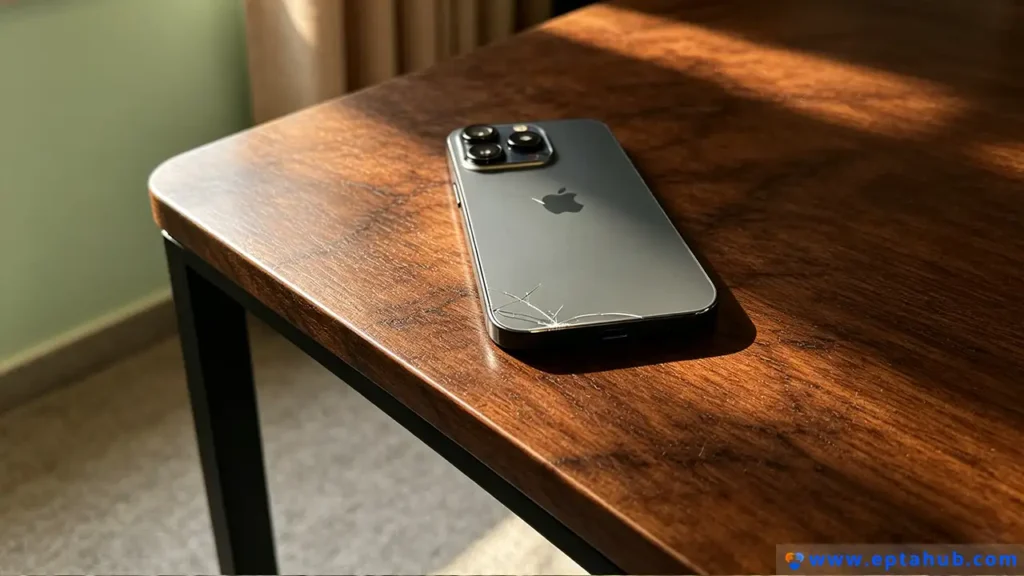
Chez eptahub.com, nous sélectionnons les matériaux en fonction de leur dureté Shore et de leur résistance à la traction. Voici le réalité technique des matériaux Vous devez choisir parmi les options suivantes pour votre commande en gros.
Matrice des matériaux techniques : Résines pour coques de téléphone en gros
| Type de matériau | Désignation d'ingénieur | Dureté Shore | Absorption d'énergie cinétique | Méthode de fabrication primaire | Cas d'utilisation idéal |
|---|---|---|---|---|---|
| TPU (polyuréthane thermoplastique) | Élastomère | 70A à 95A | Excellent (Rebondit/Se déforme) | Moulage par injection | La référence mondiale en matière de coques de protection transparentes et flexibles. Excellente adhérence, prix abordable. |
| PC (Polycarbonate) | Thermoplastique amorphe | 75D à 85D | Mauvais (Choc des transferts) | Moulage par injection | Plaques arrière rigides et structurelles. Résistantes aux rayures, elles acceptent parfaitement l'impression UV haute résolution. |
| LSR (caoutchouc silicone liquide) | Élastomère réticulé | 30 A à 60 A | Très bon (Atténue) | Liquide Moulage par injection (LIM) | Coques haut de gamme au toucher doux et mat (comme les coques officielles Apple). Nécessite un outillage complexe et chauffé. |
| Fibre aramide (Kevlar) | polymère synthétique | N/A (Matrice tissée) | Supérieur (Disperse la force) | Formage sous vide / Stratification de résine | Étuis tactiques ultra-fins et haut de gamme. Bloquent les signaux RF s'ils ne sont pas conçus correctement. |
La solution hybride : moulage par injection 2K
La norme du secteur pour le haut de gamme étuis de téléphone personnalisés en gros Il ne s'agit pas d'un matériau unique. C'est une conception hybride PC/TPU.
Nous utilisons un processus appelé Moulage par injection 2K (deux couches). Une plaque arrière rigide en polycarbonate (PC) est d'abord injectée dans le moule afin d'assurer la rigidité de la structure et de fournir une surface plane pour l'impression. Le moule tourne ensuite, et un pare-chocs souple en TPU est injecté directement sur les bords de la plaque arrière en PC, liant chimiquement les deux plastiques. On obtient ainsi une coque arrière rigide pour une protection optimale contre les chutes et des bords souples pour une absorption des chocs.
Conception magnétique d'une coque de téléphone MagSafe personnalisée
Depuis 2020, la compatibilité MagSafe est la spécification technique la plus critique exigée par les clients. Nombre de concepteurs amateurs pensent pouvoir se contenter de coller un anneau métallique bon marché à l'intérieur d'une coque en TPU et considérer le résultat comme satisfaisant. Étui de téléphone MagSafe personnalisé. Il s'agit d'une défaillance technique catastrophique.
L'écosystème MagSafe d'Apple n'est pas un simple aimant ; il s'agit d'un système hautement précis, calculé mathématiquement. Réseau de Halbach.
- Spécifications de l'aimant : Vous devez préciser Néodyme de qualité N52 (NdFeB) Aimants. Si vous utilisez des aimants N35 ou N40 moins puissants pour économiser quelques centimes sur votre commande en gros, le téléphone risque de tomber du support de voiture lorsque vous passerez sur une bosse.
- La géométrie du réseau : La norme MagSafe exige exactement 36 aimants rectangulaires individuels disposés en cercle parfait, plus une queue d'alignement.
- L'ingénierie de la polarité : C'est là que les coques bon marché présentent leurs limites. Les aimants ne peuvent pas tous être orientés dans la même direction. Ils doivent alterner les polarités (Nord-Sud-Nord-Sud) selon une configuration de type Halbach. Cette disposition spécifique force les lignes de flux magnétique vers l'extérieur, en direction du chargeur, concentrant ainsi la force magnétique exactement là où elle est nécessaire et empêchant les champs magnétiques parasites de perturber le fonctionnement du téléphone, notamment la boussole interne et l'antenne NFC (Apple Pay).
- Tolérance sur l'axe Z : Le champ magnétique obéit à la loi de l'inverse du carré de la distance. Chaque millimètre de plastique entre l'aimant et le téléphone diminue la force de maintien de façon exponentielle. La paroi en plastique qui encapsule le réseau d'aimants doit avoir exactement les dimensions indiquées. 0,4 mm à 0,6 mm Si votre outillage de moulage par injection est imprécis et produit une paroi de 1,0 mm, le système MagSafe ne parviendra pas à maintenir l'appareil en place.
Étude de cas en ingénierie : La catastrophe des interférences NFC
Pour prouver pourquoi vous devez obtenir un diplôme de base application de création de coques de téléphone Prenons l'exemple d'une véritable entreprise d'ingénierie : examinons une analyse de défaillance que j'ai réalisée pour une marque de commerce électronique basée à New York (qui a démarré son activité en cherchant comment…). Créez votre propre coque de téléphone à New York avant de passer à l'échelle mondiale).
Le scénario : Le client a commandé 25 000 étuis hybrides PC/TPU MagSafe auprès d'un fournisseur de niveau 3 non vérifié en Asie, car ce dernier proposait le prix unitaire le plus bas. Après réception de la livraison, le client a apposé ses visuels personnalisés sur les étuis et les a expédiés à ses clients.
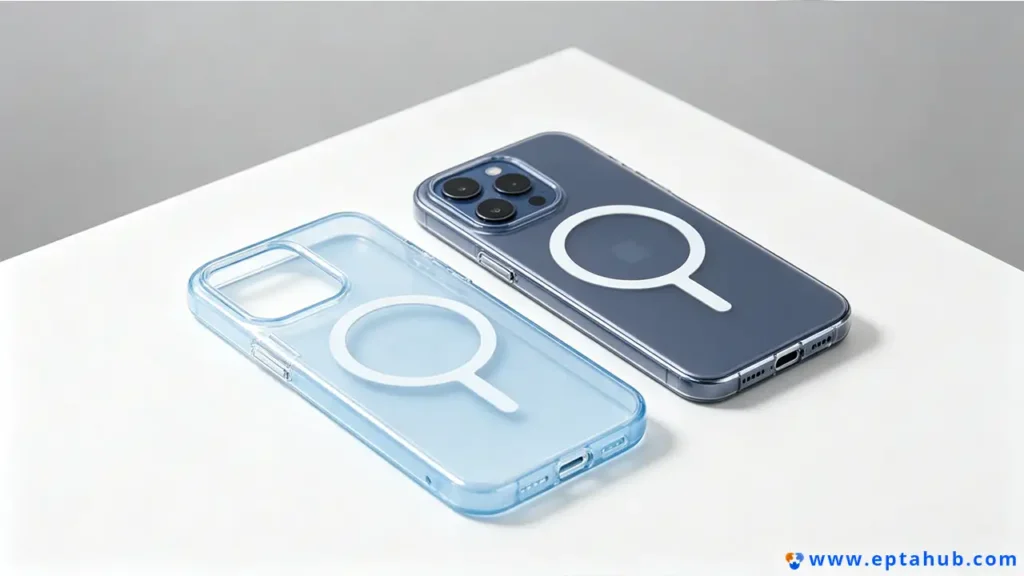
L'échec : En deux semaines, le client a enregistré un taux de retour de 40%. Les clients se plaignaient de problèmes avec Apple Pay (NFC), de la navigation GPS qui tournait en rond et de la surchauffe de la batterie de leur téléphone sur les chargeurs MagSafe.
La cause profonde en matière d'ingénierie :
Nous avons démonté les coques défectueuses dans le laboratoire d'eptahub.com. Le fournisseur avait complètement ignoré les directives de conception magnétique MFi (Made for iPhone) d'Apple.
Au lieu d'utiliser 36 aimants N52 individuels disposés en réseau de Halbach, le fournisseur à bas prix a utilisé un unique anneau massif estampé en ferrite isotrope de qualité inférieure. De plus, il n'a pas installé de blindage magnétique (une fine couche de mu-métal ou de feuille nanocristalline) derrière l'anneau.
En raison d'un flux magnétique non contrôlé, d'importantes interférences électromagnétiques (IEM) ont envahi l'arrière de l'iPhone. Ce champ magnétique parasite a perturbé la bobine NFC interne du téléphone (rendant Apple Pay inopérant) et le magnétomètre haute sensibilité (désactivant la boussole GPS). De plus, l'anneau de ferrite, conducteur mais mal aligné avec la bobine d'induction du chargeur sans fil, a agi comme une charge parasite, absorbant l'énergie de charge sans fil et la convertissant en une chaleur intense, endommageant ainsi les batteries du téléphone.
La solution : Nous avons dû mettre au rebut la totalité du lot de 25 000 unités. Nous avons modifié le moule d'injection afin d'y intégrer une cavité de précision de 0,5 mm de profondeur. Nous avons utilisé des matrices Halbach en néodyme N52 certifiées, que nous avons protégées par une feuille de blindage nanocristalline de 0,1 mm afin d'empêcher les interférences électromagnétiques de pénétrer dans le téléphone. Ces matrices ont ensuite été scellées dans la cavité par soudage ultrasonique. Les nouveaux étuis ont passé avec succès tous les tests de conformité NFC et thermique.
Lorsque vous achetez étuis de téléphone personnalisés en gros, Vous n'achetez pas du plastique ; vous achetez les tolérances d'ingénierie qui vous empêchent de détruire un smartphone $1200.
La toile de production de masse : comment personnaliser une coque de téléphone avec des photos à grande échelle
Lorsqu'un fondateur de startup souhaite Créez votre propre coque de téléphone, ils ouvrent fréquemment un navigateur, recherchent le meilleures coques de téléphone imprimées à la demande ou Coques de téléphone imprimables, Téléchargez une image JPEG et attendez la livraison de votre exemplaire. C'est le produit vendu au détail. L'encre, totalement exposée à la surface du plastique, s'effacera au moindre contact avec vos clés de voiture.
Lorsque vous passez à la commande étuis de téléphone personnalisés en gros, vous ne pouvez pas vous fier à la technologie d'impression jet d'encre de bureau de base que l'on trouve dans un ordinateur grand public kit de fabrication de coques de téléphone. Chez eptahub.com, nous devons garantir mathématiquement le coefficient d'adhérence de l'encre au substrat polymère sur des dizaines de milliers d'unités.
Si votre objectif est de Coque de téléphone personnalisée avec des photos À l'échelle industrielle, vous devez spécifier l'un des trois procédés de fabrication hautement contrôlés suivants.
1. Impression à plat UV (La solution idéale pour les volumes moyens)
Pour les séries de 500 à 5 000 unités, l’impression UV industrielle est la norme. De grands portiques CNC à plat projettent des gouttelettes microscopiques d’encre CMJN + blanc directement sur la plaque arrière en polycarbonate (PC) ou en TPU.
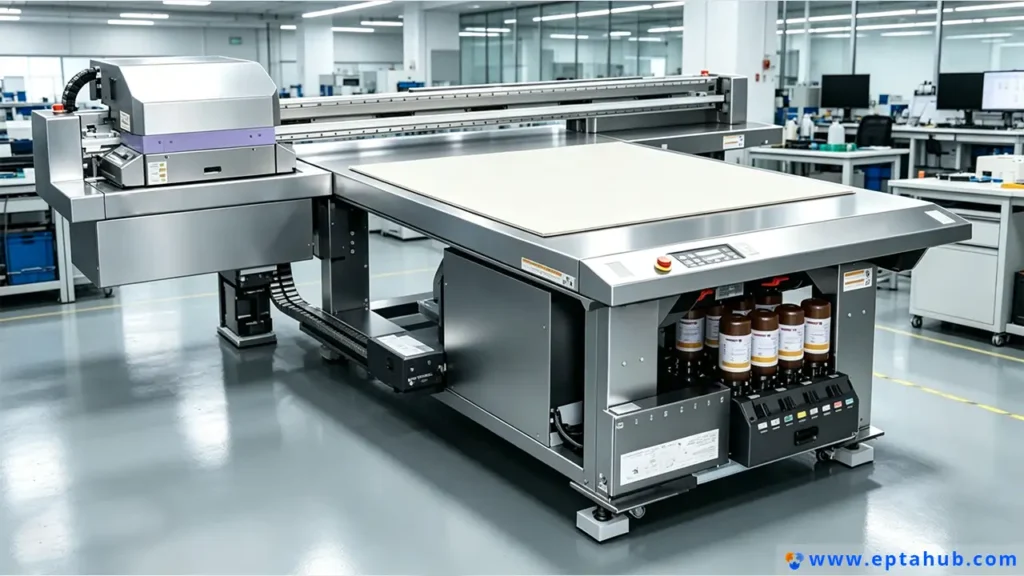
- La physique : Quelques millisecondes après le dépôt de l'encre sur le plastique, un faisceau de LED ultraviolettes (UV) à haute intensité le traverse. Le rayonnement UV provoque une réaction photochimique, réticulant instantanément les monomères de l'encre en une couche de polymère solide.
- Le défi de l'ingénierie : L'encre UV est intrinsèquement rigide. Si vous imprimez un motif épais sur une coque en TPU très flexible, l'encre se fissurera inévitablement lorsque la coque sera pliée. Pour éviter cela, il est impératif d'appliquer un promoteur d'adhérence chimique (primaire) avant l'impression et de formuler spécifiquement des encres UV “ flexibles ” adaptées à la dureté Shore du substrat en TPU.
2. Sublimation sous vide 3D (La norme de vente au détail pour l'emballage intégral)
Si votre motif doit recouvrir entièrement les bords incurvés de la coque de téléphone, l'impression UV à plat standard ne conviendra pas. Nous devons alors recourir à la sublimation 3D.
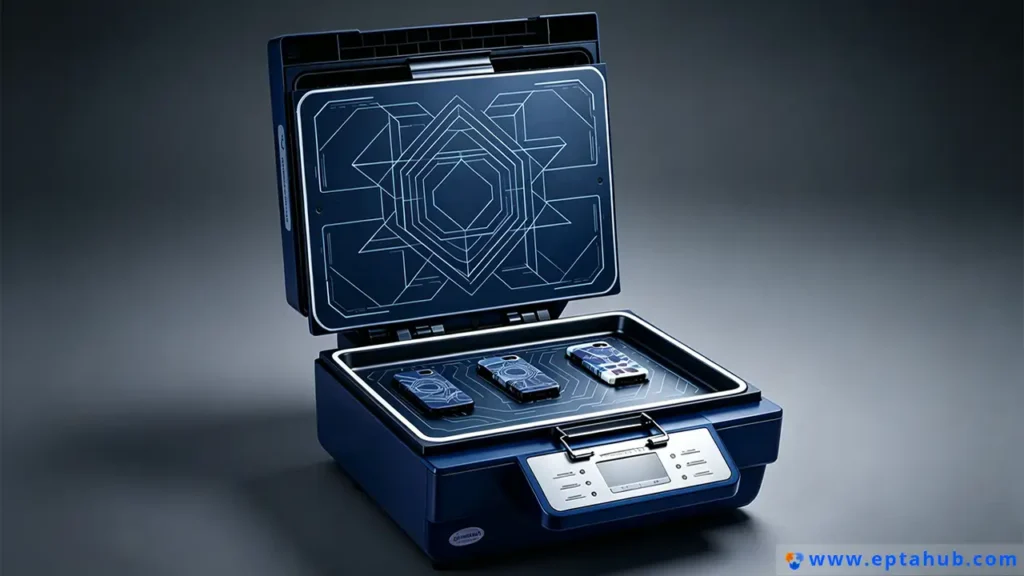
- La physique : Le motif est imprimé en miroir sur un film de transfert spécial. La coque de téléphone vierge (conçue avec un revêtement sublimable) est placée dans une presse à chaud sous vide. La machine crée un vide poussé, plaquant le film contre les courbes 3D de la coque, puis le chauffe à 200 °C.
- La réaction : À cette température précise, l'encre solide se vaporise instantanément en gaz (sublimation) et imprègne physiquement la structure moléculaire du revêtement plastique. Le motif n'est plus visible. sur le cas ; il est teint de façon permanente dans le boîtier. Il ne peut pas être rayé.
3. Décoration dans le moule (IMD) / Étiquetage dans le moule (IML) (Le summum de l'ingénierie)
Lorsque de grandes marques internationales commandent plus de 100 000 unités, elles n'impriment pas sur les coques après leur fabrication. Elles impriment. pendant le procédé de moulage par injection.
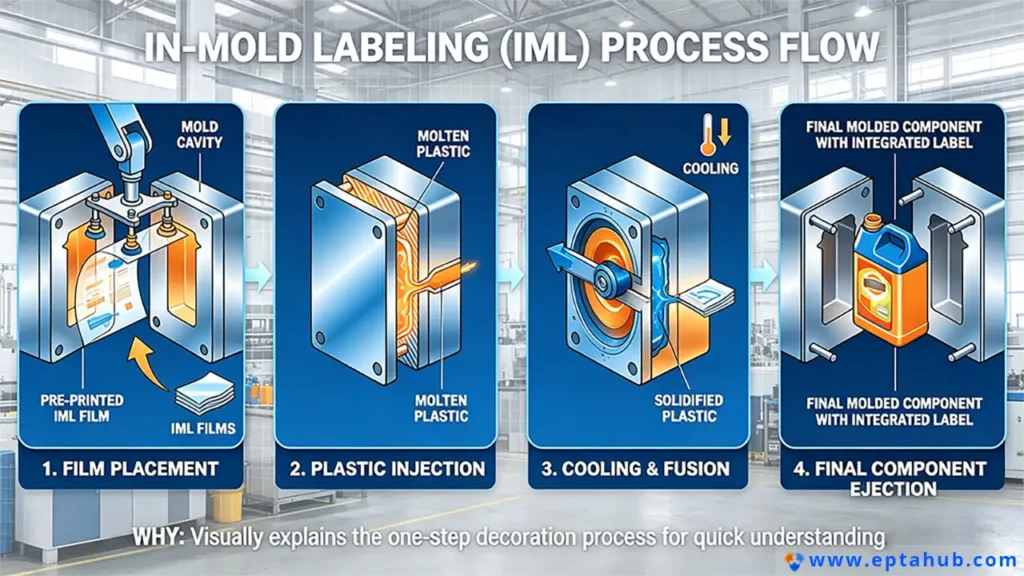
- La physique : Le motif haute résolution est imprimé sur un rouleau massif de film PET fin et transparent. Un bras robotisé découpe le film, le place directement dans la cavité ouverte du moule d'injection en acier P20, puis referme l'outil. Du polycarbonate fondu est ensuite injecté dans le moule à 15 000 PSI derrière le film.
- Le résultat : La chaleur et la pression intenses fusionnent définitivement la résine plastique et le film imprimé en un seul élément indestructible. Le motif est recouvert d'une couche protectrice de PET transparent. Il est insensible aux rayures, à la décoloration due aux UV et aux solvants chimiques. Il s'agit du nec plus ultra. étuis de téléphone personnalisés en gros fabrication.
Matrice d'ingénierie : Technologies de décoration de surface
| Technologie de fabrication | Idéal pour… | Adéquation du volume unitaire | Durabilité graphique | Inconvénients en matière d'ingénierie |
|---|---|---|---|---|
| Impression à plat UV | Plaques arrière plates en PC/TPU, texte en relief. | Faible à moyen (500 – 5 000) | Modéré (Niveau de surface) | Sensible aux rayures sans vernis transparent. L'encre se fissure sur le TPU très flexible. |
| Sublimation 3D | Couverture intégrale bord à bord, dégradés éclatants. | Moyen (1 000 – 10 000) | Très haute (infusée dans le polymère) | Fonctionne uniquement sur certains plastiques durs revêtus et résistants à la chaleur. Ne peut pas être utilisé sur le TPU souple. |
| IMD / IML | Graphismes indestructibles, déploiement massif en magasin. | Élevé (50 000+) | Absolu (Enfoui sous le PET) | Coûts d'outillage initiaux extrêmement élevés. Il est difficile de modifier le graphisme une fois le moule réalisé. |
Complexité structurelle : L'étui portefeuille personnalisé pour téléphone
Lorsqu'on passe de simples coques en plastique à des assemblages textiles complexes, tels que… étui de téléphone personnalisé (ou en format folio), la nomenclature (BOM) devient d'une complexité exponentielle.
Vous n'avez plus seulement affaire à un mouleur par injection ; vous avez affaire à une opération de découpe et de couture.
De nombreux designers amateurs pensent qu'un étui portefeuille n'est qu'une coque en plastique sur laquelle on a collé du cuir. Si l'on utilise de la cyanoacrylate standard (super-colle) pour coller du cuir PU (polyuréthane) à un châssis en TPU, la colle cèdera brutalement sous l'effet des variations de température d'une batterie de smartphone.
Chez eptahub.com, nous exigeons Soudage haute fréquence (RF).
Au lieu d'utiliser des adhésifs chimiques ou des coutures physiques (qui créent des perforations et des points faibles dans le matériau), nous fixons le cuir PU et le châssis en TPU entre deux matrices métalliques. Nous soumettons l'ensemble à des ondes radio électromagnétiques à haute fréquence (généralement 27,12 MHz). Cela excite les molécules du plastique, les faisant fondre ensemble pour former une soudure permanente et invisible. C'est ainsi que les étuis portefeuille étanches haut de gamme atteignent un taux de défaillance nul.
L'ingénierie financière : Amortissement des moisissures et coût réel
Revenons à la recherche internet destructrice : “ Coques de téléphone personnalisées en ligne » vente en gros gratuite”.
En tant qu'ingénieur de production, je dois expliquer le concept de NRE (Ingénierie non récurrente) Les coûts. La véritable fabrication en gros nécessite un outillage en acier sur mesure. Un moule d'injection en acier P20 multicavités pour un boîtier d'iPhone 15 Pro coûte entre 3 500 et8 000 USD pour l'usinage, le polissage et les tests.
Aucune usine au monde ne vous offrira cela “ gratuitement ”.”
Cependant, les mathématiques de la production de masse favorisent largement l'investisseur qui comprend Amortissement de l'outillage.
- Si vous faites appel à un intermédiaire (comme Printify) pour imprimer sur des supports vierges préfabriqués, vous pourriez payer $6.00 par unité, pour toujours.
- Si vous commandez 50 000 unités, vos coûts d'outillage sont mathématiquement amortis à seulement 0,10 par caisse. Votre coût unitaire total passe à ∗∗0.50**.
Que Il s'agit d'une véritable vente en gros. En contrôlant la composition chimique exacte du moule, vous éliminez la marge des intermédiaires et obtenez une maîtrise totale de la conception du produit.
L'avis de l'ingénieur : arrêtez d'acheter des pièces vierges, commencez à concevoir.
Le marché mondial des accessoires pour téléphones mobiles est saturé de millions de supports vierges en TPU identiques, mal imprimés et de qualité inférieure, provenant de fournisseurs en dropshipping.
Si vous voulez bâtir une marque pérenne, vous devez cesser de vous comporter comme un consommateur lambda à la recherche d'un produit. application de création de coques de téléphone. Vous devez agir comme un ingénieur mécanicien.
- Moulage hybride 2K obligatoire (PC + TPU) pour la dispersion de l'énergie cinétique.
- Appliquez strictement les directives d'Apple relatives aux matrices de Halbach pour tout Étui de téléphone MagSafe personnalisé, utilisant des aimants en néodyme N52 et un blindage nanocristallin.
- Choisissez votre technologie de décoration (UV, sublimation ou IMD) en fonction d'exigences strictes de durabilité et du volume de production, et non pas seulement de commodité.
Chez eptahub.com, nous ne nous contentons pas de fabriquer des coques de téléphone. Nous concevons des micro-environnements protecteurs pour les composants électroniques les plus sensibles et coûteux. Traitez votre chaîne d'approvisionnement avec le même respect, et votre produit dominera le marché.
Références
Pour garantir votre vente en gros Les séries de production répondent aux besoins des consommateurs du monde entier Les exigences de sécurité et de fonctionnalité imposent la conformité aux normes d'ingénierie suivantes :
1. ASTM D3363 (Méthode d'essai normalisée pour la dureté des films par l'essai au crayon)
La norme industrielle pour vérifier la résistance aux rayures de vos encres à séchage UV et vernis transparents IMD. Si votre fournisseur de boîtiers ne peut pas fournir de rapport de dureté au crayon (par exemple, 2H ou 3H), les graphismes seront endommagés sur le terrain.
Lien: ASTM.org
2. ISO 10993 (Évaluation biologique des dispositifs médicaux – Cytotoxicité et sensibilisation)
Étant donné qu'une coque de téléphone est en contact physique constant avec la peau humaine pendant 12 heures par jour, les acheteurs en gros haut de gamme doivent s'assurer que les résines TPU et les encres UV réussissent les tests de biocompatibilité de base afin de prévenir les réactions allergiques généralisées ou les brûlures chimiques.
Lien: ISO.org