Home / Fused Deposition Modeling

Fused Deposition Modeling (FDM) 3D Printing Service

Get high-quality FDM 3D printed parts with fast turnaround—parts ready in as little as 1 day

Instant 3D Printing Quotation (Icon 1) Instant 3D Printing Quotation (Icon 2) Instant 3D Printing Quotation (Icon 3)

Quote Start A New 3D Printing

STEP丨STP丨SLDPRT丨STL丨IPT丨3MF丨3DXML丨PRT丨SAT

What Is Fused Deposition Modeling (FDM) 3D Printing?

Fused Deposition Modeling (FDM) — also known as Fused Filament Fabrication (FFF) — is one of the most widely used 3D printing technologies, valued for its affordability, versatility, and ability to produce durable parts. The FDM process works by heating thermoplastic filaments to their melting point, then extruding the molten material layer-by-layer through a precision nozzle onto a build platform. As each layer cools and solidifies, it bonds to the layer below, gradually forming the final 3D part.

EPTAHUB utilizes industrial-grade FDM 3D printers, including Stratasys Fortus 900mc, Fortus 450, and other advanced systems, to deliver consistent, high-quality parts. Unlike consumer-grade FDM printers, our industrial equipment offers tighter tolerances, wider material compatibility, and the ability to print large-format parts (up to 24 inches × 36 inches × 36 inches) without compromising on strength or precision. Whether you need functional prototypes, production aids, or end-use parts, EPTAHUB’s FDM 3D printing service provides a reliable, cost-effective solution.
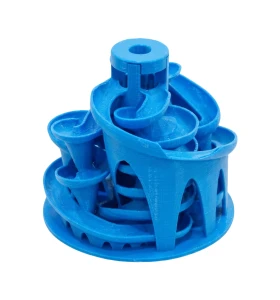
FDM 3D printer extruding white thermoplastic filament to build a detailed industrial part layer by layer

EPTAHUB FDM 3D Printing Materials

EPTAHUB offers a comprehensive range of FDM thermoplastic materials, each engineered to meet specific performance requirements — from general-purpose plastics for prototypes to high-performance polymers for harsh environments. Our material selection ensures you can find the perfect match for your

Material Name Key Properties Typical Applications
ABS (Acrylonitrile Butadiene Styrene)
Good impact resistance, rigidity, and machinability
Prototypes, enclosures, consumer goods parts, low-stress housings
ASA (Acrylonitrile Styrene Acrylate)
UV resistance, weatherability, and chemical resistance
Outdoor parts, automotive exterior components, garden equipment
PLA (Polylactic Acid)
Low cost, easy printing, and biodegradable
Concept models, non-functional prototypes, educational projects
High impact strength, transparency, and heat resistance (up to 130°C)
Transparent parts, electrical enclosures, medical device housings
PC-ABS (Polycarbonate-ABS Blend)
Balanced strength, impact resistance, and heat resistance
Automotive interior parts, electronic device casings, industrial components
Nylon (Polyamide)
High tensile strength, abrasion resistance, and flexibility
Gears, bearings, snap-fit components, structural parts
ULTEM 9085
Flame retardant (UL94 V-0), high heat resistance (up to 153°C), and low smoke emission
Aerospace parts, aircraft interior components, electrical insulation parts
ULTEM 1010
Ultra-high heat resistance (up to 180°C), chemical resistance, and biocompatibility​
Engine components, high-temperature fixtures, medical devices (USP Class VI compliant)
PPSF/PPSU (Polyphenylsulfone)​
Exceptional heat resistance (up to 207°C), chemical resistance, and hydrolytic stability
Semiconductor equipment parts, chemical processing components, sterilizable medical tools

EPTAHUB FDM 3D Printing Advantages

EPTAHUB’s FDM 3D printing service stands out for its unique combination of affordability, durability, and flexibility, making it a top choice for a wide range of industries.

Cost-Effective For Prototyping & Small-Batch Production

FDM requires no tooling or mold development, eliminating upfront costs associated with traditional manufacturing. This makes it ideal for prototyping (where design iterations are frequent) and small-batch production (10-500 parts), as you only pay for the parts you need - no minimum order quantities required.

Durable And Functional Parts

With access to engineering-grade and high-performance materials, EPTAHUB’s FDM parts are built to withstand real-world use. Unlike fragile prototypes from other 3D printing technologies, FDM parts offer the strength, impact resistance, and heat resistance needed for functional testing, production aids, and even end-use applications.

Large-Format Printing Capability

EPTAHUB’s industrial FDM printers can produce parts up to 24 inches × 36 inches × 36 inches, making it possible to print large components (such as full-scale tooling fixtures, machine housings, or architectural models) in a single piece - no assembly required. This reduces production time and eliminates weak points from bonding multiple smaller parts

Fast Turnaround

EPTAHUB prioritizes speed without sacrificing quality. Most FDM parts are ready for shipping in 1-3 business days, with 1-day expedited service available for urgent orders. This rapid turnaround helps accelerate your product development cycle, getting your designs from concept to testing faster.

Material Versatility

Whether you need a UV-resistant part for outdoor use, a flame-retardant component for aerospace, or a transparent housing for electronics, EPTAHUB’s wide range of FDM materials ensures you can select the perfect material for your application’s unique requirements.

Post-Processing Flexibility

FDM parts are easy to post-process, allowing you to refine their appearance and performance. EPTAHUB offers post-processing options including sanding (for smooth surfaces), painting (custom colors), drilling (for precise holes), tapping (for threads), and bonding (for assembling large parts) — ensuring your FDM parts meet your exact specifications.

FDM Applications

Close-up of multiple white plastic 3D printed prototypes demonstrating iterative design for concept models

Concept Models

The speed and versatility of plastic 3D printing enable product developers to create physical snapshots of their designs throughout the iterative process.
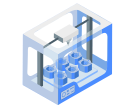
Solid 3D printed conceptual model used for design iteration and solid modeling

Rapid Prototyping

Plastic 3D printing can be used to create fully functional plastic prototypes—complete with moving parts—as well as all-in-one assemblies.

High-precision plastic 3D printed components arranged for large-scale direct digital manufacturing

Direct Digital Manufacturing

The high accuracy and consistency of plastic 3D printing make it an ideal approach for building large quantities of discrete or customized parts.
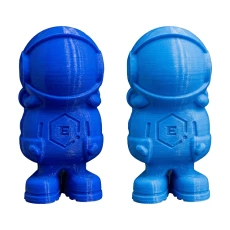
FDM 3D Printing Design Guidelines

Industrial plastic part showing layered texture from Fused Deposition Modeling FDM
Dimensional Tolerances
General Tolerance:
For parts under 100mm, the tolerance is ±0.1mm; for parts over 100mm, the tolerance is ±0.1% of the part size (e.g., a 200mm part has a tolerance of ±0.2mm).
Hole Tolerance:
For threaded holes, an additional 0.2-0.3mm should be added to the nominal diameter to ensure good thread fit after printing.
Clearance:
For moving parts (such as gears and hinges), a clearance of 0.15-0.25mm should be reserved between parts to prevent jamming.
Wall Thickness

Minimum Wall Thickness:
The minimum wall thickness is 0.8mm for general-purpose materials (ABS, PLA);
1.0mm for engineering-grade materials (PC, Nylon);
and 1.2mm for high-performance materials (ULTEM, PPSF).
Uniform Wall Thickness:
Avoid excessively thick walls (over 5mm) to prevent warping or internal voids.
Strength can be increased by adjusting the infill percentage (20%-80%) without thickening the wall.

Infill Percentage

Infill percentage is an internal structural parameter of FDM parts, which affects the strength and weight of the parts:
1. 20%-30%: Suitable for concept models and non-functional parts (lightweight, low cost).
2. 40%-60%: Suitable for functional prototypes and production aids (balanced strength and weight).
3. 70%-100%: Suitable for high-strength end-use parts (maximized durability, higher cost).

Support Structures
For overhanging structures (with an angle of more than 45° from the build platform), FDM requires adding support structures to prevent sagging.
Design Recommendations:
 1. Adjust the part orientation to reduce overhanging structures (e.g., place flat surfaces face down on the build platform).
 
 2. Use "tree supports" (if the equipment supports it) to reduce material usage and post-processing time.
 
 3. Avoid adding supports on critical surfaces (such as mating surfaces and appearance surfaces) to prevent damage when removing supports.
Part Orientation
Part orientation affects part strength, surface finish, and printing time:
1. For maximum strength: Align the load-bearing direction of the part with the layer lines (the bonding strength of printed layers is the highest in the vertical direction).
2. For optimal surface finish: Place the most visible surface of the part parallel to the build platform (to reduce layer line marks).
3. Large parts: (If necessary) The part can be split into multiple small sections, printed separately, and then bonded — positioning structures (such as locating pins and locating holes) need to be designed to ensure assembly accuracy.

FDM Quality & Certifications

At EPTAHUB, quality is the core of our FDM 3D printing service. We strictly adhere to various standards to ensure every part meets or even exceeds your expectations.

FDM Quality & Certifications

EPTAHUB holds the following certifications, demonstrating our commitment to quality and compliance:

  1. ISO 9001:2015: Quality Management System certification, ensuring the stability of processes and part quality.
  2. ISO 13485:2016: Medical Device Quality Management System certification, applicable to FDM parts used in the medical field.
  3. IATF 16949:2016: Automotive industry quality management system certification, meeting strict requirements for automotive manufacturing.
  4. AS9100D: Aerospace Quality Management System certification ensures that FDM parts meet the rigorous industrial application standards for requirements such as fire resistance and complete traceability.
  5. ITAR Registration: Qualified to handle controlled projects in regulated industries.

Quality Control Process

Every FDM part from EPTAHUB undergoes a multi-step quality control process:

  1. Material Inspection: Conduct consistency tests on incoming materials (such as filament diameter and tensile strength) to ensure they meet specification requirements.
  2. Printing Monitoring: Industrial printers are equipped with real-time monitoring systems to track temperature, layer adhesion, and nozzle performance - an alert is triggered immediately if parameters deviate from the set standards.
  3. Post-Print Inspection: Use calipers, micrometers, and 3D scanners to measure parts and verify dimensional accuracy; conduct visual inspections to check for part defects (such as warping and layer separation).
  4. Documentation: For certified applications, we provide traceability reports, including material batch numbers, printing parameters, and inspection results.

Material Traceability

EPTAHUB implements full-process traceability management for all FDM materials. Each batch of materials is assigned a unique batch number, and we record the following information:

  1. Material manufacturer and certification status (e.g., medical materials need to comply with USP Class VI standards, and flame-retardant materials need to comply with UL94 standards).
  2. Material receipt date and storage conditions (to ensure material integrity).
  3. Which parts each batch of materials is used to print (facilitating recall or compliance checks).

Real Time Quotation Demonstration

Learn how to use the EPTAHUB (instant Quoting Engine @) Quickly and easily obtain FDM 3D Printing quotes.
Why Choose EPTAHUB For FDM 3D Printing?

Diverse selection of 3D printing materials, surface treatments, and certifications

Endless Options

Select from millions of possible combinations of materials, finishes, tolerances, markings, and certifications for your order.

Logistics icon symbolizing direct doorstep delivery of managed 3D printing projects

Easy To Use

Have your parts delivered right to your door, without the hassle of sourcing, project management, logistics, or shipping.

ISO 9001 and IATF 16949 certification logos for 3D printing quality assurance

Certified Network

We hold ISO 9001:2015, ISO 13485, and AS9100D certifications.

Close-up of a high-quality FDM 3D printed prototype part ready for industrial application

Are You Ready To Start Your FDM 3D Printing Project?

Upload your CAD file now to get an instant quote, or contact our team to learn how EPTAHUB's FDM service can meet your needs.
×

EPTAHUB Professional & Intelligent Quoting

Our automated quoting system gives you instant pricing so you can quickly estimate your project costs.

For high-precision or complex parts, our senior account managers can provide more detailed quotes and help you find the best overall solution for your needs.

Get Instant Quote Get a Quote Instantly — ⭐⭐⭐
Request Expert Quote Precise Quotes — ⭐⭐⭐⭐⭐