Home / Selective Laser Sintering

Selective Laser Sintering (SLS) 3D Printing Service

High-precision production of durable plastic parts, suitable for complex structure requirements | prototype pricing includes tariffs

Instant 3D Printing Quotation (Icon 1) Instant 3D Printing Quotation (Icon 2) Instant 3D Printing Quotation (Icon 3)

Start A New SLS 3D Printing Quote

STEP丨STP丨SLDPRT丨STL丨IPT丨3MF丨3DXML丨PRT丨SAT

What Is Selective Laser Sintering (SLS) 3D Printing Technology?

Selective Laser Sintering (SLS) is a mature industrial-grade additive manufacturing technology that uses a high-power laser beam to selectively melt plastic powder and build 3D parts layer by layer. Compared with other 3D printing technologies, SLS does not require support structures — unmelted powder serves as natural support, which not only enables the integral forming of complex structures such as hollow, lattice, and inner cavity, but also avoids damage to parts during support removal.

EPTAHUB has introduced multiple high-precision SLS printers (such as EOS P 396, 3D Systems SPro 60), equipped with a CO₂ laser source with a wavelength of 10.6μm. The laser positioning accuracy can reach ±0.1mm, and the minimum layer thickness can be as low as 0.05mm, ensuring that parts have excellent dimensional accuracy and surface finish. Whether for small-batch prototype verification, medium-batch customized production, or rapid manufacturing of complex structural parts, EPTAHUB's SLS 3D printing service can provide stable and reliable solutions, widely applicable to industries such as automotive, aerospace, industrial equipment, and consumer goods.

Oversized industrial component produced using large format 3D printing technology

EPTAHUB SLS 3D Printing Materials

EPTAHUB carefully selects high-performance plastic powders suitable for SLS technology, covering general-purpose, reinforced, and special-function categories to meet the strict performance requirements of parts in different industries:

Material Name Key Properties Typical Applications
Nylon 12 (PA12)
Low shrinkage rate, excellent dimensional stability, impact resistance
General parts, snap-fit components, connectors, prototypes
Nylon 11 (PA11)
High toughness, fatigue resistance, biocompatibility
Flexible parts, sports equipment components, medical auxiliary devices
Nylon 6 (PA6)
High strength, wear resistance, cost-effectiveness
Structural parts, gears, bearings, industrial accessories
Nylon 12 + Glass Fiber (PA12+GF)
High rigidity, high modulus, excellent heat resistance
Automotive structural parts, mechanical brackets, industrial equipment enclosures
Nylon 12 + Carbon Fiber (PA12+CF)
High strength, lightweight, excellent electrical conductivity
Aerospace parts, UAV components, high-end equipment structural parts
Nylon 6 + Mineral Filled (PA6+Mineral)
Low warpage, high hardness, good surface finish
Appearance parts, electronic device housings, precision components
Flame-Retardant Nylon 12 (PA12 FR)
Flame-retardant grade UL94 V-0, low smoke emission
Electronic insulation parts, automotive interior parts, aerospace components
Medical-Grade Nylon 12 (PA12 Medical)
Compliant with USP Class VI standard, sterilizable
Medical implant accessories, diagnostic equipment parts, surgical instrument components
Weather-Resistant Nylon 12 (PA12 Weather Resistant)
UV resistance, resistance to high and low temperatures (-40℃ to 120℃)
Outdoor equipment parts, automotive exterior parts, marine engineering accessories

Applications SLS 3D Printing

White plastic 3D printed concept models showing iterative design snapshots for rapid product development

Concept Models

The speed and versatility of plastic 3D printing enable product developers to create physical snapshots of their designs throughout the iterative process.
Solid 3D printed conceptual model used for design iteration and solid modeling

Rapid Prototyping

Plastic 3D printing can be used to create fully functional plastic prototypes—complete with moving parts—as well as all-in-one assemblies.

High-precision plastic 3D printed components arranged for large-scale direct digital manufacturing

Direct Digital Manufacturing

The high accuracy and consistency of plastic 3D printing make it an ideal approach for building large quantities of discrete or customized parts.

EPTAHUB SLS 3D Printing Advantages

EPTAHUB’s SLS 3D printing service stands out for its unique combination of affordability, durability, and flexibility, making it a top choice for a wide range of industries.
High Design Freedom And Suitable For Complex Structures

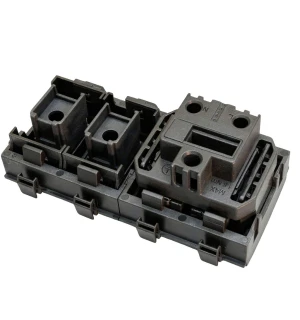
SLS technology does not require support structures and can easily realize complex structures that are difficult to achieve with traditional manufacturing - such as lattice structures with a hollow rate of more than 80%, multi-cavity nested parts, and complex inner cavity flow channels. For example, EPTAHUB printed an engine cooling component for an aerospace customer using SLS technology to achieve integral forming. Compared with the traditional splicing process, the part weight was reduced by 40% and the heat dissipation efficiency was increased by 25%.

Excellent Part Performance, High Durability

The density of SLS parts can reach more than 98%, and their mechanical properties are close to those of injection-molded parts — the tensile strength of Nylon 12 SLS parts can reach 50MPa, and the impact strength can reach 6kJ/m². They also have excellent chemical corrosion resistance and fatigue resistance, and can be directly used as end-use parts without secondary processing.

High Production Efficiency, Short Delivery Cycle

EPTAHUB's SLS printers have large-size build platforms (such as the EOS P 396 with a platform size of 340×340×600mm), which can print multiple parts simultaneously in a single batch (unrestricted by geometric shape). The production efficiency is 2-3 times that of traditional CNC machining. The delivery cycle for regular orders is 3-7 days, and urgent orders can be produced in as fast as 2 days, greatly shortening the product development and launch cycle.

High Material Utilization Rate, Controllable Cost

SLS technology supports the recycling and reuse of unmelted powder (with a reuse rate of up to 70%), reducing material waste compared with other 3D printing technologies; at the same time, there is no need to design support structures, which further reduces material consumption and post-processing costs. It is especially suitable for medium-batch production (100-10000 parts).

Full-Process Industrial Quality Control With Guaranteed Product Quality

EPTAHUB has established a full-process quality control system covering "material-production-inspection": each batch of raw materials undergoes particle size distribution and melt flow rate testing; key parameters such as laser power, scanning speed, and forming temperature are monitored in real time during production; finished products undergo dimensional accuracy testing via 3D scanning, and mechanical performance testing using a universal material testing machine, ensuring that each part meets industry standards and customer requirements.

SLS 3D Printing Design Guidelines

Technical SLS 3D printed part featuring complex geometries and lattice structures for design guideline reference
Dimensional Tolerances
1. Recommended minimum part size: Length/width not less than 2mm, height not less than 1mm;
2. Standard tolerance: ±0.1mm (for parts with size ≤100mm), ±0.1% (for parts with size >100mm);
3. Thread design: Coarse-thread threads (such as M3-M12) are preferred. The thread depth is recommended to be no less than 1.5 times the thread diameter. Fine-thread threads should be avoided (as powder adhesion may easily affect precision).
Wall Thickness And Structure
Minimum wall thickness: 0.8mm for general nylon materials, 0.6mm for reinforced materials;
Wall thickness uniformity: The wall thickness deviation is recommended to be no more than 0.3mm. Avoid local over-thickness (>8mm) to prevent internal stress or warping during printing;
Complex structure design: The hole diameter of hollow structures should be no less than 1mm, and the unit size of lattice structures should be no less than 1.5mm to ensure smooth cleaning of unmelted powder;
A powder cleaning hole of at least 1.5mm should be reserved for closed inner cavity structures.
Surface Treatment And Post-Processing
1. The default surface finish of SLS parts is Ra 8-12μm. For higher surface finish (such as Ra 4-6μm), you can choose the sandblasting, painting, chemical polishing or vacuum coating post-processing services provided by Eptahub;
2. For parts requiring high-precision fitting, it is recommended to reserve a machining allowance of 0.1-0.2mm, and then achieve higher precision through subsequent CNC finishing.
Mass Production Optimization
1. Multi-part nested placement: Utilize the large-size advantage of the SLS printing platform to nest and place multiple small parts (with a part spacing of no less than 2mm), improving the production efficiency of a single batch;
2. Part orientation optimization: Place the high-precision surface of the part downward (close to the printing platform) to reduce laser scanning errors and improve surface finish; it is recommended to place long parts at an inclination of 15°-30° to avoid warping during printing. 

SLS 3D Printing Quality & Certifications

EPTAHUB has always regarded quality as its core competitiveness. Through a number of industry certifications and strict quality control processes, it ensures the quality of SLS parts:

Industry Certifications

Real Time Quotation Demonstration

Learn how to use the EPTAHUB (instant Quoting Engine @) Quickly and easily obtain SLS 3D Printing quotes.
Why Choose EPTAHUB's SLS 3D Printing Service?

Diverse selection of 3D printing materials, surface treatments, and certifications

Endless Options

Select from millions of possible combinations of materials, finishes, tolerances, markings, and certifications for your order.

Logistics icon symbolizing direct doorstep delivery of managed 3D printing projects

Easy To Use

Have your parts delivered right to your door, without the hassle of sourcing, project management, logistics, or shipping.

ISO 9001 and IATF 16949 certification logos for 3D printing quality assurance

Vetted Network

We hold ISO 9001:2015, ISO 13485, and AS9100D certifications.
High-quality nylon SLS 3D printed industrial component ready for production on the EPTAHUB platform

Start Your SLS 3D Printing Project Now

Whether you need small-batch prototype verification, medium-batch customized production, or complex structural part manufacturing, EPTAHUB can provide you with an efficient and cost-effective SLS solution. Upload your CAD file now to get an instant quote, or contact EPTAHUB's technical consultants to learn more about SLS technical details and industry application cases!

×

EPTAHUB Professional & Intelligent Quoting

Our automated quoting system gives you instant pricing so you can quickly estimate your project costs.

For high-precision or complex parts, our senior account managers can provide more detailed quotes and help you find the best overall solution for your needs.

Get Instant Quote Get a Quote Instantly — ⭐⭐⭐
Request Expert Quote Precise Quotes — ⭐⭐⭐⭐⭐