Home / Custom Plastic Injection Molding Service

Custom Plastic Injection Molding Service

Provide Automatic Quotation Estimation For Custom Plastic Molding Prototypes And Mass Production | Offer Nearly Unlimited Material And Surface Treatment Options | Include Professional Engineering Review And Project Management Services For Each Order

Interface for uploading 3D CAD files to receive a precision injection molding manufacturing quote.

Upload 3d Cad Files For Injection Molding Quotation

STEP丨STP丨SLDPRT丨STL丨IPT丨3MF丨3DXML丨PRT丨SAT

Overview Of EPTAHUB Injection Molding Service

Injection molding is the most cost-effective method for mass-producing plastic parts with high consistency and quality. Compared with other manufacturing methods, it offers the most abundant choices in terms of materials, colors and surface treatments.

EPTAHUB's custom plastic injection molding service provides on-demand prototyping and mass production solutions. Through our extensive supplier network, we can find suitable partners to process your parts without compromising on design while ensuring reasonable prices. Our team has rich experience in various industries and can provide professional consulting and project management services, covering medical injection molding, liquid silicone rubber molding, domestic and international injection molding, and ITAR injection molding for sensitive projects.

EPTAHUB simplifies the complex injection molding process into simple operation steps. You only need to upload your 3D CAD file to the EPTAHUB instant quotation engine to start the service. Most projects can obtain automatic quotation estimates, allowing you to make project budget and planning without waiting for a reply. When you are ready, submit your requirements for review, and our team will work closely with you at every step!

Injection Molding Service Capabilities

Capabilities Details
Lead Time Fastest 5 working days; most projects usually take 3 weeks
Production Options International production
Materials Most plastics, including custom procurement and material matching; see the material list below for details
Equipment & Molds Single-cavity, multi-cavity and family molds; 50 to over 3700 tons of presses; automatic side core pulling or manual core loading
Testing & Certification Options ISO 9001, AS9100, ISO 13485, IATF 16949, UL, ITAR certifications, and ISO Class 7 and 8 medical cleanrooms; First Article Inspection (FAI) and Part Approval Process Plan (PAPP) available
Mold Ownership Customers own the mold, and mold maintenance services are also provided
Mold Cavity Tolerance The tolerance during mold processing is ±0.005 inches, and an additional ±0.002 inches per inch is added when calculating the shrinkage rate
Inter-part Repeatability ±0.004 inches or less
Critical Feature Tolerance Tighter tolerances can be required, but this may increase mold costs due to additional sampling and trimming work. EPTAHUB will adopt a steel safe machining state for critical features
Mold Grades Steel and aluminum molds, with production grades ranging from Grade 105 (prototype molds) to Grade 101 (ultra-high-volume production molds)

This table shows the general tolerances of EPTAHUB's plastic injection molding service, taking into account sufficient draft angles, fillets and core designs to ensure manufacturability. Learn more about our injection molding manufacturing standards.

Custom Plastic Injection Molding Workflow

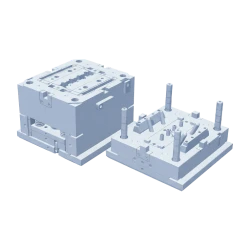
The plastic injection molding process requires an injection molding machine, plastic raw materials and processed molds. First, the plastic raw materials are melted in the injection unit, then injected into a mold usually made of steel or aluminum, and the plastic cools and solidifies in the mold to form the final plastic part.

At EPTAHUB, we first review your plastic injection molding online quotation and the manufacturability of the parts, then communicate with you to ensure that your specifications, lead time and price meet the project requirements. We use your 3D CAD files to produce high-quality injection molds through CNC machining. After the mold parts are manufactured, EPTAHUB will send samples (T1 stage) for your review and confirmation. After the mold is optimized and approved by you, EPTAHUB will start mass production. With this process, we can process various products ranging from the smallest medical inserts to large automotive, aerospace and defense parts.
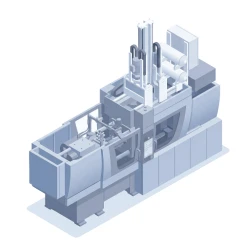
Schematic of the injection molding process including material melting, mold injection, and cooling stages.

Injection Molding Materials

Rigid Plastic Materials

EPTAHUB provides a variety of rigid plastic materials, including:

PS (Polystyrene):
A transparent, hard and brittle material, widely used in food packaging, clamshell containers and even disposable tableware.

ABS (Acrylonitrile-Butadiene-Styrene Copolymer):
A high-strength general-purpose engineering plastic used in various commercial products.

ASA (Acrylonitrile-Styrene-Acrylate Copolymer):
Very similar to ABS, with stronger fading resistance, more suitable for outdoor use.

CA (Cellulose Acetate):
Usually used in glasses and films, it is a flexible and transparent material that can be used in contact with food.

HDPE (High-Density Polyethylene):
Has excellent strength-to-weight ratio and chemical resistance, often used in fuel tanks, connector insulators, food containers, and also in outdoor equipment such as playgrounds.

LCP (Liquid Crystal Polymer):
Maintains good mechanical properties at high temperatures and has a low dielectric constant, very suitable for micro-molding and thin-walled components, widely used in electrical connectors, interconnects and medical equipment.

LDPE (Low-Density Polyethylene):
Good flexibility and toughness, lower density than HDPE, does not react with acids, alkalis or alcohols, suitable for pallets, lids and general containers.

PA 6 (Polyamide 6, Nylon 6):
Has higher mechanical strength, rigidity, good heat resistance and/or chemical resistance.

PA 6/6 (Polyamide 6/6, Nylon 6/6):
Has higher mechanical strength, rigidity, good heat resistance and/or chemical resistance.

PARA (Polyarylamide):
Usually mixed with fillers such as glass fiber or mineral fiber to make rigid parts, with low creep rate and lower water absorption than nylon (PA), very suitable for structural components in handheld electronic devices and medical electronic devices.

PBT (Polybutylene Terephthalate, Valox):
A common polyester-based electrical insulator, often used as a long-term alternative to nylon in the automotive industry.

PBT-PET (Polybutylene Terephthalate-Polyethylene Terephthalate Blend):
A composite blend of PBT and PET.

PC (Polycarbonate):
A transparent or colored lightweight glass-like plastic, widely used in multiple industries, with strong impact resistance and good presentation of part details, can be used in safety equipment, lenses, electronic devices and other products.

PC-ABS (Polycarbonate-Acrylonitrile-Butadiene-Styrene Copolymer):
Combines the advantages of PC and ABS, is a high-strength engineering thermoplastic with slightly higher flexibility than standard polycarbonate.

PC-PBT (Polycarbonate-Polybutylene Terephthalate, Xenoy):
A tough and rigid material, resistant to lubricants, solvents and cleaning agents, often used in electronic enclosures.

PC-PET (Polycarbonate-Polyethylene Terephthalate Blend):
A blend of PC and PET, with tough and chemical-resistant properties, can be used as an alternative to PC-ABS, can withstand corrosive solvents and cleaning agents, very suitable for sports equipment and healthcare applications.

PCT (Polycyclohexylenedimethylene Terephthalate):
A thermoplastic polyester that usually outperforms PET due to lower hygroscopicity and better environmental stability, often used in connectors and switches.

PE (Polyethylene):
One of the most commonly used plastics in the world, with high ductility, wear resistance and chemical resistance, usually classified by molecular weight, such as ultra-high molecular weight polyethylene (UHMW PE), low-density polyethylene (LDPE) or high-density polyethylene (HDPE), used in various products such as packaging, pipes, films and bottles.

PEEK (Polyether Ether Ketone):
Has tensile strength exceeding most plastics, often used as a lightweight alternative to metal parts in high-temperature and high-stress applications, chemical resistant, wear resistant and moisture proof.

PEI (Polyetherimide, Ultem):
Its most prominent features are extremely high heat resistance and flame retardancy, used in various medical applications, and more affordable than PEEK.

E-PP (Polyethylene-Polypropylene Blend):
A resin blend of polyolefin polypropylene and polyethylene.

PES (Polyethersulfone):
A rigid transparent plastic with strong chemical inertness, good biocompatibility and sterilizability, suitable for food-contact equipment such as coffee machine parts, as well as aerospace and automotive fields with high chemical exposure.

PE-PS (Polyethylene-Polystyrene Blend):
A resin blend of polyethylene and polystyrene.

PET (Polyethylene Terephthalate, Rynite):
Also abbreviated as PETE, it is a transparent, strong and lightweight PE resin, widely used in food packaging, soda bottles, cans, etc., meets food safety standards, recyclable, and has a resin code of 1.

PLA (Polylactic Acid):
A biodegradable and renewable plastic with a relatively low glass transition temperature, often used in short-term products.

PMMA (Polymethyl Methacrylate, Acrylic):
A transparent glass-like plastic with good wear resistance, suitable for outdoor use.

POM (Polyoxymethylene, Acetal, Delrin):
Good moisture resistance, high wear resistance and low friction coefficient.

PP (Polypropylene):
Excellent electrical properties, extremely low hygroscopicity, can withstand light loads for a long time at different temperatures, and can be molded into parts requiring chemical resistance.

PPA (Polyphthalamide):
A subclass of nylon (polyamide), usually with higher melting point and lower hygroscopicity, often used in automotive and industrial applications due to its ability to withstand corrosive chemicals, suitable for fuel and fluid manifolds and headlight housings.

PPS (Polyphenylene Sulfide, Ryton):
A high-performance thermoplastic with strong solvent resistance.

PS-PPE (Polystyrene-Polyphenylene Ether Blend, Noryl):
Has high heat resistance and flame retardancy, and high rigidity and tensile strength even at high temperatures.

PSU (Polysulfone, Udel):
A rigid and hard transparent plastic, a high-end alternative with better performance than polycarbonate.

PVC (Polyvinyl Chloride, Shore D Hardness):
A rigid general-purpose plastic, often used in pipes, non-food packaging and decorative strips.

PVDF (Polyvinylidene Fluoride, Kynar):
A high-temperature material with strong chemical inertness and low friction coefficient, used in pipe parts, bearings, chemical processing equipment, wire insulation and pipes.

TPO (Thermoplastic Olefin):
A flexible plastic with good chemical resistance but lower heat resistance than PP.

TPU (Thermoplastic Polyurethane, Shore D Hardness):
A tough resin with extremely high wear resistance, between rubber and plastic, can be made rigid or elastic through formula design, with high flexibility before breaking, very suitable for wheels and door panels.

If you cannot find the required stock material in the material list, please select "Others" in the material drop-down menu on the quotation page, and submit an application for professional engineering review after clearly stating the part characteristics, tolerances, testing requirements and required quantity.

Elastomer and Rubber Molding Materials

Elastomer parts can be manufactured through injection molding, transfer molding or compression molding. When obtaining a quotation from EPTAHUB, our team will help you determine the best manufacturing method based on part geometry, expected annual output and required material type.

EPDM (Ethylene Propylene Diene Monomer, Viton):

One of the highest-performance rubber elastomers, with high heat resistance, chemical resistance and moisture-proof sealing performance, often used in automotive seals, gaskets, O-rings and electrical insulators.

PEBA (Polyether Block Amide):

A soft and flexible plastic or elastomer, used in medical devices such as catheters. PEBA foam is used in cushions, insoles and sports equipment, and is resistant to moisture and UV radiation.

PVC (Polyvinyl Chloride, Shore A Hardness):

A soft rubber-like general-purpose elastomer, often used in outdoor products, protective films and floor mats. Rubber-like PVC with Shore A hardness requires plasticizers to convert it from its usual rigid state to a flexible state. PVC is flame-retardant due to its self-extinguishing property.

TPE (Thermoplastic Elastomer):

A large category of elastomers with properties similar to thermosetting materials, featuring high flexibility and elasticity, but processed in the same way as thermoplastics and can be processed through molding processes. It is a general term covering multiple unique elastomer categories.

TPU (Thermoplastic Polyurethane, Shore A Hardness):

A tough elastomer with extremely high wear resistance, between rubber and plastic. It can be made rigid or elastic through formula design, with high flexibility before breaking, very suitable for flexible tires, skateboard wheels and waterproof gaskets.

TPV (Thermoplastic Vulcanizate, Santoprene):

A high-performance elastomer with high heat resistance, compression resistance and elasticity, and a wide range of applications.

LSR (Liquid Silicone Rubber):

Silicone rubber is a versatile rubber material with food compatibility, biocompatibility, extremely high heat resistance and excellent flexibility, often used in medical devices, automobiles, aerospace and consumer goods. Liquid silicone rubber molding is a professional process different from traditional injection molding.
Multiple options for plastic injection molding, liquid silicone rubber molding and compression molding are available through online quotation. If you cannot find the required stock material in the material list, please select "Others" in the material drop-down menu on the quotation page, and submit an application for professional engineering review after clearly stating the part characteristics, tolerances, testing requirements and required quantity.

Injection Mold Surface Treatment & Post-Processing Options

Standard Surface Treatment

The surface treatment method is selected by the mold manufacturer, usually SPI B-2 grade, depending on the geometry and draft angle. Internal non-appearance surfaces are usually in the as-machined state.

SPI Surface Treatment

The Surface Treatment grades of the Society of the Plastics Industry (SPI) range from Grade 3 diamond polishing/high polishing to 320-grit low polishing, including SPI A-1, SPI A-2, SPI A-3, SPI B-1, SPI B-2, SPI B-3, SPI C-1, SPI C-2, SPI C-3, SPI D-1, SPI D-2 and SPI D-3.

MoldTech Surface Treatment (Mold Texture)

Multiple surface treatment types, including matte, swirl, lines and patterns. The most common texture treatments include MoldTech MT11010, MoldTech MT11020 and MoldTech MT11030. Other texture treatments can be added upon request.

Other Textures - VDI

VDI 3400 surface treatment (usually called VDI surface treatment) is a mold texture standard developed by the Association of German Engineers (VDI), mainly achieved through Electrical Discharge Machining (EDM), which can form matte surfaces from fine to rough.

As-Molded State

No secondary polishing or grinding is performed, and the part will retain the mold machining marks.

Threaded Inserts

We can install most commonly used UNF standard and metric standard inserts.

Pad Printing

Transfer two-dimensional images to three-dimensional parts, and all images need to be reviewed.

Laser Engraving

Engrave part numbers, logos, etc. on parts.

Assembly

Eptahub can assemble and label injection molded parts. Please discuss your specific needs with your Eptahub representative.

Overview Of Injection Molding Surface Treatment

EPTAHUB offers SPI injection molding surface treatment as well as MoldTech and VDI injection molding surface treatment options, which can achieve polished, matte to textured surface effects of molded parts.

Comparison of SPI, VDI, and MoldTech surface finishes on injection molded plastic plaques.

Application Scenarios & Advantages Of Plastic Injection Molding Service

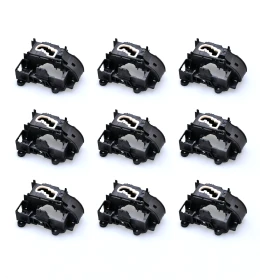
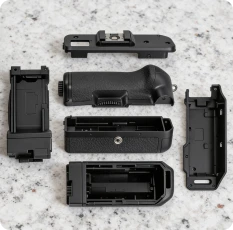
Group of high-volume plastic injection molded parts used in consumer electronics and industrial equipment.
Rapid Prototyping

Low-cost mold options enable rapid injection molding, allowing us to produce parts at an affordable price in as fast as 5 working days.

Mass Production Of Parts

Injection molding is an ideal solution for producing end-use parts. Compared with CNC machined or 3D printed parts, it has superior performance. The rich resin options allow parts to be customized according to specific performance and solvent compatibility requirements. This process uses high-precision molds to produce identical parts with tight tolerances and complex details, and the production scale can range from small batches to large-scale production of more than 1 million pieces.

Applicable Industries & Certifications

Our molding services can meet your qualification and quality requirements, providing ISO 9001, AS9100, ISO 13485, IATF 16949, UL, ITAR certifications, as well as ISO Class 7 and 8 medical cleanroom molding services.

Why Choose EPTAHUB For Injection Molding Service?

Diverse collection of molded components showcasing various plastic materials, colors, and textures.

Endless Options

We can provide millions of combinations of materials, surface treatments, tolerances, markings and certifications for your order.

Logistics icon symbolizing direct doorstep delivery of managed 3D printing projects

Easy To Use

Parts are directly delivered to your door, eliminating the need for you to find suppliers, manage projects, handle logistics or arrange transportation.

ISO 9001 and IATF 16949 certification logos for 3D printing quality assurance

Quality Assurance

We hold ISO 9001:2015, ISO 13485, AS9100D and IATF 16949 certifications.

Instant Quote Demo

Learn how to easily obtain an instant quote for Injection Molding services through the EPTAHUB Instant Quoting Engine®.

Feature! Instant Price & Lead Time Estimation

Simplify your budgeting and procurement process with the EPTAHUB Instant Quotation Engine. Upload your 3D CAD file to get an automatic price and lead time estimate, allowing you to plan your project quickly without waiting for a manual quotation as usual. This powerful tool provides you with the necessary information in advance, saving valuable time. When you are ready to move forward with the project, our expert team will conduct a comprehensive review of your project, confirm and finalize the quotation, and provide professional consultation to ensure the smooth progress of your project.

EPTAHUB Instant Quotation Engine interface showing automated lead time and pricing for a 3D model.

Built-in Mold Management

The EPTAHUB platform has built-in functions to easily manage mold projects, allowing customers to have a clearer understanding of the production status. In your mold library, you can find all mold quotations and orders. From the mold library, you can view the mold details page to learn about the current status, key milestones, specific information and related activities of the mold. No matter which stage the project is in, you can easily find and contact the EPTAHUB team member responsible for your project. Our mold library and mold details page have multiple advantages, such as:
EPTAHUB Tool Library dashboard showing project milestones and tool management status.

EPTAHUB Custom Injection Molding Design Guidelines

Features Recommendations
Undercuts Reduce undercut structures by adding through cores, as undercuts increase the complexity and cost of the mold ejection mechanism
Wall Thickness Maintain uniform wall thickness to prevent wall sinking and voids. Thinner wall thickness can shorten the production cycle and reduce costs
Draft Angle Ensure the part design has a minimum draft angle of 0.5°. For medium-textured surfaces, the draft angle can be as high as 5°
Reinforcing Ribs/Gussets The thickness of the reinforcing ribs should be 40%-60% of the outer wall thickness, and the draft angle still needs to be maintained
Bosses The depth of the boss should be designed to be 30% of the wall thickness, with an edge groove of 30% wall thickness. Connect the boss to the side wall or reinforcing rib to improve structural stability
Close-up of a high-precision steel injection mold cavity for complex plastic part production.

Ready To Manufacture Injection Molding Design?

Frequently Asked Questions (FAQs) About Injection Molding

Which Industries Use Injection Molding Technology?

Injection molding technology is widely used in various industries, including aerospace, medical equipment, consumer goods, energy, electronics, automotive, robotics, toys and other fields.

What Is The Difference Between Molding and 3D Printing?

In the molding process, plastic or metal parts are formed inside the mold, and the parts are complete once removed from the mold. 3D printing, on the other hand, is an additive manufacturing process where parts are built layer by layer through deposition or sintering.

What Is The Process After Placing An Order?

After receiving the order, our manufacturing engineers will review the statement of work, assign a project manager to you, and identify a suitable manufacturing supplier. A complete Design for Manufacturability (DFM)/Part Engineering Review (PEG) report will then be generated for your approval. After approval, mold manufacturing will begin. T1 stage samples will be produced and sent to you for review and confirmation. After you approve the optimized mold, Eptahub will start mass production.

Who Owns The Mold?

At EPTAHUB, customers own the injection molds! After production is completed, the molds will be stored in our factory. If needed, we can ship the molds to you, but you will be responsible for the relevant transportation and packaging costs. If you are unsure whether the mold is compatible with your equipment, our engineers will collaborate with you to confirm.

Can The Same Material Be Processed In Different Colors?

Yes! Even for the same order, multiple colors can be processed. When multiple colors are required for the same order, an additional cleaning fee will be charged.

Additional EPTAHUB Molding Services

Plastic part with integrated metal threaded inserts produced via high-strength insert molding.

Insert Molding Service

Produce strong and practical prototypes and mass-produced parts through insert molding
Multi-material part featuring a soft-touch rubber overmold on a rigid plastic substrate.

Overmolding Service

Obtain high-quality custom overmolded products | Multiple materials and surface treatments available | Project management and professional support services included with each order
Overmolding Service

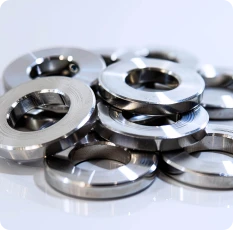
Small, complex metal components manufactured via high-precision Metal Injection Molding (MIM).

Metal Injection Molding Service

With EPTAHUB, mass-produce complex small metal parts. Specific services are subject to availability, and EPTAHUB does not guarantee that this service will be available at all times.

Metal Injection Molding Service
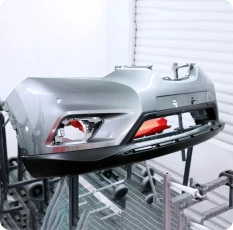
Large-scale custom plastic housing produced using heavy-duty injection molding machinery.

Large Part Injection Molding Service

Obtain custom plastic molding prototypes and mass-produced parts in as fast as 10 working days. We provide professional engineering review services, get 10% off your first mold tooling order, and multiple materials and surface treatments available.

Large Part Injection Molding Service

ISO 13485-certified medical device components manufactured in a cleanroom injection molding environment.

Medical Injection Molding Service

Provide high-quality injection molded parts, including ISO 13485-certified medical device manufacturing | Get 10% off your first mold tooling order.

Medical Injection Molding Service
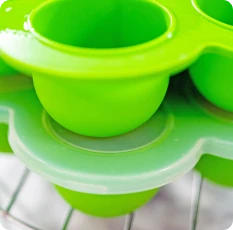
Flexible liquid silicone rubber (LSR) components available in multiple hardness grades and colors.

Liquid Silicone Rubber (LSR) Molding Service

Produce custom silicone rubber prototypes and end-use mass-produced parts in 15 days or less, with multiple hardnesses and grades of liquid silicone rubber materials available. Specific services are subject to availability, and EPTAHUB does not guarantee that this service will be available at all times.

Liquid Silicone Rubber (LSR) Molding Service

Lightweight hollow plastic part produced via gas-assisted injection molding for structural integrity.

Gas-Assisted Injection Molding Service

Obtain custom gas-assisted plastic molding prototypes and mass-produced parts in as fast as 10 working days. We provide professional engineering review services, get 10% off your first mold tooling order, and multiple materials and surface treatments available. Specific services are subject to availability, and EPTAHUB does not guarantee that this service will be available at all times.

Gas-Assisted Injection Molding Service

Eptahub Plastic Injection Molding Case Studies

Case Study: Thermaco Expands Global Product Line with Eptahub Injection Molding Service

Case Study: An Archery Enthusiast Achieves Goals with Eptahub Injection Molding Service

Case Study: Combating COVID-19 with Non-Contact AI Thermal Imaging Equipment

×

EPTAHUB Professional & Intelligent Quoting

Our automated quoting system gives you instant pricing so you can quickly estimate your project costs.

For high-precision or complex parts, our senior account managers can provide more detailed quotes and help you find the best overall solution for your needs.

Get Instant Quote Get a Quote Instantly — ⭐⭐⭐
Request Expert Quote Precise Quotes — ⭐⭐⭐⭐⭐