Top-Tier, Cost-Effective Metal Extrusions By EPTAHUB
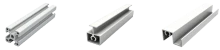
STEP丨STP丨SLDPRT丨STL丨IPT丨3MF丨3DXML丨PRT丨SAT
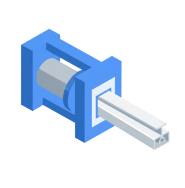
Metal extrusion stands as the preferred manufacturing technique for mass-producing components with a uniform cross-sectional shape. In this process, metallic materials are pressed through a custom-shaped die opening under high pressure to form the desired extruded profile. These profiles range from basic configurations like circular or square tubes, U-shaped or H-shaped channels, to intricate designs featuring multiple internal cavities and external structures—such as 80/20 framing and T-slot bars. Extrusion is also widely used for manufacturing wall and window trims, which serve both decorative and structural framing purposes.
Raw materials typically come in billet form. These billets are heated and placed into a component of the extrusion press known as the container. On the opposite end of the container lies a die stack, which creates the opening that shapes the material into the required form via either direct or indirect extrusion techniques. After extrusion, the product undergoes quenching, straightening, cutting to the specified length, and inspection to ensure dimensional precision and consistency. Extruded products can also be easily post-processed to add features beyond the basic profiled shape.Extrusion profiles can take on nearly any shape, whether solid or hollow with one or more hollow sections. Hollow profiles require a multi-component die: the material is forced around piercing mandrels supported in the first die to form the inner structure, then separated and "welded" back together by the second die to create the outer profile.
The size of the extrusion press needed is determined by the smallest circle that can enclose the entire profile—larger circumscribed circles call for bigger presses. EPTAHUB specializes in aluminum extrusion, which accounts for approximately 80% of all extruded metal components. Aluminum extrusions are ubiquitous, found in everything from window frames and handrails to electrical enclosures. Our project managers and technical experts personally evaluate and manually quote every metal extrusion project. This ensures we meet your unique requirements while delivering a streamlined, hassle-free manufacturing experience. Explore the sections below to learn more about the process and our capabilities. Aluminum Extrusion Offerings
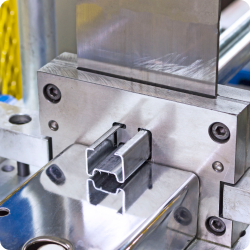

Upload your design files to the EPTAHUB Quoting System and customize your project parameters. Our team will consult with you to confirm that your specifications, delivery timeline, and pricing align with your project requirements. Before commencing tooling production, we will provide a Design for Manufacturability (DFM) report for your approval.

Once your project is officially launched, we will fabricate a high-quality metal extrusion die. After the tooling is completed, we will produce initial samples and send them to you for inspection and approval.

Once you approve the samples, we will proceed with full-scale production and deliver the finished components. You can rest assured that EPTAHUB manages all supplier coordination and logistics throughout the entire process. You retain full ownership of the tooling and can easily place reorders to meet fluctuating demand. New Feature!
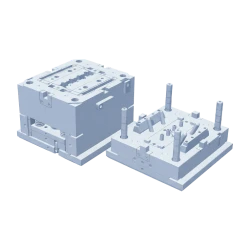
EPTAHUB partners with the leading extrusion suppliers who utilize the most sophisticated technology to deliver high-quality extrusions. Thanks to our manufacturing network, we can support multiple types of metal extrusion and an endless array of extrusion profiles. The sections below dive deeper into the different extrusion methods and provide examples of standard extrusion profiles.
Direct extrusion, also referred to as forward extrusion, is the most common metal extrusion method. With this type of extrusion, a billet of material is pushed through a container by a high-pressure ram. The material flows in the direction of the ram motion and exits through the opening of the stationary die. Direct extrusion allows for larger profile designs and a higher quality surface finish than the indirect extrusion method. There are some disadvantages to consider with this method. A large amount of friction generates between the material and the walls of the container, which results in decreased die face pressure and temperature variances. These factors make it more challenging to control dimensional consistency and the material’s properties.
With indirect extrusion, the material is placed into a container and secured. The extrusion die moves with a hollow ram over the material, forcing it through the die opening. Indirect extrusion is also sometimes referred to as backward extrusion because the material flows in the opposite direction of the ram motion. Since there is no relative movement between the material and container, there is much less friction with this method, resulting in lower energy use and less heat generation. With less heat, indirect extrusion generally has greater control over dimensional consistency, material properties, and grain size when compared with direct extrusion. However, the drawback to this type of extrusion is a more significant limitation on overall die profile size, as it must fit inside the hollow ram. The billet’s surface impurities can find their way into the extruded product reducing the overall surface finish and aesthetics.
These are sub-categories of extrusion integrated into the primary methods discussed above. The temperature of the billet relative to the room and material recrystallization temperature defines hot, warm, or cold extrusion. Hot extrusion is when the billet is heated well above the material’s recrystallization temperature, often associated with the direct extrusion method. The heating of the material softens it and prevents work hardening, so it more easily flows through the die, reducing wear on the tooling. Warm extrusion is when the material is heated above room temperature but remains well below the recrystallization point. The material is not heated in cold extrusion and remains at room temperature.
Warm and cold extrusion can increase the hardness and strength of the extruded product due to no excessive raw material heating. These processes work best with high ductility materials, such as aluminum. The warm and cold processes are typical of the indirect metal extrusion method. While not drastically heating the material can provide benefits, it can be harder on the tooling and reduce the lifetime of the die. With this in mind, most manufacturers opt for hot extrusion methods.
Extrusion profiles represent the cross-sectional shape that forms the extruded product. EPTAHUB's custom manufacturing services enable you to get extruded parts made with custom extrusion profiles. If you are looking to save cost and time by post-machining an existing aluminum extrusion profile, we can do that too! Below is a list of some off-the-shelf aluminum extrusion profiles we can modify via another manufacturing process, such as our CNC machining service.
Extruded aluminum makes up roughly 80% of all extruded metal products due to its versatility across industries, mechanical properties, diverse finishing options, and high ductility, making it ideal for extrusion processes. Most extruded aluminum alloys are lightweight, resistant to corrosion, and have high thermal and electrical conductivity. Some aspects of each alloy set it apart from the others. To help you choose the right one for your project, we have compiled a table below of the most commonly used alloys we offer and their unique characteristics.
If your project requires stainless steel or other metal extrusions, we have a “custom material” option within our quoting interface. This option enables you to submit custom requests which we will be happy to review and explore further with you.
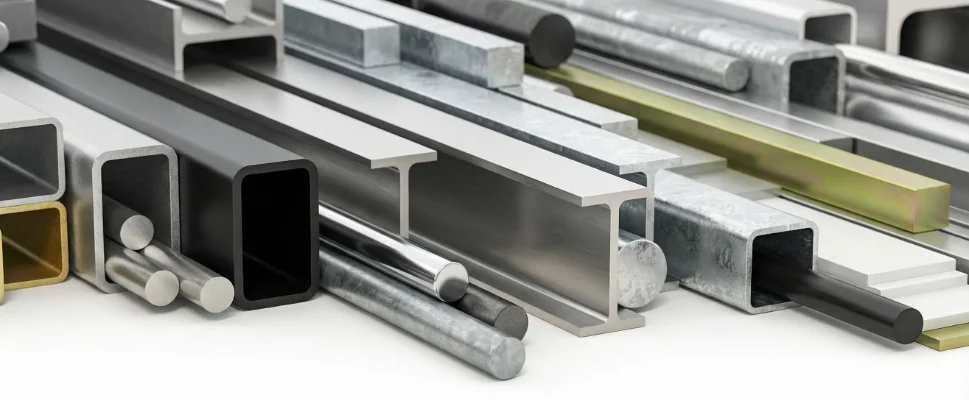
EPTAHUB makes adding additional finishing steps to your metal extrusion project easy. Our vast network of finishing suppliers allows us to apply a variety of finishes to your parts. We have what you need, whether it’s functional or cosmetic finishes. The finishes we offer for our metal extrusion process are detailed below.
The finish will be left unprocessed and remain as-extruded. Surface roughness can vary between alloys due to differences in grain structure but typically will fall between 64µin - 125µin Ra. Noticeable grain lines or discolored streaks may be present.
Type II anodizing creates a corrosion-resistant oxide finish. Parts can be anodized in different colors—clear, black, red, and gold are the most common. Type III is a thicker finish and creates a wear-resistant layer in addition to the corrosion resistance seen with Type II. Anodized coatings are not electrically conductive.
This is a process where powdered paint is electrostatically sprayed onto a part, then baked in an oven. This creates a strong, wear- and corrosion-resistant layer that is more durable than standard wet painting methods. Various colors and textures are available to create the desired aesthetic.
All extruded metal parts can be wet painted in various paint formulations and colors. For color matching, paint brand and number should be specified on your included drawings or notes.
Extruded parts can be plated with electroless nickel, nickel, brass, tin, chrome, chromate, Teflon, silver, and gold.
A chromate conversion coat can be applied to protect aluminum from corrosion and improve the adhesion of paints and primers. Chemical film conversion coatings also allow the metal to retain its electrical conductivity while providing corrosion protection to the surface.
Parts are subjected to vibratory media tumbling to remove sharp edges and smooth surfaces. Suitable for smaller pieces that can fit within the bowl or barrel of the tumbler.
Don’t see the finish you need? Select “custom” in our quoting interface and let us know what you are looking for, and we will be happy to explore additional options for you!
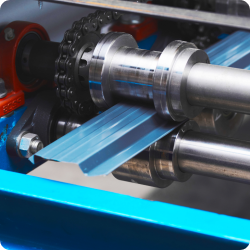
Choose from millions of possible combinations of materials, finishes, tolerances, markings, and certifications for your order.

Quickly get instant quotes for metal extrusion services with our user-friendly quoting system.

We hold ISO 9001:2015, ISO 13485, and AS9100D certifications.
Learn how to easily obtain an instant quote for Extrusion services through the EPTAHUB Instant Quoting Engine®.
 English English
  German
 Spanish
 French
 Japanese
 Korean
 Malay
Malay
 Portuguese
 Russian
 Thai
Thai
Our automated quoting system gives you instant pricing so you can quickly estimate your project costs.
For high-precision or complex parts, our senior account managers can provide more detailed quotes and help you find the best overall solution for your needs.