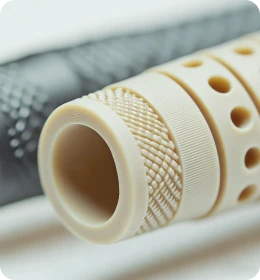
EPTAHUB delivers a broad spectrum of finishing alternatives paired with real-time online quoting functionality. We cater to finishing needs across most manufacturing processes, from CNC machining and sheet metal fabrication to 3D printing, injection molding, urethane casting, and beyond!
Metal Finishes Showcase
3D Printing Finish Gallery
Plastic Injection Molding Surface Finishes
Powder Coating Finish Portfolio
EPTAHUB’s instant quoting system lets users tailor materials, features, finishes, and add custom notes for their unique manufacturing projects. With numerous standard finishing options available at instant online prices, we stand as your one-stop service provider. For more personalized requirements, you can specify multiple finishes per component. Dive into the details of each finish and explore practical examples in the sections below.
If you’re seeking a specific finishing or post-processing method not listed here, don’t hesitate to reach out to us. Alternatively, select the “Other” finish option during quoting to outline your needs and request a manual assessment.
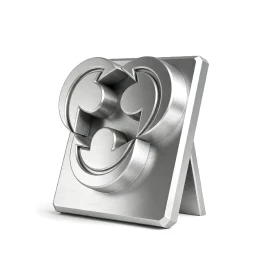
Each part undergoes thorough cleaning and deburring, with no additional surface treatments applied.
Type II anodization offers upgraded protection against corrosion and acts as a perfect foundation for painting and other subsequent finishing steps. Its thickness spans from .0002” to .0012” and meets the requirements of MIL-A-8625/MIL-PRF-8625 Type II, Class 2 specifications.
Type III hardcoat anodization creates a thicker layer than standard anodization, resulting in enhanced durability and wear resistance. It also works well as a base for paint and other finishes. Due to its increased thickness, the resulting colors tend to be slightly darker, and like Type II, these anodized shades can’t be matched to specific Pantone or RAL colors. Typically, the thickness measures 0.002” and adheres to MIL-A-8625/MIL-PRF-8625, Type III, Class 1/2 standards.
Even without pigment, a clear hardcoat anodized finish will darken the part’s surface - this is due to the coating’s greater thickness compared to standard anodization. Depending on various factors like material composition and processing conditions, the natural color can range from light gray to deep gray or brown.
Chromate conversion coatings—commonly known as chem-film—boost corrosion resistance and electrical conductivity, while also serving as an effective base for paint. These coatings add minimal thickness, approximately 0.00001” to 0.00004” . They comply with MIL-DTL-5541, TYPE I/II CLASS 1A or CLASS 3 as specified. If alternative standards (such as MIL-DTL-81706) are required, they must be clearly outlined in a provided technical drawing.
Type I chromate conversion coatings contain hexavalent chromium, which typically gives the coating a gold or brown tint. Type II, by contrast, is free of hexavalent chromium, resulting in a clear finish that doesn’t alter the part’s original surface color.
This process applies a continuous, protective colored finish to parts using evenly distributed, heat-cured paint. The thickness usually falls between .006” and .012” and meets ASTM D7803, along with various MIL and FDE specifications. A wide array of colors and sheens are available to suit different needs.
Black oxide is a conversion coating designed for ferrous materials such as steel and stainless steel. It darkens the material’s top layer, reducing reflection and glare while adding a moderate level of corrosion resistance – all without changing the part’s dimensions.
An electrochemical cleaning process for steel parts that reduces corrosion and enhances appearance by brightening the metal surface. It removes roughly 0.0001” to 0.0025” of the metal and complies with ASTM B912-02 standards.
Heat treatment of metal parts is performed to enhance material properties, including processes like annealing and other specialized heat treatments. Specify the required treatment in the ‘Notes’ section or an attached drawing. This finish adheres to ASTM B917 (for aluminum alloys) or AMS-H-6875 / AMS 2759 (for steels).
A colorless coating that improves corrosion resistance for 200 and 300 series stainless steels, as well as precipitation-hardened corrosion-resistant steels, by eliminating free iron from the surface. The coating’s thickness is negligible—approximately .0000001” (0.0000001 )—and it complies with standards such as ASTM A967, AMS-QQ-P-35, MIL-STD-171, ASTM A380, or AMS 2700.
Electroless nickel plating delivers a uniform nickel coating that protects irregular surfaces from corrosion, oxidation, and wear. The finished part features a brighter appearance, with a minimum thickness of .0001” (0.0001 ). It complies with ASTM-B733, TYPE IV, SC1, CLASS 1 (as the default) or AMS-2404 (formerly AMS-C-26074/MIL-C-26074) if specified. For any other nickel plating requirements, select “Other” as the finish option and request a manual quote.
Gold plating offers exceptional resistance to corrosion and tarnish. Gold itself boasts low contact resistance, outstanding electrical conductivity, and strong solderability. Cosmetically, it gives the part a genuine gold-like appearance. The default application follows MIL-G-45204 & ASTM B488, CLASS 00, 0, OR 1 (with a thickness of 0.00002” (0.00002 ) – 0.00005” (0.00005 )): Pricing and lead time depend on Type I, II, or III, Grade A, B, or C, and Class 00, 0, or 1 (with thickness ranging from 0.00002” (0.00002 ) to 0.00005” (0.00005 )). Any gold plating thickness exceeding 0.00005” (0.00005 ) should be selected as “Other” and requires a manual quote.
Silver electroplating provides good corrosion resistance but is prone to tarnishing over time. Silver offers high solderability and excellent electrical conductivity, and cosmetically, it gives the part a silver-like finish. The coating thickness ranges from approximately .00002” (0.00002 ) to .0003” (0.0003 ) and complies with AMS QQ-S-365D.
A metal plating process for conductive materials that delivers reliable corrosion resistance. Zinc plating is a standard choice for carbon steels and other rust-prone alloys. It adheres to the ASTM B633-15 service class I (SC1) specification, with a typical coating thickness of 0.0002” (0.0002 ), resulting in a subtle silver sheen.
EPTAHUB’s powder coating process delivers a seamless, protective colored finish for components. This method uses uniformly applied, heat-cured paint, resulting in a coating thickness typically ranging from 0.006 to 0.012. Our powder coating services adhere to industry standards including ASTM D7803, as well as multiple high‑reliability specifications and requirements.
Clients can select from a diverse range of color options and sheen levels to match their project needs.
Explore the full selection of our powder coating offerings in our powder coat finishes gallery.
A batch-based process that uses vibrating media to tumble parts, removing sharp edges and burrs from machined components. Tumbling also eliminates machine marks on external surfaces, creating a more consistent appearance. Parts larger than 8” may require manual review.
This process applies a continuous, protective colored finish using water or solvent-based paints, either via spraying or manual application.
EPTAHUB can accommodate a wide range of custom finishing needs by selecting “Other” from the finishing drop-down menu when configuring your online quote. These custom finishes include:
Vapor smoothing creates a uniform, sealed surface with a semi-gloss appearance. It can be combined with our color dyeing service for enhanced customization. Click here to learn more about vapor smoothing.
Available for:
Parts are immersed in a dye solution that penetrates roughly ~0.010” into the surface, altering the color. Slight color variations between batches may occur.
Available for:
A standard finish involving a secondary copper + nickel plating process, adding a 0.004” -0.006” nickel coating. This plating enhances durability, stiffness, and wear resistance but is not intended for cosmetic purposes—resulting in a rough nickel surface.
Available for:
Parts are de-powdered via sandblasting and manual powder removal. The standard finish is a white matte texture resembling sugar cubes.
Building on the standard finish, abrasive media tumbling is added. This reduces growth lines and softens sharp edges, resulting in an eggshell-like surface.
Parts are immersed in a dye solution that penetrates roughly ~0.010" into the surface, changing the color. All color options—including black—may have slight batch-to-batch variations.
A dyed black finish enhanced with abrasive media tumbling, which reduces growth lines and softens sharp edges.
An automated post-processing technology (AMT PostPro3D) that achieves a high-quality surface finish. Vapor smoothing transforms most matte surfaces to semi-gloss, seals the surface, boosts mechanical properties, and delivers a consistent cosmetic finish for production. Vapor-smoothed parts can be further dyed.
A standard finish that includes a secondary copper + nickel plating process, adding a 0.004" -0.006" nickel coating. This enhances durability, stiffness, and wear resistance but is not a cosmetic finish—resulting in a rough nickel surface.
EPTAHUB offers additional HP Multi Jet Fusion finishing options, including (but not limited to) sanding, painting, and plating, to meet your specific requirements. Specify a custom finish for manual review.
Parts are de-powdered through sandblasting and manual cleaning. The standard finish is a gray matte texture similar to sugar cubes.
Parts are immersed in a dye solution that penetrates the surface, darkening the color. While generally consistent, slight batch-to-batch variations may occur.
An automated post-processing technology (AMT PostPro3D) that delivers a high-quality surface finish. Vapor smoothing converts most matte surfaces to semi-gloss, seals the surface, enhances mechanical properties, and provides a consistent cosmetic finish for production. Vapor-smoothed parts can be dyed.
EPTAHUB provides additional HP Multi Jet Fusion finishing solutions, including (but not limited to) sanding, painting, and plating, to fulfill your needs. Specify a custom finish for manual review.
Support material is removed, and parts are cleaned, resulting in a uniform smooth surface ranging from matte to semi-gloss.
Support material is removed, and parts are cleaned. Upward-facing surfaces feature a smooth glossy finish, while other surfaces remain matte to semi-gloss.
EPTAHUB can provide additional processing and finishes (such as sanding) to meet your requirements. Specify a custom finish for manual review.
Supported surfaces are lightly sanded with 220 or 320-grit sandpaper and then media-blasted to achieve a uniform matte finish.
Supported surfaces are lightly sanded with 220 or 320-grit sandpaper to improve surface quality. Sanding scratches will be visible on supported areas.
Supported regions may display small grid-like dots or surface imperfections due to support removal.
Only supported surfaces are sanded. Layer lines will still be visible, but a high-gloss clear coat is applied to enhance shine.
EPTAHUB offers additional SLA finishing options, including (but not limited to) sanding, polishing, painting, plating, and post-thermal processing. Specify a custom finish for manual review.
Parts produced with Carbon DLS technology typically have a matte to semi-gloss surface finish, depending on the direction of features. After production, parts are cleaned and stripped of supports. Supported surfaces are lightly sanded with 220 or 320-grit sandpaper to improve quality, and sanding scratches will be visible on these areas.
EPTAHUB can provide additional processing to meet your requirements. Specify a custom finish for manual review.
Support structures are removed, and the part is media-blasted to achieve a uniform finish. Typical surface roughness ranges from 150-400 μin Ra.
Additional DMLS post-processing (such as CNC machining of features or polishing) is evaluated on a case-by-case basis. Specify a custom finish for manual review.
This standard finish creates a bright, matte, bronze-to-gray metallic surface using a ceramic bead blast (zirconium silicate beads).
After tumble polishing, a heat patina is applied, resulting in a copper-like color with darker gray streaks on features inaccessible to the media. Parts are sealed with a protective coating before shipping.
A heat patina is applied to a media-blasted surface, creating an even, dark gray, matte finish. Parts are sealed with a protective coating before shipping.
A heat patina is applied, followed by tumble polishing, resulting in a dark gray appearance with subtle bronze shine on protruding features. Parts are sealed with a protective coating before shipping.
Parts are media-tumbled to achieve a semi-gloss polish. The finish is bright bronze with darker gray streaks on features inaccessible to the media. Small gaps may retain tiny particles of polishing media.
A heat patina is applied, followed by media blasting, resulting in an even, matte, copper-like finish. Parts are sealed with a protective coating before shipping.
EPTAHUB partners with a diverse network of molding suppliers, offering all standard mold finishing options. Mold finishes can range from glossy to matte and even patterned—any finish applied to the mold cavity surface is transferred to the molded part. For instance, a reflective polished mold surface will produce a reflective (or transparent) part. Unlike CNC-machined or 3D-printed parts (where each component is treated individually), mold finishes are applied directly to the mold. Adding a finish or texture may impact tooling costs (depending on the process required) but does not affect the price of individual parts.
Our standard mold finishes include:
Diamond-buffed with grade #3, 6000 grit for a highly polished finish. Suitable for producing optically clear parts. Average surface roughness: 0.012-0.025μm Ra.
Diamond-buffed with grade #6, 3000 grit for a high-gloss polish. Suitable for producing transparent parts. Average surface roughness: 0.025-0.050μm Ra.
Diamond-buffed with grade #15, 1200 grit for a high-to-medium polish. Suitable for producing non-optical transparent parts. Average surface roughness: 0.050-0.100μm Ra.
600-grit sanded finish for a medium polish. Surface roughness: 0.05-0.10μm Ra.
400-grit sanded finish for a medium polish. Surface roughness: 0.10-0.15μm Ra.
320-grit sanded finish for a medium-to-low polish. Surface roughness: 0.28-0.32μm Ra.
600-stone finish for a low polish. Surface roughness: 0.35-0.40μm Ra.
400-stone finish for a low polish. Surface roughness: 0.45-0.55μm Ra.
320-stone finish for a low polish. Surface roughness: 0.63-0.70μm Ra.
Dry-blasted with glass beads for a satin finish. Surface roughness: 0.80-1.00μm Ra.
Dry-blasted with #240 oxide for a dull finish. Surface roughness: 1.00-2.80μm Ra.
Dry-blasted with #24 oxide for a dull finish. Surface roughness: 3.20-18.00μm Ra.
Standex Engraving Mold-Tech is a standardized mold texturing solution commonly used for commercial or marketable products. Mold-Tech is divided into four series (A through D), with Series A being the most widely used—offering a range of fine to coarse matte finishes that don't require laser, masked chemical etching, or other specialized texturing processes. Mold-Tech finishes are categorized by serial number and texture depth. Below are examples of popular Mold-Tech finishes we offer:
MT-11010
Dull matte finish with a texture depth of 0.001".
MT-11020
Coarse matte finish with a texture depth of 0.0015".
MT-11030
Coarse matte finish with a texture depth of 0.002".
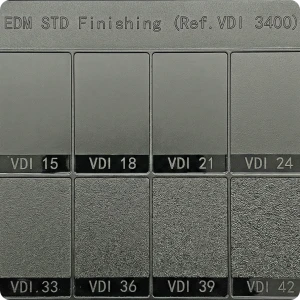
VDI 3400 Surface Finish (commonly called VDI surface finish) refers to the mold texturing standard developed by Verein Deutscher Ingenieure (VDI), the German Society of Engineers. Primarily achieved via Electrical Discharge Machining (EDM) during mold production, VDI is an international standard for matte surface mold texturing. The EDM process creates a fine-to-coarse grain texture based on the selected parameters:
Urethane-casted parts can be rigid, flexible, or even rubber-like, depending on the urethane composition. We offer urethane in a wide range of colors, including transparent (standard), black, and custom color matching. Parts can also be supplied with a standard smooth finish or a custom finish (including hardware installation and painting).
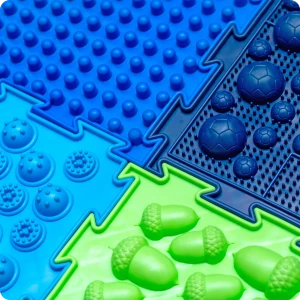
A standard finish where the master pattern is lightly processed to create a matte or frosted appearance on opaque and translucent materials, respectively.
The master pattern undergoes additional processing to achieve a smoother surface, resulting in a semi-gloss finish on the cast parts.
The master pattern is extensively polished to create an ultra-smooth surface, producing glossy or clear cast parts.
A selection of SPI and Mold-Tech mold finishes that replicate the textures of injection-molded parts.
EPTAHUB can provide additional processing and finishes (such as hardware installation, overmolding, and painting) to meet your needs. Specify a custom finish for manual review.
Our automated quoting system gives you instant pricing so you can quickly estimate your project costs.
For high-precision or complex parts, our senior account managers can provide more detailed quotes and help you find the best overall solution for your needs.