High-Quality, Low-Cost Custom Plastic Extrusions By EPTAHUB

STEP丨STP丨SLDPRT丨STL丨IPT丨3MF丨3DXML丨PRT丨SAT
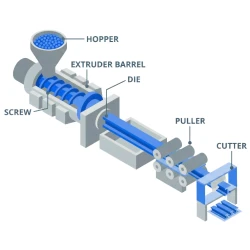
Plastic extrusion transforms thermoplastic granules into a continuous length of plastic stock featuring a consistent cross-section. During the manufacturing process, a hopper feeds the granules into a heated rotary screw—similar to the mechanism used in plastic injection molding. The heated auger pushes the thermoplastic molecules to rub against each other, which raises the material’s pressure and temperature until it turns molten and flows easily. At this stage, the molten plastic is forced through a filter to keep out contaminants and then through a die shaped to match the desired extrusion cross-section, ensuring uniformity. The extrusion is pulled out of the die at a steady rate, cooled (usually in water), and cut into standard lengths for sale and distribution.
Plastic extrusion and plastic tubing can have an enclosed plastic profile that generally looks like an open cavity. The inner cavity of the tube, also called a lumen, is contained within the profile. It can be divided into multiple lumens to further separate the interior space while maintaining consistent wall thicknesses. At EPTAHUB, we are able to provide plastic extrusions with up to 4 lumens. Plastic extrusions play a crucial role in nearly every industry, including construction, utilities, telecommunications, and various other fields of application.
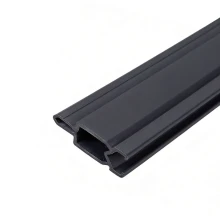
When creating custom plastic extrusions with EPTAHUB, designers can make use of a custom profile and colors to produce the exact plastic profile required for their intended uses.

Upload your files to the EPTAHUB Quote Engine. Our team will consult with you to ensure your specifications, lead time, and price fit your project needs. We will provide a DFM report for approval before kicking off tooling.
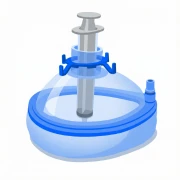
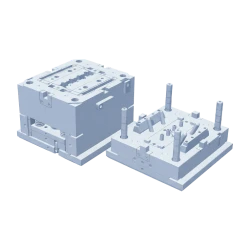
Once your project is kicked off we will build a high-quality injection mold. After the mold is created we will send out part samples, called T1s, for approval.

Once samples are approved, we move forward with production and deliver parts. You own your tool and can easily re-order as needed to meet demand.
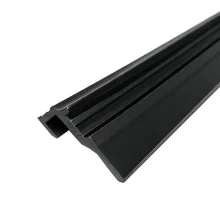
Plastic extrusions can be formed into a variety of open and closed shapes based on specific needs. The most commonly used shape is a simple annulus or square profile, which is used in tube and piping applications. These shapes are typically designed to meet specific industry standards to ensure the tube is compatible with fittings and other components. EPTAHUB’s plastic extrusion service can produce enclosed profiles with up to 4 lumens, allowing designers to divide the internal space according to their requirements. Open shapes include U, J, or L channels, as well as custom profiles for specific design setups.
Using plastic channels (known as conduits) to protect wires and transmission lines helps provide additional insulation and shield these components from damage. Houses, commercial buildings, and industrial facilities all use conduits to some extent, and plastic conduits prevent the unwanted short-circuiting that can occur with more traditional metal conduits.
One of the most (if not the most) common uses of plastic extrusion in the industry is the manufacturing of pipes for water, waste, and other liquid transport. Unlike their copper, cast iron, and steel counterparts, plastic does not corrode when exposed to chemicals or water—making it a significant improvement for plumbing and irrigation systems.
Plastic extrusions shaped as weatherstripping, outer housing shingles, and other specialty cross-sections are common in manufactured goods. Plastic extruded trim protects sharp edges from causing damage and can be found in consumer, automotive, and industrial products.

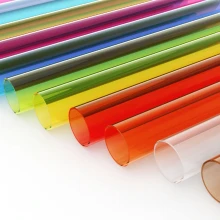
Below is a list of the materials offered by EPTAHUB for creating custom plastic extrusions. If you don’t see your desired plastic on this list, reach out to us through our manual quoting process when placing an order, and we can help you source and fabricate it.
LDPE is frequently used to create custom plastic tubes and extrusions because it is strong, economical, translucent, and generally resistant to chemicals. While it is not suitable for flammable or outdoor weather applications, LDPE is a common choice for small-diameter flexible extrusions that need to be FDA-compliant—such as tubing used in food processing.
Cross-linked polyethylene, abbreviated as PEX, is a highly popular material that replaces other polyethylene types in piping applications. Technically, it is a type of extruded HDPE with more cross-linking, which gives it greater heat and chemical resistance than other polyethylenes while remaining easy to work with and weld. It is much more cost-effective than copper for household water piping applications and is ideal for plumbing and water-transport systems like heating systems and sprinkler lines.
TPE combines the elasticity of rubber with the workability of thermoplastics. These properties make it a unique alternative to latex, silicone rubber, and other thermosetting elastomers. Within its operating temperature range, extruded TPE is resistant to heat and oil, can accept colorants, and is available in a range of hardness levels for both flexible and rigid applications. Extruded TPE is typically used to make exercise equipment handles, medical seals, and other flexible products.
PVC is strong, lightweight, easy to work with, and economical—making it highly popular for general-purpose applications. You can find extruded PVC tubes in nearly every home (just look under your sink), and it performs equally well indoors and outdoors. It also comes in various types, such as CPVC, PVC-U, and PVC-O, which are formulated for specific working conditions. PVC tubes are consistently in high demand across construction, structural, and high-volume applications.
Many plastic parts are made from ABS, thanks to its combination of aesthetic appeal, strength, and availability. Extruded ABS is ideal for decorative trim on appliances and other equipment, as well as pipes for water and waste. Extruded ABS can also be used to create base components for other production projects, allowing designers to start with an existing consistent profile.
Polystyrene is inexpensive, has good insulating properties, and is easy to work with. Extruded polystyrene (sometimes referred to as XPS) has higher mechanical strength than expanded polystyrene, making it a more rigid foam product. Common uses include PS ceiling insulation, refrigeration applications, modeling, and hobby crafting.
Polypropylene is similar to polyethylene, but it is more cost-effective and has a higher temperature tolerance. It is also more durable—for example, the plastic hinges on shampoo bottle caps are made from PP—and can be easily customized to be translucent, opaque, or multi-colored. PP extrusions are commonly used in automotive tubing, toy parts, handles, and food-grade tubing.
Polycarbonate (PC) has excellent impact resistance and temperature resistance while remaining affordable. Its dimensional stability and transparency make it highly useful for impact-resistant windows, reusable bottles, electrical components, personal protective equipment, rigid plastic extrusion profiles, and much more.

Select from millions of potential combinations of materials, finishes, tolerances, markings, and certifications for your order.

Quickly get instant quotes for plastic extrusion services with our user-friendly quoting system.

EPTAHUB holds ISO 9001:2015, ISO 13485, and AS9100D certifications.
Learn how to easily obtain an instant quote for Custom Plastic Extrusion services through the EPTAHUB Instant Quoting Engine®.
 English English
  German
 Spanish
 French
 Japanese
 Korean
 Malay
Malay
 Portuguese
 Russian
 Thai
Thai
Our automated quoting system gives you instant pricing so you can quickly estimate your project costs.
For high-precision or complex parts, our senior account managers can provide more detailed quotes and help you find the best overall solution for your needs.