Home / Stereolithography (SLA) 3D Printing Service

Stereolithography (SLA) 3D Printing Service

Ultra-high precision molding, restoring fine surface details
EPTAHUB online interface icon for starting a high-resolution SLA 3D printing quote and resin part configuration

Start A New SLA 3D Printing Quote

STEP丨STP丨SLDPRT丨STL丨IPT丨3MF丨3DXML丨PRT丨SAT

What Is Stereolithography (SLA) 3D Printing Technology?

Stereolithography (SLA) is the world's first commercialized additive manufacturing technology. It uses an ultraviolet (UV) laser beam to selectively irradiate liquid photopolymer resin, causing the resin to undergo a photopolymerization reaction and cure layer by layer, ultimately stacking to form 3D solid parts. As a representative of photopolymerization 3D printing technology, SLA's greatest advantages lie in ultra-high molding precision and fine surface finish, which can easily restore complex textures, thin-walled structures and micro-features of parts. It is an ideal choice for appearance verification, functional prototypes and precision model manufacturing.

EPTAHUB has introduced multiple industrial-grade SLA printers (such as Formlabs Form 3L, Stratasys J750), equipped with high-precision UV lasers with a wavelength of 355nm. The positioning accuracy can reach ±0.02mm, the minimum layer thickness can be as low as 0.025mm, and the molding size covers a full range of needs from 100×100×100mm to 1000×800×500mm. Whether it is consumer product appearance prototypes, medical surgical guides, or industrial design verification parts, EPTAHUB's SLA 3D printing service can restore design details with high fidelity, widely applicable to industries such as consumer electronics, medical care, jewelry, and automotive design.
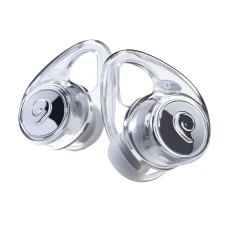
Smooth surface finish resin part showcasing Stereoscopic Lithography SLA materials

EPTAHUB SLA 3D Printing Materials

EPTAHUB carefully selects high-performance plastic powders suitable for SLA technology, covering general-purpose, reinforced, and special-function categories to meet the strict performance requirements of parts in different industries:

Material Name Key Properties Typical Applications
Standard Resin
Fast curing, low shrinkage rate, high surface finish
Appearance prototypes, design verification parts, display models
Tough Resin
Impact resistance, bending resistance, ABS-like mechanical properties
Functional prototypes, snap-fit components, structural verification parts
Rigid Resin
High strength, low deformation, excellent dimensional stability
Precision parts, gears, connectors
Clear Resin
High light transmittance (over 85%), polishable, yellowing resistance
Optical parts, lampshades, transparent enclosures, medical observation models
Flexible Resin
Shore hardness A50-A90, high elasticity, fatigue resistance
Soft rubber parts, seals, bionic models, wearable device accessories
High-Temp Resin
Heat distortion temperature 80-150℃, aging resistance
Automotive lamp parts, high-temperature-resistant components for electronic devices, mold inserts
Medical Resin
Compliant with USP Class VI standard, sterilizable, biocompatibility
Surgical guides, dental models, medical teaching models, implant prototypes
Castable Resin
Easy to burn at high temperature, no residue, high casting precision
Jewelry wax patterns, investment casting prototypes for metal parts
Food-Safe Resin
Compliant with FDA 21 CFR Part 177 standard, odorless
Food container prototypes, tableware models

Applications SLA 3D Printing

Functional 3D printed prototype with integrated components and moving parts

Concept Models

With its speed, precision, and smooth finish, SLA empowers designers to quickly create high-fidelity prototypes for iterative validation.
Solid 3D printed conceptual model used for design iteration and solid modeling

Rapid Prototyping

SLA produces functional prototypes using materials engineered to mimic the properties of PP, PC, ABS, and rigid composites.

Mass production of high precision customized parts via direct digital manufacturing

Direct Digital Manufacturing

SLA excels at producing high volumes of custom or individual parts, thanks to its reliable accuracy and repeatability.

EPTAHUB SLA 3D Printing Advantages

Compared with other 3D printing technologies, EPTAHUB's SLA 3D printing service has irreplaceable advantages in precision, surface quality and detail restoration, creating higher value for customers:
Ultra-High Molding Precision, Fine Detail Restoration

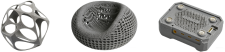
The laser positioning accuracy of SLA technology can reach ±0.02mm, and the minimum micro-feature (such as small holes, textures, thin walls) that can be formed is 0.1mm. The part dimensional error can be controlled within 0.1%. For example, the ring model printed by EPTAHUB for a jewelry customer can clearly restore the 0.05mm carved texture, with a surface roughness Ra as low as 0.8μm, which can be directly used for display without secondary polishing.

High Surface Finish, Excellent Appearance Effect

The default surface finish of SLA parts is Ra 1.6-3.2μm. After simple sanding or polishing, it can reach Ra 0.4μm (mirror effect), which is far superior to the surface quality of FDM, SLS and other technologies. It is especially suitable for scenarios requiring high appearance requirements - such as consumer product appearance prototypes, medical models, and display parts.

Rich Material Options, Adapting To Multi-Scenario Needs

EPTAHUB provides more than 20 types of SLA-specific resins, covering full-range needs from soft to hard, transparent to opaque, and general-purpose to industry-specific. They can simulate the properties of various traditional materials such as ABS, PP, rubber, and glass, meeting the functional and appearance requirements of different industries.

Fast Molding Speed And Short Delivery Cycle

EPTAHUB's industrial-grade SLA printers have high-speed scanning and fast curing capabilities. A single small part (such as 50×50×50mm) can be printed in as fast as 2 hours; the delivery cycle for regular orders is 2-5 days, and urgent orders can be delivered in as fast as 1 day, greatly shortening the product design verification and launch cycle.

High Design Freedom, Adapting to Complex Structures

SLA technology supports the integral forming of complex inner cavities, hollow structures, and thin walls (minimum 0.2mm), without the need for designing support structures (or only a small amount of easily removable supports). It can realize complex designs that are difficult to achieve with traditional manufacturing — such as the human organ model for a medical customer, which uses SLA technology to integrally form a complex blood vessel network, providing accurate reference for surgical planning.

SLA 3D Printing Design Guidelines

SLA 3D printed part with smooth surface finish and complex internal geometries for design guideline reference
Dimensions And Tolerances

Recommended minimum part size: Length/width not less than 0.5mm, height not less than 0.2mm;
minimum size of micro-features (such as thin columns, thin ribs) not less than 0.1mm;
Standard tolerance: ±0.05mm (for parts with size ≤50mm), ±0.1mm (for parts with size 50-100mm), ±0.15% (for parts with size >100mm);
Thread design: Coarse-thread threads (such as M1-M8) are preferred, and the thread depth is recommended to be no less than 1.5 times the thread diameter; fine-thread threads (such as M1.2×0.25) require special treatment to avoid precision impact caused by resin curing shrinkage.

Wall Thickness And Structure

Minimum wall thickness: 0.2mm for general resin, 0.3mm for flexible resin, 0.4mm for high-temperature resistant resin;
Wall thickness uniformity: The wall thickness deviation is recommended to be no more than 0.3mm, and local over-thickness (>5mm) should be avoided to prevent internal bubbles or uneven curing during printing;
Complex structure design: The hole diameter of hollow structures should be no less than 0.5mm to ensure smooth resin leveling and curing; a vent hole of at least 1mm should be reserved for closed inner cavity structures to avoid part deformation caused by pressure during curing.

Support Design And Post-Processing

Support design: For overhanging structures (overhang length >3mm) or thin-walled structures, it is recommended to add supports; the diameter of the connection point between the support and the part is recommended to be 0.5-1mm for easy removal and reduced part damage;
Post-processing recommendations: After printing, SLA parts need to be cleaned (to remove uncured resin) and post-cured (to improve mechanical properties); for higher surface finish, sanding (using 400-2000 grit sandpaper), polishing (using polishing paste) or painting can be performed.

Material Selection Recommendations

Appearance requirement priority: Select high-gloss resin or transparent resin, and cooperate with post-processing sanding and polishing to improve surface effect;
Functional requirement priority: Select flexible resin for flexible parts, high-temperature-resistant resin for high-temperature scenarios, and medical-grade resin for medical scenarios;
Cost control requirement: Select general resin for small-batch prototypes, and cost-effective special resin for mass production (such as casting wax patterns).

SLA 3D Printing Quality & Certifications

EPTAHUB always takes "high precision and high quality" as the core, and ensures the quality of SLA parts through a number of industry certifications and strict quality control processes:

Industry Certifications

Quality Control Process

Real Time Quotation Demonstration

Learn how to use the EPTAHUB (instant Quoting Engine @) Quickly and easily obtain SLA 3D Printing quotes.
Why Choose EPTAHUB's SLA 3D Printing Service?

Diverse selection of 3D printing materials, surface treatments, and certifications

Endless Options

Select from millions of possible combinations of materials, finishes, tolerances, markings, and certifications for your order.

Logistics icon symbolizing direct doorstep delivery of managed 3D printing projects

Easy To Use

Have your parts delivered right to your door, without the hassle of sourcing, project management, logistics, or shipping.

ISO 9001 and IATF 16949 certification logos for 3D printing quality assurance

Vetted Network

We hold ISO 9001:2015, ISO 13485, and AS9100D certifications.
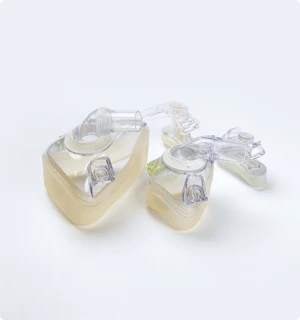
High-precision translucent resin part created via SLA 3D printing, showcasing professional prototyping quality

Start Your SLA 3D Printing Project Now

Whether you need high-precision appearance prototypes, functional verification parts, medical models, or jewelry wax patterns, EPTAHUB can provide you with an efficient and cost-effective SLA solution. Upload your CAD file now to get an instant quote, or contact EPTAHUB's technical consultants to obtain material samples and industry application solutions!

×

EPTAHUB Professional & Intelligent Quoting

Our automated quoting system gives you instant pricing so you can quickly estimate your project costs.

For high-precision or complex parts, our senior account managers can provide more detailed quotes and help you find the best overall solution for your needs.

Get Instant Quote Get a Quote Instantly — ⭐⭐⭐
Request Expert Quote Precise Quotes — ⭐⭐⭐⭐⭐