Get Custom Part Quotes With Our Online CNC Routing Service We Deliver Rapid Prototyping And Production Parts In Days We Hold ISO 9001:2015, ISO 13485, IATF 16949:2016, And AS9100D Certifications And Are Registered Under The International Traffic In Arms Regulations (ITAR)


STEP丨STP丨SLDPRT丨STL丨IPT丨3MF丨3DXML丨PRT丨SAT
As a trusted and innovative CNC Routing service provider in the industry, EPTAHUB has become the preferred partner for enterprises and individuals seeking CNC Routing solutions for mass-produced components and finished parts, thanks to its professional technology, advanced process equipment, and dedication to quality. EPTAHUB is committed to providing customers with high-quality solutions, which is also the core driving force behind our acquisition of ISO 9001:2015, ISO 13485, IATF 16949:2016, and AS9100D certifications, as well as our ITAR registration.
Our CNC Routing service can process a variety of materials, including Medium-Density Fiberboard (MDF), plywood, acrylic, polyurethane foam, polyethylene sheets, as well as softer metals such as brass and aluminum alloys. Steel can also be processed in some cases.
CNC (Computer Numerical Control) Routing is a subtractive manufacturing process that uses computer-controlled equipment to cut and shape various materials, typically wood, plastic, or metal. This process employs a rotating cutting tool called a router to perform complex and high-precision cutting, drilling, and contouring on materials under precise digital instructions.
CNC Routing shares similarities with other CNC processes such as CNC milling and CNC turning, as they all use computer-controlled equipment and follow similar operating procedures. However, there are the following significant differences:
Despite the above differences, all CNC processes offer the advantages of high precision, strong repeatability, and the ability to process complex shapes without excessive manual intervention. They can improve production efficiency, reduce labor costs, and ensure consistent and high-quality product quality.
Compared with traditional manual engraving or other manufacturing processes such as plasma cutting and laser cutting, CNC Routing has many advantages, as follows:
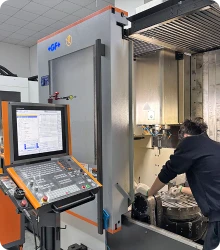
CNC engraving equipment can achieve extremely high-precision cutting and shaping, meeting fine design and strict tolerance requirements. The computer-controlled nature of this process ensures consistent processing accuracy and avoids error fluctuations that may occur during manual engraving.
CNC engraving equipment can process a variety of materials, including wood, plastic, foam, composite materials, and non-ferrous metals. This versatility makes it suitable for multiple industries and application scenarios such as furniture manufacturing, sign making, prototype development, cabinet processing, and architectural wood mold making.
Through the CNC engraving process, the same design can be accurately and consistently replicated, ensuring the uniformity of multiple parts or multiple batches of products. This feature is of great value in industries with high requirements for precision and consistency, such as aerospace, automotive, and electronics.
CNC engraving technology can process complex shapes and fine patterns that are difficult to achieve with manual processing or require a lot of time. Computer-controlled equipment can easily complete fine cutting, curve processing, and pattern engraving, providing more possibilities for creative design and customized applications.
CNC Routing equipment is compatible with a variety of materials, including soft metals, wood, plastic, and composite materials. The following are some common materials used in CNC Routing:
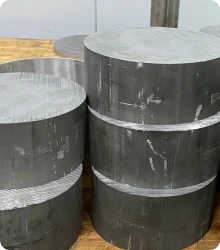
ABS is a thermoplastic polymer with good toughness and impact resistance, commonly used in prototype manufacturing, automotive parts, housings, and consumer goods production. This material has high strength, good durability, is easy to process, and is available in a variety of colors, offering significant cost-effectiveness.
ACM Panel is a lightweight composite material composed of thin aluminum sheets and polyethylene or flame-retardant core materials. It is widely used in sign making, building curtain walls, exhibition displays, and interior decoration. It has excellent flatness, high specific strength, weather resistance, and easy processing and shaping, making it suitable for outdoor use.
Baltic Birch Plywood is made by pressing multiple layers of birch veneers and is known for its high strength and durability. It is commonly used in furniture manufacturing, cabinet processing, tooling fixtures, and decorative parts production. This material has strong stability, no voids, high strength, good nail-holding performance, and is suitable for fine cutting and engraving.
HDPE is a versatile thermoplastic material with high specific strength and chemical resistance, used in the manufacture of kitchen cutting boards, marine engineering components, wear strips, and storage containers. It is lightweight, has excellent chemical stability, low moisture absorption, is easy to process, and has high cost-effectiveness.
MDF is an artificial board made by processing hardwood or softwood scraps into wood fibers, which are then mixed with resin and pressed. It has the characteristics of high density and uniform structure. It is widely used in cabinetry, furniture, sign making, and decorative panel manufacturing. Its core advantages include a smooth and flat surface, easy processing, convenient shaping and engraving, low cost, good stability, and suitability for painting and veneering processes.
Polycarbonate is a transparent thermoplastic material with high impact resistance and good light transmittance, commonly used in the manufacture of protective screens, mechanical shields, lenses, and electronic components. This material has excellent impact resistance, high optical transparency, is easy to shape and process, and has good electrical insulation properties.
CNC engraving technology is often used to cut and shape foam materials, such as expanded polystyrene (EPS) and polyurethane foam. These materials are widely used in packaging, thermal insulation, stage props, and architectural model making.
UHMW is a high-molecular-weight thermoplastic material with excellent toughness and wear resistance, used in the manufacture of bearings, wear strips, conveyor equipment components, and chute liners. It has strong wear resistance, good self-lubricating performance, low friction coefficient, and high impact strength.
Aluminum alloy is a lightweight metal with high strength, corrosion resistance, and good electrical and thermal conductivity, commonly used in the manufacture of mechanical parts, household hardware, automotive parts, and housings. This material has high specific strength, excellent thermal and electrical conductivity, and good corrosion resistance.
Brass is a copper-zinc alloy with an attractive appearance and easy processability, commonly used in the manufacture of decorative parts, jewelry, hardware, and musical instruments. It has good corrosion resistance and antibacterial properties.
CNC Routing technology can be used to process composite materials, including Fiberglass Reinforced Plastic (FRP), Carbon Fiber Reinforced Plastic (CFRP), and other composite laminates. Among them, CFRP has the characteristics of high strength, high stiffness, light weight, excellent fatigue resistance, and low thermal expansion coefficient, and is widely used in aerospace, automotive, marine engineering, and sports equipment manufacturing.
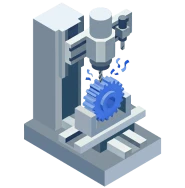
CNC Routing technology is used in multiple industries for the production of finished parts and mass-produced components. The specific application scenarios are as follows:
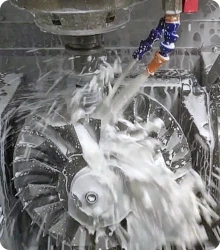
CNC Routing technology is widely used in the wooden furniture manufacturing industry. It can perform high-precision cutting, shaping, and detail processing on various types of wood, achieving complex designs, decorative patterns, and smooth edge treatment. With CNC Routing equipment, furniture components such as table legs, chair backs, fine panels, and ornate decorative parts can be produced efficiently with high processing precision.
CNC Routing technology is commonly used in the production of signs for enterprises, institutions, and events. It can accurately cut materials such as wood, plastic, and metal to create customized shapes, text, logos, and decorative elements. This technology can achieve fine detail processing, sharp edge effects, and consistent processing quality, suitable for various indoor and outdoor sign making scenarios.
Thermoforming is a manufacturing process that heats plastic sheets and shapes them on molds. CNC Routing technology plays a key role in thermoforming mold making. By accurately cutting or routing materials such as wood and composite panels, CNC Routing equipment can produce molds with complex shapes and contours, ensuring that plastic sheets can be accurately and repeatedly formed to meet the production needs of packaging, automotive parts, medical equipment, and other fields.
CNC Routing technology is often used in the production of cabinet and wood mold components. It can perform accurate cutting, shaping, and detail processing on materials such as wood, Medium-Density Fiberboard (MDF), and plywood to produce fine cabinet doors, drawer panels, decorative lines, and decorative panels.
In the product development process, CNC Routing technology is widely used for prototype making. It can quickly and accurately produce prototypes, helping designers and engineers test and optimize design schemes before entering large-scale production. CNC Routing equipment can use a variety of materials such as plastic, foam, wood, and composite materials to make prototypes.
CNC Routing equipment equipped with special routing tools can engrave fine patterns, text, logos, or images on the surface of various materials. It is suitable for making personalized products such as plaques, medals, signs, nameplates, and custom artworks.
CNC Routing technology is applied in the manufacturing of automotive and aerospace components, which can shape and trim materials such as aluminum alloys, carbon fiber materials, plastics, and composite materials. With this technology, accurate cutting and contour processing required for products such as instrument panels, interior panels, exterior decorative parts, and aerospace components can be completed.
At EPTAHUB, your design is transformed into CNC routed finished parts through the following steps:
In the CNC engraving process, kerf compensation is a crucial step to ensure cutting accuracy. Kerf refers to the width of material removed during the cutting process due to the width of the cutting tool itself. The following are the common kerf compensation methods used by EPTAHUB in CNC engraving:
This method adjusts the tool path by considering the diameter of the cutting tool used. It can be set in the CAM software to offset the tool path inward or outward by half the tool diameter. This compensation method can offset the amount of material removed during the cutting process, ensuring that the final part size meets the design requirements.
Another method is to perform a test cut on the same material to determine the actual kerf width under a specific CNC engraving equipment configuration. Due to factors such as equipment tolerance, component damage, or uncalibrated CNC engraving equipment, runout may occur, resulting in an actual kerf width larger than the theoretical value. By measuring the kerf width after the test cut, the CAM software can be adjusted accordingly to achieve kerf compensation and ensure the accuracy of part sizes in subsequent cutting processes.
In some CNC engraving equipment configurations, preset kerf parameter values are available for specific materials. These parameter values can be stored in the CAM software as a kerf parameter table or preset values, and the tool path is automatically adjusted according to the selected material. There is no need for manual measurement of kerf width or calculation of tool diameter, which simplifies the operation process.
In some cases, kerf compensation can be achieved by modifying the design scheme. By adjusting the size of the vector file to compensate for the expected kerf width, the CNC engraving equipment can cut accurately according to the programming instructions, ensuring that the final size of the part meets the design requirements. This method requires a full understanding of the specific CNC equipment configuration and material properties, as well as careful design adjustments.
Learn how to easily obtain an instant quote for CNC Routing services through the EPTAHUB Instant Quoting Engine®.
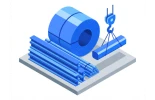
Select from millions of possible combinations of materials, finishes, tolerances, markings, and certifications for your order.

Receive your parts directly at your doorstep without the hassle of sourcing, project management, logistics, or shipping.

We hold ISO 9001:2015, ISO 13485, and AS9100D certifications.
 English English
  German
 Spanish
 French
 Japanese
 Korean
 Malay
Malay
 Portuguese
 Russian
 Thai
Thai
Our automated quoting system gives you instant pricing so you can quickly estimate your project costs.
For high-precision or complex parts, our senior account managers can provide more detailed quotes and help you find the best overall solution for your needs.