High-Quality Die-Cast Metal Parts
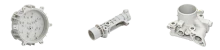
STEP丨STP丨SLDPRT丨STL丨IPT丨3MF丨3DXML丨PRT丨SAT
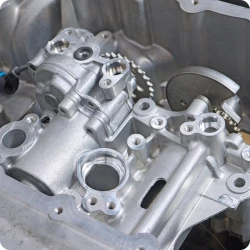
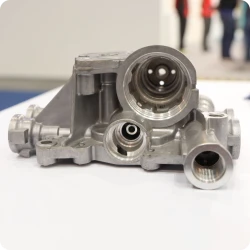
Die casting is the manufacturing method of choice for producing large volumes of relatively complex metal components, and it is widely utilized due to its versatility, dependability, and precision. This process eliminates all or most secondary operations required to fabricate a metal part; however, post-machining is frequently used to meet stricter critical-to-function tolerances. Die cast parts can also undergo post-processing with any finish that their corresponding CNC-machined equivalents can have.
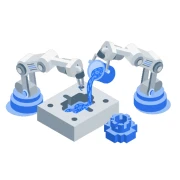
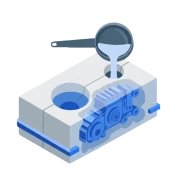
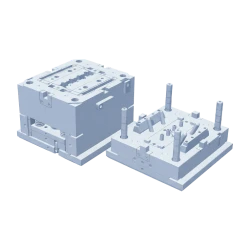
Similar to injection molding, die casting needs the creation of a mold tool—known as a die—that can feature one or multiple cavities. The process is suitable for softer alloys, such as aluminum and zinc alloys, because of their relatively low melting temperatures. Die casting works by injecting molten metal into a die cavity; the metal takes the shape of the part and hardens in place before being removed. Depending on the project scope, die casting can be done using low or high pressure, with a ladle or plunger used to deposit the metal. It can produce highly complex, tight-tolerance parts in a repeatable way at very high production volumes. Modern die casting techniques like squeeze casting and semi-solid metal casting create high-quality parts for nearly every industry. Die casting companies often specialize in casting aluminum or zinc, with aluminum accounting for roughly 80% of die cast parts.
Our project managers and experts personally review and manually provide quotes for each die casting project to ensure we meet your unique requirements while delivering a fast and straightforward manufacturing experience. Learn more about the process and our capabilities in the sections below.

Upload your files to the EPTAHUB Quote Engine and configure your project. Our team will consult with you to make sure your specifications, lead time, and price align with your project needs. We will provide a DFM report for approval before initiating tooling.

Once your project gets started, we will build a high-quality die. After the tooling is made, we will send out part samples—called T1s—for your approval.
Once you are satisfied with your samples, we move forward with production and deliver the parts. You can rest easy knowing EPTAHUB handles supplier management and logistics throughout the entire process. You own your tooling and can easily reorder as needed to meet demand.
EPTAHUB partners with die casters that use the latest die casting machines and technology to deliver high-quality, on-demand parts to a wide range of industries. Our offerings focus on the two main types of die casting: hot chamber casting and cold chamber casting. Both types can produce parts with complex geometries, tight tolerances, and strong mechanical properties.
Several different metal materials are available for use in die casting manufacturing. The material you select will depend on the intended use of the product. For example, cast aluminum parts are common in aerospace or automotive applications where corrosion resistance and weight reduction are key factors. You can learn more about the main types of die casting materials we offer in the sections below. If you have a specific material request, just let us know!
Aluminum alloys are the most widely used for die cast parts. EPTAHUB’s aluminum die casting suppliers benefit from the material’s full recyclability and ease of use. Due to its relatively higher melting point, aluminum die casting may require a cold chamber casting process. Engineers primarily use cast aluminum parts for their excellent strength-to-weight ratios, dimensional stability, and diverse finishing options. Some of the other common characteristics of cast aluminum alloys include:
Engineers and designers can choose from a wide range of alloys for their aluminum casting parts. EPTAHUB offers the most popular aluminum die casting alloys, including:
Zinc is the easiest material to cast among die casting metals and is typically used in hot chamber processes. Molten zinc has excellent casting fluidity and a low melting point. Its strength and stiffness allow it to produce parts with thinner walls and highly detailed features while maintaining tight tolerances. The low melting point of die casting zinc alloys means zinc die cast components cool down and solidify more quickly, resulting in the fastest production rates among die casting materials. Zinc is a well-rounded, high-performance material due to its balanced mechanical and physical properties, which include:
EPTAHUB offers the most popular types of Zamak and ZA die casting zinc alloys. More specifically, these alloys include:
The versatility and high production capacity of die casting make it suitable for a variety of applications and industries. Die cast products that are small-to-medium-sized with complex features are usually well-suited for this process. Examples include consumer and industrial products, automotive parts, aerospace components, and parts for medical devices. Die casting is an excellent option when you need high-volume metal parts that may be too large for similar high-volume processes like Metal Injection Molding (MIM).
Our team of experts will work closely with you throughout the process and offer suggestions and options to provide the best possible turnaround time while meeting your unique needs.
Select from millions of potential combinations of materials, finishes, tolerances, markings, and certifications for your order.

Quickly get instant quotes for die casting services with our user-friendly quoting system.

EPTAHUB holds ISO 9001:2015, ISO 13485, and AS9100D certifications.
Learn how to easily obtain an instant quote for Online Die Casting services through the EPTAHUB Instant Quoting Engine®.
 English English
  German
 Spanish
 French
 Japanese
 Korean
 Malay
Malay
 Portuguese
 Russian
 Thai
Thai
Our automated quoting system gives you instant pricing so you can quickly estimate your project costs.
For high-precision or complex parts, our senior account managers can provide more detailed quotes and help you find the best overall solution for your needs.