Home / Custom Online CNC Machining Service

Custom Online CNC Machining Service

Custom metal and plastic machined parts with instant quoting | Fast delivery of prototypes and production parts in just days | Certified with ISO 9001:2015, ISO 13485, IATF 16949:2016, AS9100D, and ITAR registered.

EPTAHUB online quoting interface icon for custom CNC machining and precision part manufacturing (icon 1) EPTAHUB online quoting interface icon for custom CNC machining and precision part manufacturing(icon 2) EPTAHUB online quoting interface icon for custom CNC machining and precision part manufacturing(icon 3)

Start A New CNC Quote

STEP丨STP丨SLDPRT丨STL丨IPT丨3MF丨3DXML丨PRT丨SAT

Why Choose EPTAHUB's Custom Online CNC Machining Service

3D printing is one of the top methods for obtaining low-volume production goods. Nevertheless, plastic 3D printing usually comes with a notable trade-off: parts tend to have coarse surface finishes. Powder bed fusion processes such as selective laser sintering (SLS) and HP Multi Jet Fusion (MJF) result in a matte, sugar cube-like surface. Fused deposition modeling (FDM) leaves distinct layer lines. Over the past 30 years, post-process surface finishing techniques like abrasive media tumbling, hand finishing, or coatings have only slightly improved the surface finishes of 3D printed parts. When cosmetics are a key concern, engineers might opt for other processes entirely, such as injection molding, machining, or urethane cast parts.

Upload your CAD file to EPTAHUB's Instant Quoting Engine® to receive pricing, lead times, and design-for-manufacturability feedback for custom CNC parts. Our efficient CNC machining capabilities cover metal and plastic processing, with flexible production and shipping solutions to meet your needs at the right price point and product development stage. Additionally, quotes for CNC-machined prototypes include standard package customs duties and shipping costs.

EPTAHUB ensures part quality through ISO 9001:2015, ISO 13485, IATF 16949:2016, AS9100D certified quality management systems and ITAR registration. We also offer additional options such as inspection services, hardware traceability, material certification, and Certificates of Conformance (CoCs). We accept technical drawings and have a dedicated support team to ensure you receive high-quality CNC-machined parts on time.

What Is CNC Machining

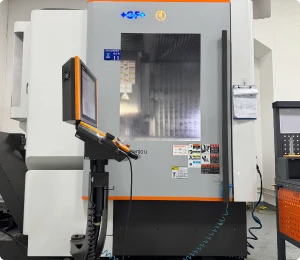
CNC (Computer Numerical Control) machining is a widely used manufacturing process that uses automated high-speed cutting tools to shape metal or plastic raw materials into desired designs. Standard CNC equipment includes 3-axis, 4-axis, 5-axis milling machines, lathes, and engraving machines. Different CNC machines may use varying cutting methods: some fix the workpiece while the tool moves; others fix the tool while the workpiece rotates; and some coordinate movement between both the tool and workpiece.

Skilled machinists program tool paths based on the geometry of the final part, which is defined by a CAD (Computer-Aided Design) model. CNC machines can perform high-precision, repeatable machining on nearly all metal alloys and rigid plastics, making custom CNC-machined parts suitable for industries such as aerospace, medical, robotics, electronics, and industrial manufacturing.

EPTAHUB offers CNC machining services and provides custom CNC quotes for over 40 materials, ranging from common aluminum alloys and acetal resins to high-end titanium alloys and engineering plastics like PEEK (Polyether Ether Ketone) and Teflon (Polytetrafluoroethylene).

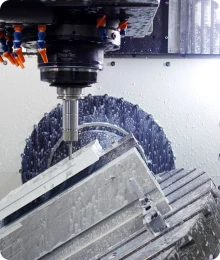
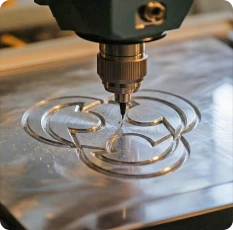
3-axis CNC machine spindle milling a solid block of aluminum to create a high-precision industrial part

Custom CNC Machining Services: Milling, Turning, Engraving

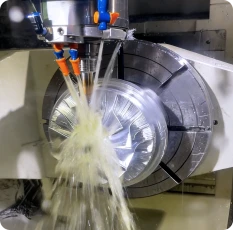
Multi-axis CNC milling process showcasing complex geometry creation in a custom metal component

Custom CNC Milling Services

Instant quoting for custom milled metal and plastic parts. Fast delivery of prototypes and production parts in just days. Certified with ISO 9001:2015, ISO 13485, IATF 16949:2016, AS9100D, and ITAR registered.

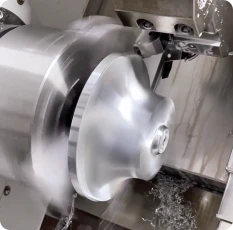
CNC lathe turning operation rotating a workpiece to achieve high-tolerance cylindrical symmetry

CNC Turning Services

Instant quoting for custom turned metal and plastic parts. Fast delivery of prototypes and production parts in just days. Certified with ISO 9001:2015, ISO 13485, IATF 16949:2016, AS9100D, and ITAR registered.
CNC Turning Services

Precision CNC engraving tool detailing alphanumeric text and logos on a finished metal surface

CNC Engraving Services

Get quotes for custom parts through our online CNC engraving services. Fast delivery of prototypes and production parts in just days. Certified with ISO 9001:2015, ISO 13485, IATF 16949:2016, AS9100D, and ITAR registered.
Automated CNC production line capable of high-volume manufacturing for large batches of identical parts

High-Volume CNC Machining Services

High-volume production of prototypes and production parts with fast lead times (just days). Certified with AS9100D, ISO 9001:2015, ISO 13485, IATF 16949:2016. ITAR registered

CNC Machining Tolerances

Item Description
Maximum Part Size Milled parts: Up to 80" × 48" × 24"
(2032mm × 1219mm × 610mm);
Turned parts: Maximum length 62" (1575mm), maximum diameter 32" (813mm)
Standard Lead Time 3 business days
Standard Tolerances Unless specified otherwise, metal part tolerances follow ISO 2768 standards at ±0.005" (±0.127mm);
Plastic and composite part tolerances: ±0.010"
Precision Tolerances EPTAHUB can machine and inspect parts to tight tolerance standards, including tolerances below ±0.001", based on your drawing specifications and GD&T requirements
Minimum Feature Size 0.020" (0.50mm), may vary by part geometry and material selection
Threads and Threaded Holes All standard thread sizes available;
custom threads require manual quote review
Edge Condition Sharp edges are deburred and rounded as standard
Surface Roughness Standard finish: As-machined (mill finish) with roughness up to 125 Ra or better;
additional surface finish options available during quoting

We offer precision machining services with a wide range of tolerance capabilities. The table above outlines standard CNC machining tolerance guidelines. For more details, refer to our Manufacturing Standards Guide
Metal CNC Machining Materials

CNC Machined Aluminum Alloys

6061 Aluminum, 5052 Aluminum,
2024 Aluminum, 6063 Aluminum,
7050 Aluminum, 7075 Aluminum,
MIC-6 Aluminum

CNC Machined Copper Alloys

101 Copper, C110 Copper


CNC Machined Bronze Alloys

C932 Copper (Bronze)


CNC Machined Brass Alloys

260 Copper (Brass), 360 Copper (Brass)


CNC Machined Stainless Steel Alloys

Nitronic 60 (218 Stainless Steel), 15-5 Stainless Steel, 17-4 Stainless Steel, 18-8 Stainless Steel,
303 Stainless Steel, 316/316L Stainless Steel, 416 Stainless Steel, 410 Stainless Steel, 420 Stainless Steel,
440C Stainless Steel


CNC Machined Steel Alloys

1018 Steel, 1215 Steel, 4130 Steel, 4140 Steel, 4140PH Steel, 4340 Steel, A2 Tool Steel, O1 Tool Steel


CNC Machined Titanium Alloys

Grade 2 Titanium, Grade 5 Titanium


CNC Machined Zinc Alloys

Zinc Alloy


Custom Materials

We can source additional alloys and tempers through our network of over 1000 custom machine shops. If you don't find
your desired stock material, select the "Custom" option in the material dropdown menu of EPTAHUB's Instant Quoting Engine℠.
After submitting your quote, our dedicated manufacturing team will review it manually and contact you. 

Plastic CNC Machining Materials

ABS Plastic

High-strength engineering plastic widely used in various commercial products.


Acrylic (Plexiglass)

Glass-clear plastic with excellent wear resistance, suitable for outdoor applications.


Acrylic (Plexiglass)

Acetal Resin
Delrin 150
Delrin 100

These resins offer excellent moisture resistance, high wear resistance, and low friction coefficients.


Garolite (Phenolic Laminates)

Garolite G10 (FR4)
Garolite G10 (Non-FR)
Garolite G11 (FR5)

Composed of epoxy resin and glass fiber cloth, also known as epoxy-grade industrial laminates and phenolic plastics. This material offers high strength and low moisture absorption.


HDPE (High-Density Polyethylene)

Offers moisture resistance, chemical resistance, and excellent impact strength. Ideal for outdoor applications,
waterproof containers, or seals.


Nylon 6/6

High mechanical strength and rigidity, good stability at high temperatures, and excellent chemical resistance.


PC (Polycarbonate)

Tensile strength nearly twice that of ABS plastic, with outstanding mechanical properties and structural stability. Widely
used in automotive, aerospace, and other industries requiring high durability and stability.


PEEK (Polyether Ether Ketone)

PEEK
PEEK (USP Class VI TECAPEEK)
PEEK GF30

Excellent tensile strength, often used as a lightweight alternative to metal parts in high-temperature, high-stress
environments. Offers chemical resistance, wear resistance, and moisture resistance.


Polypropylene

Excellent electrical properties and extremely low moisture absorption. Can withstand light loads for extended periods in
environments with wide temperature variations. Suitable for parts requiring chemical or corrosion resistance.


PTFE (Teflon)

Outperforms most plastics in chemical resistance and extreme temperature tolerance. Resistant to most solvents and an
excellent electrical insulator.


UHMW PE (Ultra-High Molecular Weight Polyethylene)

Versatile material offering wear resistance, corrosion resistance, low surface friction, high impact strength, and chemical
resistance. Non-absorbent.


PVC (Polyvinyl Chloride)

Type 1 PVC is a chemically resistant synthetic plastic commonly used in liquid-contact environments or applications requiring
electrical insulation.


ULTEM (Polyetherimide)

ULTEM 1000
ULTEM 2300

ULTEM (Polyetherimide) is a rigid, high-performance thermoplastic that can operate continuously at high temperatures
(up to 340°F). It offers high dielectric strength among commercial thermoplastics and is an excellent electrical insulator.
Additionally, ULTEM is chemical resistant, easy to clean, and non-absorbent, making it suitable for medical applications.

Custom CNC Plastics

We can source additional plastics for CNC machining through our network of over 1000 machine shops. If you don't find
your desired stock material, select the "Custom" option in the material dropdown menu of EPTAHUB's Instant Quoting Engine℠.
After submitting your quote, our dedicated manufacturing team will review it manually and contact you.

CNC Machining Surface Finishes

Standard (As-Machined)

Fastest delivery option. Parts retain visible tool marks, with possible sharp edges and burrs (which can be removed upon
request). CNC machining surface roughness equivalent to 125 microinches Ra.

Sandblasting

Creates a smooth, matte finish on part surfaces.

Tumbling

A bulk finishing process that removes sharp edges, burrs, and external tool marks from CNC parts via vibratory media.
Parts larger than 8 inches require manual quote review.

Anodizing (Type II or Type III)

Type II (MIL-A-8625, Type II): Forms a corrosion-resistant layer. Parts can be anodized in various colors, including clear, black, red, and gold. Typically used for aluminum parts.
Type III (MIL-A-8625/MIL-PRF-8625, Type III, Class 1/2 "Hard Anodizing"): Thicker oxide layer offering enhanced wear resistance in addition to corrosion protection. View examples in our Metal Surface Finish Gallery.

Titanium Anodizing

Complies with AMS-2488 Type 2 standard (also known as Tiodize). Improves part fatigue strength and wear resistance. Anodized titanium parts are commonly used in aerospace and medical device manufacturing. Non-colored titanium anodizing reduces surface gloss.

PTFE-Impregnated Hard Anodizing

Embeds PTFE into the hard anodization layer to create a self-lubricating dry-contact surface while retaining the protective
properties of Type III hard anodizing. Suitable for aluminum or titanium parts, extending product service life. Complies with
AMS-2482 Type 1 Teflon-impregnated (non-colored) hard anodizing standard.

Chemical Conversion Coating (Chromate Conversion)

Provides corrosion resistance and good electrical conductivity. Can be used as a base coat for painting. Parts may have a
yellow or gold appearance. Film thickness is extremely thin (0.00001"- 0.00004"). Complies with MIL-DTL-5541 Type I/II.

Passivation

Enhances corrosion resistance of 200-series, 300-series stainless steels, and precipitation-hardening corrosion-resistant
steels. Passivation film thickness is negligible (0.0000001"). Complies with ASTM A967, AMS-QQ-P-35, MIL-STD-171,
ASTM A380, or AMS 2700.

Powder Coating

Powder coating is applied electrostatically and cured in an oven, forming a harder, more wear-resistant, and
corrosion-resistant finish than conventional painting. Available in various colors for aesthetic requirements. View examples
in our Powder Coating Gallery.

Electropolishing

An electrochemical process that cleans and enhances the corrosion resistance and appearance of steel parts, creating a
brighter surface. Removes 0.0001"- 0.0025" of metal. Complies with ASTM B912-02.

Electroless Nickel Plating

Forms a uniform nickel coating on part surfaces, providing corrosion resistance, oxidation resistance, and wear protection
for irregular surfaces. Creates a brighter finish. Coating thickness starts at 0.0001". Complies with MIL-C-26074.

Silver Plating

Offers excellent solderability and electrical conductivity but is prone to tarnish (dulling of metal surfaces due to oxidation).
Complies with AMS QQ-S-365D. Coating thickness: 0.00002"- 0.0003".

Gold Plating

Provides good corrosion resistance, tarnish resistance, and excellent solderability. Default standards: MIL-G-45204 and ASTM
B488 Class 00, 0, or 1. Coating thickness: 0.00002"- 0.00005".

Zinc Plating

Forms a uniform zinc coating on part surfaces, providing corrosion resistance, oxidation resistance, and wear protection for
irregular surfaces. Complies with ASTM B633-15.

CNC Machining Design Guidelines

Item Description
Internal Corner Fillets Radius should be 0.020" - 0.050" larger than standard drill sizes. Follow a 1:6 ratio of drill diameter to depth (1:4 ratio recommended).
Bottom Fillets Size should be smaller than corner fillets to allow the same tool to clear material inside the part.
Relief Cuts Should be standard-sized and avoid corners to ensure smooth tool movement during machining.
Threaded Hole/Tapped Hole Depth Allow additional tool clearance beyond the tapped depth to ensure complete thread formation.
Complexity Minimize small-scale cuts to reduce CNC machining costs; retain only necessary part features to balance functionality and aesthetics.

CNC Machining FAQs

How Does CNC Machining Work?

CNC machining is a subtractive manufacturing process that shapes final parts by removing material from raw stock. Specific
operations include drilling, boring (creating holes and channels), and shaping metal into parts with varying tapers, diameters,
and forms.

In subtractive manufacturing, part geometry is achieved by material removal—unlike additive manufacturing (building parts
by adding and layering material) or injection molding (injecting material in different states into a mold).

CNC machining is highly versatile, capable of processing various materials including metals, plastics, wood, glass, foam, and
other composites. This versatility makes it widely used across industries, enabling designers and engineers to manufacture
products efficiently and precisely.

What's The Difference Between CNC Machining And Traditional Machining

In traditional machining, skilled machinists operate equipment to cut or shape metal based on technical requirements
provided by designers and engineers (usually in the form of engineering drawings or blueprints). Machinists use handwheels,
dials, switches, chucks, vises, and various cutting tools made of high-speed steel, carbide, and industrial diamonds, relying on
measuring instruments to ensure all part dimensions meet specifications.

CNC machining performs the same functions as traditional machining—cutting, drilling, milling, boring, grinding, and other
metal shaping and removal operations—but uses computer numerical control instead of manual operation by machinists.
CNC machining is highly automated, driven by programs written by professional programmers. It maintains consistent
precision from the first cut to the 500th cut.

Widely used in digital manufacturing (and sometimes low-volume production), CNC machining can adapt to different materials
by modifying programs. Compared to traditional machining, CNC machining offers higher precision and has become dominant
in manufacturing, machining, and industrial production (though it has not fully replaced traditional machining).

CNC machining achieves high-precision manufacturing through mathematical coordinates and computer calculations.
Specifically, computer numerical control uses the Cartesian coordinate system—a multi-dimensional spatial coordinate system. Automated control of cutting tools is achieved by computers reading coordinates set by engineers in digital product drawings and designs to control cutting, boring, drilling, and other machining operations.

Which Industries Use CNC Machining?

CNC machining is widely used across industries, including aerospace, automotive, consumer electronics, robotics,
agriculture, and other sectors that frequently use metal parts. It is also extensively employed in medical device manufacturing, consumer goods production, energy, oil and gas, and other consumer product industries. It is one of the most commonly used manufacturing processes worldwide.

What Is The History Of CNC Machining?

During World War II, the United States needed to rapidly produce large quantities of ships, aircraft, and vehicles to meet military demands. After the war, the U.S. experienced a post-war boom, with rapid growth in housing construction, infrastructure expansion, and transportation, leading to sustained demand for industrial products. Engineers and designers urgently needed efficient tools to meet the growing production needs.

Against this backdrop, CNC machining technology emerged. John T. Parsons, who had worked on helicopter rotor blade production, was one of the early advocates of CNC machining. He and colleagues at Wright-Patterson Air Force Base in Dayton, Ohio, applied interpolation curves (a calculation method applicable to machining) to produce the complex tapered structures required for rotor blades. As Parsons' company received more orders for complex aerospace parts, they began using computational methods and CNC-machined parts to achieve the desired part geometries.

This marked an important milestone in the development of CNC machining. Building on Parsons' innovations, the Servomechanisms Laboratory at the Massachusetts Institute of Technology (MIT) developed the first equipment capable of manufacturing high-precision mechanical parts using computational methods. The servomechanisms of this equipment could control the machine and its moving parts using the Cartesian coordinate system (the core of numerical control technology) to achieve automated precision machining. Since then, the automation level of CNC machining has continued to improve throughout the remainder of the 20th century and beyond.

What CNC Machining Inspection Options Does EPTAHUB Offer?

We offer 6 different inspection options under the "Inspection" tab in the "Modify Part" window of our quoting platform. Standard inspection is included for all machined and sheet metal parts, with associated costs and time already factored into the part price and lead time. For more details, view our Inspection Services page.

What Are The Tolerance Standards For CNC Machined Parts?

For most metal part geometries, the local tolerance is ±0.005"; for plastic parts, the tolerance is ±0.010". Tolerances may vary for large parts, especially those requiring flatness of large surfaces after heat treatment.

The minimum surface roughness for CNC parts with an "as-machined" finish is 125 Ra.

All machined parts have a dimensional tolerance of 0.010" and an angular tolerance of 1°.

If threaded holes are not explicitly marked as features in the quoted CAD model, they will be machined to the diameter specified in the model.

No surface treatments (such as anodizing, sandblasting, chromate conversion, powder coating, etc.) will be applied to parts unless you have paid for them and we have confirmed this explicitly.

What Are EPTAHUB's CNC Machining And Turning Capabilities?

Through our in-house machine shop services and network of manufacturing partners, EPTAHUB offers robust CNC machining
capabilities. Below are general guidelines for equipment sizes. If your quote requires further consultation (RFQ), be sure to
request a quote review for professional evaluation!

5-Axis Machining: Maximum part size up to 26"
4-Axis Machining: Maximum part size up to 36"
3-Axis Machining: Maximum part size up to 60"
Dual-Spindle Lathes: Maximum swing diameter 32", maximum machining diameter 18", chuck size 8"
Wire EDM: Maximum part depth up to 18"

Does EPTAHUB Offer Rush CNC Machining Services?

Yes! EPTAHUB offers short lead times for rush parts, with most parts deliverable in 3-4 days. We also provide expedited
options, and our team will work closely with you to meet your most urgent delivery deadlines.

Do International-Produced Parts Require Customs Duties?

For international shipments of prototype parts, EPTAHUB’s pricing includes tariffs.For more information, read our article on International Shipping Cost Breakdown. 

Advantages And Challenges Of CNC Machining

Comparison of CNC machining precision versus the complexity of tool path constraints and setup costs
Advantages Of CNC Machining

CNC milling and turning offer high precision and repeatability, with tight tolerances ranging from ±0.001"to ±0.005" depending on requirements. When necessary, CNC machines can operate 24/7 via programming, making CNC milling an ideal choice for on-demand part production.

With standard tooling, CNC machining services excel at producing single parts, custom CNC parts (such as replacing obsolete components or providing specialized upgrade parts for customers). Single-part production can also scale to high-volume manufacturing (10,000+ units). Depending on part quantity, size, and complexity, lead times for CNC-machined parts can be as short as 1 day, with delivery within a week including shipping.

Another key advantage of CNC technology is its excellent mechanical performance. Unlike injection molding or additive manufacturing (which alter material properties through thermal processing), CNC machining shapes parts by cutting solid blocks of material, preserving all the inherent mechanical properties of the selected metal or plastic.

CNC milling and turning can process over 50 industrial-grade metals, alloys, and plastics, including aluminum alloys, brass, bronze, titanium, stainless steel, PEEK, ABS, and zinc alloys. The only material requirement for CNC machining is that the part material must be rigid enough for clamping and cutting.

Challenges Of CNC Machining

While CNC manufacturing services deliver high-performance results, they come with tradeoffs: part cost increases with geometric complexity. Simple, thick-walled parts are most suitable for CNC milling and turning. CNC machining has design limitations due to tool accessibility, with the degree of limitation depending on the number of machine axes—more axes enable machining of more complex part features.

Another consideration is the high upfront cost of CNC machining. Setup, tool loading, and programming of CNC milling machines and lathes require professional expertise. However, these costs are fixed; producing multiple parts with the same setup reduces the unit cost. Additionally, minimizing part repositioning saves costs. For parts with multi-sided geometries, 5-axis or higher machining eliminates the need for manual repositioning, sometimes improving manufacturing economics.

Compared to other machining processes, Wire EDM is slower and more expensive, with a narrower material range limited to conductive materials.

Real Time Quotation Demonstration

Learn how to use the EPTAHUB (instant Quoting Engine @) Quickly and easily obtain CNC Machining quotes.
Application Areas Of CNC Machining

Durable 5052 aluminum alloy mold and tooling manufactured via rapid CNC machining for production use

Rapid Tooling

CNC machining can cut various high-density, durable materials (such as 5052 aluminum alloy and stainless steel), making it ideal for manufacturing tooling or molds.
CNC machined prototype using 6061 aluminum and ABS plastic to verify design fit and functional performance

Rapid Prototyping

EPTAHUB offers a range of cost-effective metal alloys (such as 6061 aluminum alloy) and plastics (such as acetal resin and ABS), combined with the efficient machining capabilities of professional machinists. Our online CNC machining service is an ideal choice for prototyping.
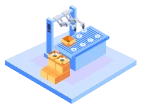
High-precision plastic 3D printed components arranged for large-scale direct digital manufacturing

Production Manufacturing

High-quality surface finishes, tight tolerances as low as ±0.001", and certified material options make CNC machining an excellent technical solution for manufacturing end-product parts.
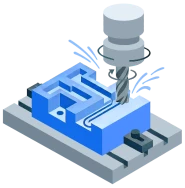

Finished precision CNC machined parts ready for final inspection and shipment from EPTAHUB

Ready To Request Your CNC Machining Quote?

×

EPTAHUB Professional & Intelligent Quoting

Our automated quoting system gives you instant pricing so you can quickly estimate your project costs.

For high-precision or complex parts, our senior account managers can provide more detailed quotes and help you find the best overall solution for your needs.

Get Instant Quote Get a Quote Instantly — ⭐⭐⭐
Request Expert Quote Precise Quotes — ⭐⭐⭐⭐⭐