Home / Carbon Digital Light Synthesis™ (DLS™) 3D Printing Service

Carbon Digital Light Synthesis™ (DLS™) 3D Printing Service

High-Quality Prototypes and Serialized Production Components

Instant 3D Printing Quotation (Icon 1) Instant 3D Printing Quotation (Icon 2) Instant 3D Printing Quotation (Icon 3)

Quote Start A New DLS™

STEP丨STP丨SLDPRT丨STL丨IPT丨3MF丨3DXML丨PRT丨SAT

What Is Carbon DLS™ Technology?

Carbon DLS™ Technology Basics

Carbon leverages digital light projection, oxygen-permeable optics, and programmable liquid resins to craft products boasting end-use durability, precise resolution, and superior surface finish. This advanced 3D printing method is known as Digital Light Synthesis™, or DLS for short. Previously, it was also referred to as Continuous Liquid Interface Production (CLIP). When paired with Carbon’s custom liquid resins, DLS opens up new business prospects and product design possibilities that were once unachievable - including mass customization and on-demand inventory for end-use items.

Carbon serves as a bridge to, and sometimes a replacement for, processes such as Urethane Casting and Injection Molding in production. Its materials are urethane-based or epoxy-based, delivering exceptional mechanical performance. There are even elastomer and silicone resins that outperform most additively manufactured rubber-like materials.


Carbon DLS 3D printed parts demonstrating isotropic strength and smooth surface finish from continuous liquid resin printing

DLS™ Materials Available At EPTAHUB

Material Name Description Shore Hardness Elongation at Break (%) Impact Strength (J/m) Data Sheets
RPU 70 Rigid polyurethane 80D 100% 22 J/m RPU 70 Data Sheet
UMA 90 Urethane methacrylate 86D 17% 33 J/m UMA 90 Data Sheet
EPX 82 Impact-resistant epoxy 89D 5.9% 44 J/m EPX 82 Data Sheet
FPU 50 Flexible polyurethane 71D 280% 40 J/m FPU 50 Data Sheet
EPU 40 Elastomeric polyurethane 68A 310% N/A EPU 40 Data Sheet
SIL 30 Elastomeric silicone-urethane 35A 330% N/A SIL 30 Data Sheet
Standard

Parts created with Carbon DLS technology typically feature a matte to semi-gloss surface finish, which varies based on feature direction. Extended protrusions will display vertical lines parallel to the growth direction. Supports are removed and minimized as needed.

Custom Color (UMA 90)

UMA 90 materials offer custom color mixing options. While black and white are standard, other solid colors can be used for part production.

Custom

If you don’t see the finish you require, submit a Request for Quote (RFQ) and we’ll explore a tailored finishing process for you.

Promotional banner for custom 3D printed parts featuring a free shipping offer

Have A Design Ready Take The Next Step And Get Your 3D Printing Quote

Applications For Carbon DLS™ Technology

Carbon DLS 3D printed parts demonstrating isotropic strength and smooth surface finish from continuous liquid resin printing

Rapid Prototyping

Carbon DLS™ technology enables the creation of strong, flexible, and colorful prototypes.

Close-up of multiple white plastic 3D printed prototypes demonstrating iterative design for concept models

End-Use Functional Parts

Carbon DLS™ materials are fully dense and engineered specifically for end-use applications.
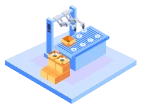
High-precision plastic 3D printed components arranged for large-scale direct digital manufacturing

Direct Digital Manufacturing

Carbon DLS™ printing is perfect for serialized production of small to medium-sized parts.
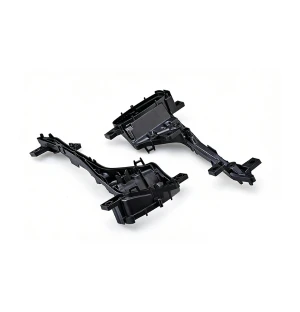
Benefits Of Carbon DLS™ 3D Printed Parts

Functional Carbon DLS 3D printed part showing superior surface finish and engineering-grade material properties
Engineered Materials

3D print directly using urethanes, epoxies, elastomers, and other specialty thermosets.

Complex Shapes and Lattices

Excels at 3D printing lattice structures and organic shapes, setting an industry benchmark.

Scalability

Produce production parts without the need for tooling. Serialized production of small parts is offered at prices competitive with injection molding.

Carbon DLS™ General Tolerances

Description Tolerance Notes
General Tolerances Typically +/- 0.003" for the first inch, plus +/- 0.010" for each subsequent inch. For more detailed DLS tolerances, refer to Our Manufacturing Standards.
Build Size The standard build area is 7.4" x 4.6" x 12.8". Parts exceeding 4" x 4" x 6" in dimensions will require manual review.
Ideal Part Size Parts that are 2" x 1" x 3" or smaller tend to offer the best production economies of scale.
Minimum Wall Thickness A minimum of 0.030" is recommended for any walls, text, or lattice features.
DLP Pixel Resolution Approximately 0.005" square.

This table outlines the general tolerances for Digital Light Synthesis™. Factors such as build stresses, support strategies, and other geometric considerations may lead to deviations in tolerances and flatness. Enhanced tolerances may be possible following a manual quote review and successful prototype completion, which must be approved on a case-by-case basis. General tolerances apply prior to secondary finishing or post-processing, unless stated otherwise. For more information on process-specific tolerances, please review EPTAHUB's Manufacturing Standards.

EPTAHUB 3D printing process comparison guide icon for selecting FDM, SLS, SLA, or Carbon DLS technologies

Choosing The Right 3D Printing Process?

Easily compare 3D printing processes with our quick reference guides.

What Differentiates Carbon

What sets EPTAHUB's Carbon DLS 3D printing service apart from similar processes like Stereolithography (SLA) or PolyJet 3D printing is the resin’s secondary thermal step. This step activates dormant epoxies or urethanes, resulting in parts that are far stronger than those produced through UV-curing alone. Additionally, the digital light synthesis process is continuous, eliminating the layer-by-layer pauses common in most additive manufacturing methods. This imparts isotropic properties to the parts, meaning strength remains consistent regardless of orientation—a significant advantage over processes like Fused Deposition Modeling (FDM), where Z-direction features are often much weaker than those built in the XY-direction.
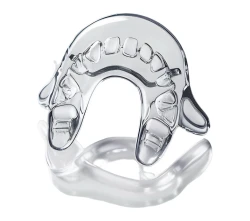
Continuous liquid interface production (CLIP) diagram highlighting Carbon DLS isotropic strength and thermal curing

Real Time Quotation Demonstration

Learn how to use the EPTAHUB (instant Quoting Engine @) Quickly and easily obtain 3D printing quotes.
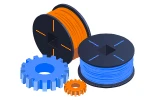
Why Choose EPTAHUB For 3D Printing?

Diverse selection of 3D printing materials, surface treatments, and certifications

Endless Options

Select from millions of possible combinations of materials, finishes, tolerances, markings, and certifications for your order.

Logistics icon symbolizing direct doorstep delivery of managed 3D printing projects

Easy To Use

Have your parts delivered right to your door, without the hassle of sourcing, project management, logistics, or shipping.

ISO 9001 and IATF 16949 certification logos for 3D printing quality assurance

Certified Network

We hold ISO 9001:2015, ISO 13485, and AS9100D certifications.

EPTAHUB 3D printing platform icon for initiating PolyJet projects and high-resolution material selection

Unsure Which Printing Technology To Use?

Unsure which printing technology to use?
×

EPTAHUB Professional & Intelligent Quoting

Our automated quoting system gives you instant pricing so you can quickly estimate your project costs.

For high-precision or complex parts, our senior account managers can provide more detailed quotes and help you find the best overall solution for your needs.

Get Instant Quote Get a Quote Instantly — ⭐⭐⭐
Request Expert Quote Precise Quotes — ⭐⭐⭐⭐⭐