Low-Volume, Durable Production-Quality Components | International Prototype Pricing Covers Tariffs
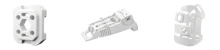
STEP丨STP丨SLDPRT丨STL丨IPT丨3MF丨3DXML丨PRT丨SAT
Urethane casting delivers end-use rigid plastic, rubber, and silicone components that meet production-grade quality standards. EPTAHUB stands out as a leading provider of urethane casting services, offering cost-effective solutions to align with your project timeline and budget—with prototype pricing that includes applicable tariffs. This process leverages a soft-tooling methodology, utilizing 3D-printed master patterns and RTV silicone molds to deliver professional results for low-volume production runs.
Urethane cast parts are an ideal choice when color consistency, surface finish quality, and durability are required for order quantities ranging from 1 to 100 units. For low-volume insert molding or overmolding projects that demand diverse material options, urethane molding serves as a perfect alternative. Whether bridging the gap between 3D-printed rapid prototypes and full-scale injection molding, polyurethane or silicone casting strikes an optimal balance of quality, cost-efficiency, and turnaround time. Urethane cast components can be produced in clear formulations, color-matched to specifications, painted (including EMI shielding applications), fitted with inserts, and customized with specialized finishes.
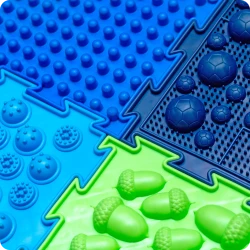
Polyurethane is a widely utilized thermoset material category celebrated for its strength, durability, abrasion resistance, and versatility. Different polyurethane formulations can replicate the properties of numerous common thermoplastics—for instance, a rigid urethane cast part may exhibit "polycarbonate-like" characteristics, while a more flexible variant can mimic polypropylene. EPTAHUB categorizes urethane materials to simplify your decision-making process and ensure your project achieves optimal performance. Below is an overview of material categories and technical examples for reference when selecting polyurethanes:
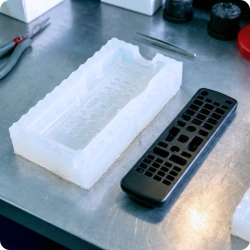
Silicone is not only a key material for creating casting tools but also an exceptional choice for end-use parts. Renowned for its durability, flexibility, tear resistance, inert nature, easy cleanability, and high-temperature tolerance, silicone rubber can achieve ultra-soft durometers as low as Shore A 10 up to medium-hard formulations in the Shore A 60 range. Silicone casting is particularly well-suited for medical devices, surgical models, props, soft-touch housings, kitchen accessories, and more.

Polyurethanes can be blended with pigments to achieve a wide range of colors. Naturally, urethane may range from amber to milky-white. EPTAHUB’s clear urethane formulations are designed to be colorless. Available color options include:


Urethane cast parts excel in low-quantity production scenarios—where the volume does not justify the investment in injection mold tooling—as well as for initial production runs, which can be completed weeks ahead of full production tooling readiness.

The urethane casting process, combined with relatively low-cost tooling, enables easy and economical design modifications. Additionally, multiple materials can be used with the same mold, allowing for material testing across various design iterations.
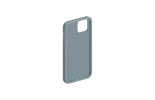
End-user functionality and high-quality finishes make urethane cast parts ideal for consumer testing, user evaluations, and concept models. The urethane casting process facilitates quick design adjustments, supporting both further testing and timely market launches.
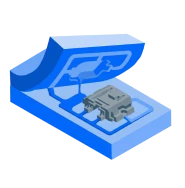
Urethane casting produces end-use rigid, flexible, and rubber components that meet production-level quality standards. The process uses a 3D-printed master pattern to create a silicone mold, delivering high-quality, short-run parts as a cost-effective alternative to low-volume injection molding.
Urethane casting shares similarities with injection molding in that both require a tool with a cavity shaped like the final part. The key difference lies in the mold material: urethane casting uses a "soft" silicone mold, while injection molding relies on a "hard" CNC-machined metal mold. While silicone molds have a shorter lifespan compared to metal molds, urethane casting offers significant cost advantages for low-volume production and prototype plastic parts that demand production-grade quality and surface finishes.
Compared to injection molding or 3D printing, urethane casting offers low-cost, quick-turnaround production of high-quality plastic parts. Unlike injection molding, which requires a substantial upfront investment in mold machining, silicone molds for urethane casting are affordable and easy to produce. Additionally, while most 3D printing processes require extensive post-processing to reach a near-finished state, urethane cast parts are ready for use immediately after removal from the mold. Urethane casting is an excellent choice for creating high-quality prototypes or low-volume production runs of rigid, flexible, clear, colored, or rubber-like plastic components.
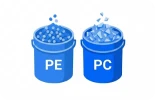
Select from millions of possible combinations of materials, finishes, tolerances, markings, and certifications to meet your project’s unique requirements.

Receive your parts directly at your doorstep without the hassle of sourcing, project management, logistics, or shipping coordination.

EPTAHUB holds ISO 9001:2015, ISO 13485, and AS9100D certifications.
Learn how to easily obtain an instant quote for Urethane and Silicone Casting services through the EPTAHUB Instant Quoting Engine®.
 English English
  German
 Spanish
 French
 Japanese
 Korean
 Malay
Malay
 Portuguese
 Russian
 Thai
Thai
Our automated quoting system gives you instant pricing so you can quickly estimate your project costs.
For high-precision or complex parts, our senior account managers can provide more detailed quotes and help you find the best overall solution for your needs.