








Often, I see RFQs come across my desk that simply state “Birch Plywood” or “Birch Wood.” From an engineering and cost-control perspective, this is a dangerous oversimplification. There is a massive structural, financial, and mechanical gulf between standard birch plywood you find at a local lumberyard and true Baltic Birch plywood imported from the Baltic region.
Why is Baltic Birch plywood the best? Why does it dominate the specifications for high-end acoustic speakers, precision jigs, die-making boards, and premium Baltic birch cabinets? The answer lies not in the face veneer, but in the unseen architecture of its core.
What Exactly is Baltic Birch?
To understand what is special about Baltic Birch plywood, you must look at its cross-section. Standard plywood is often built with a thin, attractive hardwood face veneer (often as thin as 0.5mm) glued over thick, soft, and cheap inner plies like pine, poplar, or even MDF.
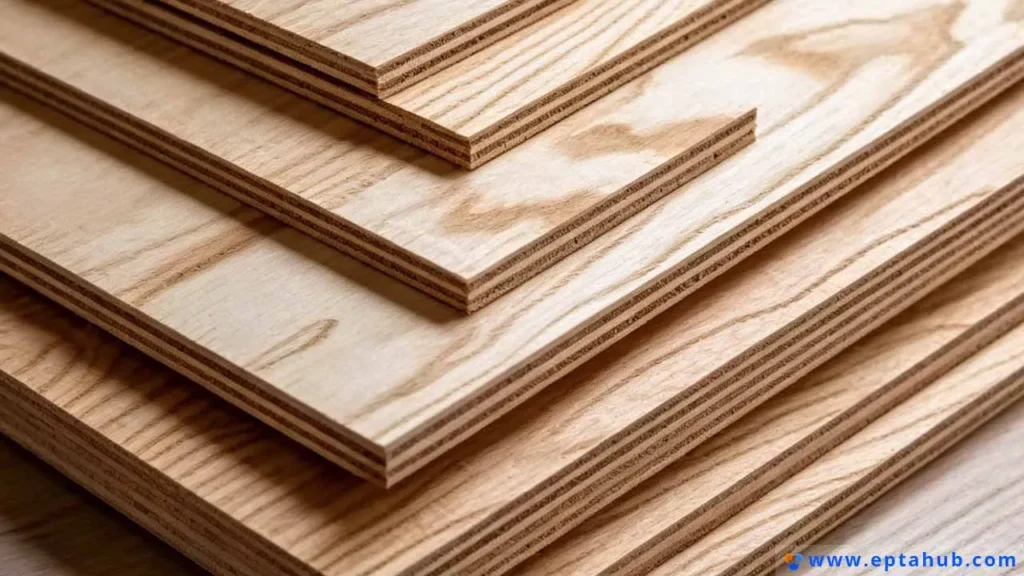
Baltic Birch (scientifically derived from Betula pendula or Betula pubescens, grown in the cold climates of the Baltic Sea region, Russia, and Finland) is manufactured using a completely different philosophy.
1. 100% Hardwood Core Construction
Every single layer (ply) of Baltic Birch is made of birch. There is no softwood filler. Because it grows slowly in freezing temperatures, the wood density is exceptionally high (typically around 680-720 kg/m³). This uniform density across the entire thickness provides predictable isotropic properties that engineers crave.
2. Uniform 1.5mm Veneers and Cross-Banding
Unlike standard plywood that might use thick 3mm or 4mm core layers, Baltic Birch uses uniform, thin 1.5mm veneers throughout its entire structure. A 3/4-inch (18mm) sheet of standard plywood might have 5 to 7 layers. A sheet of 18mm Baltic Birch will have 13 layers. These layers are meticulously cross-banded (the grain of each layer runs exactly perpendicular to the adjacent layer). This dense, multi-ply cross-banding makes the panel incredibly dimensionally stable, highly resistant to warping, and gives it an exceptional Modulus of Elasticity (MOE).
3. The “Void-Free” Promise
This is the holy grail for CNC operators and engineers. In standard plywood, the core layers often have knots that have fallen out or gaps between the veneer sheets, creating hidden voids inside the panel. True Baltic Birch is manufactured to a strict standard where inner core defects are patched or jointed, resulting in a virtually void-free solid core.
Baltic Birch vs. Standard Birch: The Procurement Trap
One of the most common related searches I see is “What is the difference between baltic birch plywood and birch plywood?” or simply “baltic birch vs birch.”
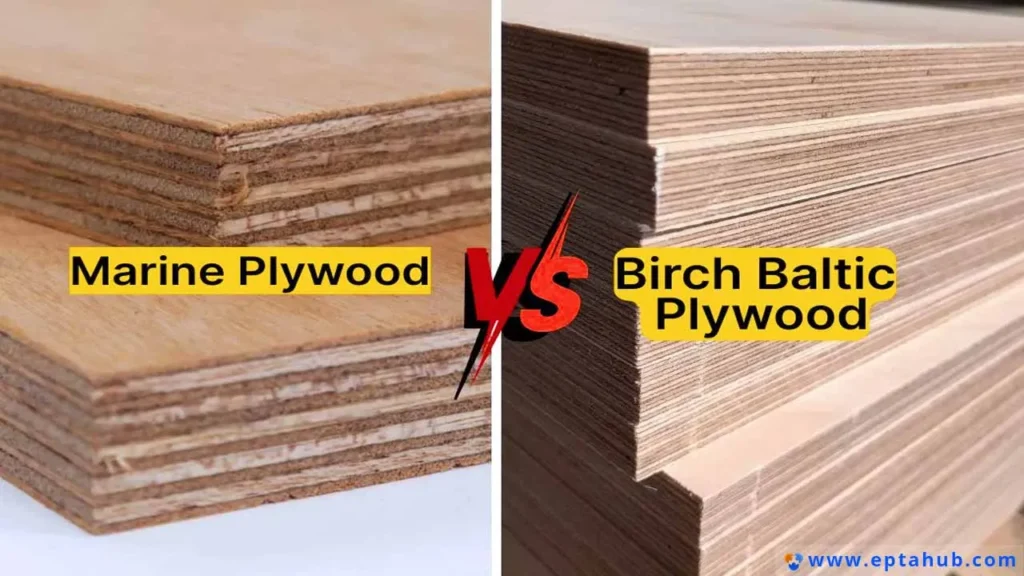
When technical procurement teams try to cut costs, they often substitute Baltic Birch with domestic or standard Birch plywood. This usually results in a catastrophic failure on the manufacturing floor. Let’s look at the mechanical and practical differences.
Technical Comparison: Baltic Birch vs. Standard Birch Plywood
| Feature / Property | True Baltic Birch Plywood | Standard Domestic Birch Plywood | Engineering Impact |
|---|---|---|---|
| Core Material | 100% Birch Veneers | Poplar, Pine, Fir, or MDF | Baltic Birch offers uniform density and superior structural rigidity. |
| Ply Count (for 18mm/¾”) | 13 Plies (all 1.5mm thick) | 5 to 7 Plies (thick inner layers) | Higher ply count equals higher resistance to warping and better load distribution. |
| Face Veneer Thickness | Typically 1.5mm (thick) | Often 0.5mm (paper-thin) | Standard birch sands through easily during finishing; Baltic Birch allows for heavy sanding. |
| Internal Voids | Virtually None (Solid Core) | Common and unpredictable | Voids in standard birch cause fastener failure, routing blowouts, and moisture pooling. |
| Screw Holding Capacity | Exceptional (Edge and Face) | Poor on edges, moderate on face | Baltic Birch can hold screws directly into its edge without splitting; standard plywood will split instantly. |
| Exposed Edge Aesthetics | Architecturally beautiful, solid striping | Ugly, visible gaps, requires edge banding | Baltic Birch edges are often left exposed and clear-coated in high-end furniture and cabinets. |
Speaking the Supplier’s Language
If you send an RFQ for “Baltic Birch plywood 4×8,” the first question a reputable supplier will ask is, “What grade?”
Unlike domestic plywood which uses letters (A, B, C, D) for the face and back, Baltic Birch uses a specific European/Russian grading scale based on the visible quality of the outer veneers. The core remains structurally identical regardless of the face grade; you are purely paying for aesthetics.
As an engineer, you must specify the correct grade to avoid overpaying. There is no reason to specify a B/BB grade for a hidden structural component.
- B/BB: The highest commonly available grade. The “B” face is a single piece of veneer with no splices, uniform color, and no patches. The “BB” back may have a few color variations and small, color-matched “football” patches (where knots were punched out and replaced with birch wood plugs). Best for: Premium Baltic birch cabinets, high-end furniture, clear-coat finishes.
- BB/BB: Both sides allow for color variations, mineral streaks, and the characteristic football patches. The surface is still sanded perfectly smooth. Best for: CNC routing, speaker cabinets, shop jigs, and any application that will be painted or veneered over.
- BB/CP or CP/CP: The “CP” grade allows for unlimited patches, larger open knots, and split defects. Best for: Structural sub-assemblies, upholstered furniture frames, die-making, where the visual appearance is entirely irrelevant.
- C/C: The lowest grade. Not sanded, allows for large open defects on the face. Best for: Packaging, crating, and rough structural use.
The Metric vs. Imperial Conversion Trap
A critical failure point in mechanical design is misunderstanding the sizing of Baltic Birch. If you are designing a mortise and tenon joint, or a slot for a panel to slide into, relying on imperial fractions will ruin your tolerances.
The Format: 5×5 vs. 4×8
Historically, the presses in the Baltic region were designed to make 1525mm x 1525mm sheets. Therefore, the true, traditional format of Baltic Birch is 5′ x 5′.
Today, due to North American demand, mills also produce “Baltic birch plywood 4×8” (1220mm x 2440mm). However, 4×8 sheets are often significantly more expensive per square foot than 5×5 sheets because the grain runs along the 8-foot length, requiring different veneer layups, and the supply is tighter. If your CNC nesting software can handle 5×5 sheets, you will immediately save money on your RFQ.
The Thickness Trap: “112 birch plywood” and “baltic birch 3/4 plywood”
Searches like “baltic birch 3/4 plywood” highlight a massive design trap. Baltic birch is manufactured strictly to metric dimensions. It is never exactly 3/4″ or 1/2″.
If a designer draws a slot exactly 0.750″ wide for a “3/4 inch” Baltic Birch panel, the panel (which is actually 18mm, or 0.708″) will slop around in the joint with a massive 0.042″ gap.
Essential Engineering Conversion Table for Baltic Birch Thickness
| Imperial Common Name | Actual Metric Production Thickness | Exact Decimal Equivalent (Inches) | Number of Plies (Typical) |
|---|---|---|---|
| 1/8″ | 3 mm | 0.118″ | 3 |
| 1/4″ | 6 mm | 0.236″ | 5 |
| 3/8″ | 9 mm | 0.354″ | 7 |
| 1/2″ (“112 birch plywood”) | 12 mm | 0.472″ | 9 |
| 5/8″ | 15 mm | 0.590″ | 11 |
| 3/4″ | 18 mm | 0.708″ | 13 |
| 1″ | 24 mm | 0.944″ | 17 |
Engineer’s Tip: Always design your CAD models and set your CNC toolpaths using the exact metric decimal equivalent. Furthermore, always use a caliper on your specific batch before running a large CNC production, as moisture content can cause a ±0.3mm variance in thickness.
Engineering Case Study: The CNC Routing Void Disaster
To illustrate why engineers insist on Baltic Birch despite the cost, let’s look at a failure case study from my own floor involving precision machining.
The Scenario: A client requested a batch of 500 complex acoustic baffles for studio monitors. The design required intricate, 3D-chamfered holes and deep pocketing. To save 30% on material costs, the client’s procurement team substituted our specified 18mm BB/BB Baltic Birch with a premium domestic 3/4″ “Cabinet Grade” Birch plywood.
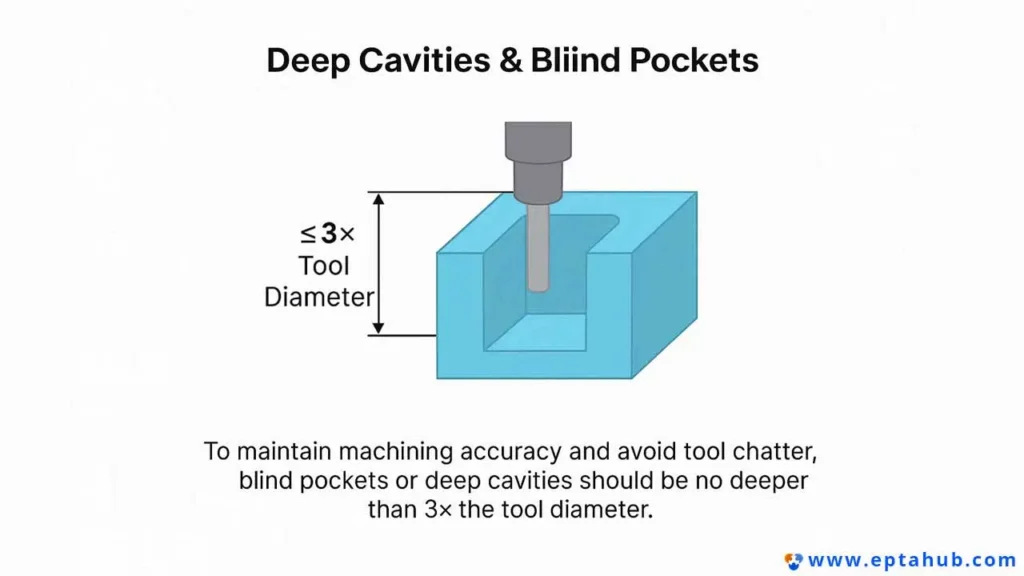
The Failure: As soon as the CNC router began the pocketing operations, the nightmare started. The domestic plywood had hidden internal voids in the poplar core. When the spinning router bit hit these air pockets, it lost structural support. The adjacent veneers violently chipped out, completely destroying the acoustic properties and visual appeal of the baffles.
Furthermore, the fast-growing softwood core of the domestic ply could not hold the threaded inserts required to mount the speakers; the inserts stripped out at just 15 Nm of torque.
The Resolution: We halted production, scrapped 40 ruined sheets, and re-ordered true 18mm Baltic Birch. The void-free core machined like dense plastic, yielding perfectly crisp chamfers with zero chip-out. The 13-ply hardwood structure held the threaded inserts flawlessly up to 45 Nm of torque. The “cheap” domestic plywood ended up costing the client an extra 15% in scrapped material, machine downtime, and delayed delivery.
Why is Birch Plywood So Expensive?
If you’ve searched “baltic birch plywood near me” recently, you’ve likely suffered sticker shock. Why is birch plywood so expensive today? The answer is a mix of botany, manufacturing complexity, and geopolitics.
- Growth Rate: Betula pendula grows very slowly in sub-zero climates. It takes decades for a tree to reach a harvestable diameter. You cannot rush this process; the slow growth is exactly what provides the tight grain and high density that makes the wood so valuable.
- Manufacturing Intensity: Creating 13 perfectly uniform 1.5mm veneers, patching every defect by hand, and pressing them requires significantly more labor and adhesive than throwing three thick, unpatched softwood plies together.
- Geopolitical Supply Chain Shocks: The vast majority of the world’s high-quality birch forests are located in Russia, Belarus, and the Baltic states. Recent geopolitical conflicts and subsequent international trade sanctions have effectively removed Russian and Belarusian birch from the North American and Western European markets. This massive reduction in global supply, paired with unrelenting demand from the aerospace, automotive, and high-end furniture sectors, has caused prices to skyrocket.
This leads directly to the frantic search for a “baltic birch plywood alternative”—a topic of critical importance for modern manufacturing that we must evaluate with extreme caution.
Can Baltic Birch Plywood Get Wet?
I frequently see junior designers incorrectly assume that “premium material” equals “waterproof material.”
So, can baltic birch plywood get wet? The strict engineering answer is: It depends entirely on the adhesive specified in your RFQ, but the wood fibers themselves will eventually fail if left unprotected.
To procure the right material and avoid catastrophic field failures, you must understand the chemistry of the adhesives used in Baltic Birch manufacturing. You cannot simply order a sheet and expect it to survive outdoor exposure.
The Standard UF Adhesive: Interior Grade Limitations
Historically, the vast majority of standard Baltic Birch is bonded using Urea-Formaldehyde (UF) glue. In the industry, this is designated as an “Interior” (MR – Moisture Resistant) grade. While UF glue creates an incredibly rigid and structurally sound panel for climate-controlled environments, it is fundamentally not designed to withstand prolonged exposure to water or high-humidity cycling.
If an interior-grade panel gets soaked, the UF adhesive bonds will undergo hydrolysis and begin to break down. This leads to delamination—the catastrophic peeling apart of the 1.5mm veneers, rendering the panel structurally useless.
Specifying WBP (Water Boiled Proof) for Harsh Environments
For applications where moisture is a known variable, you must explicitly write “Exterior Grade WBP Baltic Birch” on your purchase orders. WBP stands for “Water Boiled Proof” (or Weather and Boil Proof). These premium panels are bonded using dark Phenol-Formaldehyde (PF) resins.
You can easily verify WBP Baltic Birch on the receiving dock by inspecting the exposed edge: the glue lines between the light birch veneers will be distinctly dark brown or nearly black. A true WBP panel is tested by being submerged in boiling water for 24 to 72 hours without the glue lines failing.
The Crucial Engineering Caveat: Even if you specify WBP exterior glue, the birch wood itself is not naturally rot-resistant. Unlike Cedar or Teak, birch lacks natural protective oils. The 13-ply exposed edge of a Baltic Birch panel acts like a sponge, wicking moisture directly into the core through capillary action. If used outdoors (like in teardrop camper builds), you must seal every exposed edge thoroughly with a marine-grade epoxy or a high-solids polyurethane sealant. The glue won’t fail, but the unsealed wood will rot.
What Are the Disadvantages of Birch Plywood?
No material is a magic bullet. As a senior engineer, I must design around a material’s weaknesses just as meticulously as I leverage its strengths. While Baltic Birch is the gold standard for many applications, specifying it blindly can lead to manufacturing bottlenecks. So, exactly what are the disadvantages of birch plywood?
Extreme Density and Ergonomic Hazards on the Shop Floor
Density is a double-edged sword. The same ~720 kg/m³ density that provides Baltic Birch with its incredible screw-holding capacity also makes it brutally heavy. A standard 4×8 sheet (1220x2440mm) of 3/4″ (18mm) Baltic Birch weighs approximately 70 to 75 lbs (32-34 kg).
- Manufacturing Impact: Handling these sheets safely requires two operators or a vacuum lift assist on the CNC loading zone. Relying on a single operator leads to fatigue, slower cycle times, and a drastically higher risk of workplace musculoskeletal injuries.
High Tooling Wear and Machining Costs
The dense hardwood layers contribute to tooling wear, but the real hidden cost lies in the adhesive. A 3/4″ sheet has 12 distinct glue lines. Especially in WBP exterior grades, the phenolic resin is highly abrasive.
- Manufacturing Impact: When routing or cutting Baltic Birch, standard HSS (High-Speed Steel) or economy carbide tooling will dull exceptionally fast, leading to edge burning and increased spindle load. You must factor the cost of premium solid carbide or Diamond-tipped (PCD) compression router bits into your production BOM to maintain clean, burn-free edge cuts.
Splintering and Tear-Out on Cross-Cuts
Because the face veneers are a uniform 1.5mm and relatively brittle, cross-cutting the face veneer with a standard woodworking table saw blade will result in aggressive splintering (tear-out).
- Manufacturing Impact: To achieve perfectly clean cuts, your shop must utilize specific High-Tooth Count ATB (Alternating Top Bevel) or Hi-ATB blades, ideally paired with a zero-clearance insert. On automated panel saws, a scoring blade is absolutely mandatory.
Supply Chain Volatility and Cost Fluctuations
As discussed in the pricing section, true Baltic Birch is subject to extreme price volatility due to its geographic origin (Russia, Belarus, Baltic States). Relying solely on this single-source material for a multi-year production run puts your entire business at the mercy of international trade sanctions, tariffs, and shipping container shortages.
Evaluating the Best Baltic Birch Plywood Alternative
Given the high costs and supply chain risks, the most frequent question I receive from technical procurement teams trying to value-engineer a product is: “What is a viable baltic birch plywood alternative?
The answer requires an engineering assessment of why you specified Baltic Birch in the first place. Are you after the void-free core for precision CNC routing? The aesthetic of the exposed edge? Or the raw structural rigidity?
Here is a technical breakdown of the most common alternatives you will encounter, and when it is safe to substitute them on your BOM without compromising product integrity.
Technical Procurement Matrix: Core Comparisons
| Alternative Material | Core Composition | Primary Advantage | Primary Disadvantage | Best Engineering Application |
|---|---|---|---|---|
| ApplePly® (North American) | Alder or Poplar with Birch/Maple Face | Void-free, machines beautifully, excellent exposed edge aesthetic. | Slightly softer core (lower screw holding torque), often more expensive. | High-end cabinets, precision jigs, premium furniture. |
| Euro-Ply (Garnica / Poplar Core) | 100% European Poplar | Incredibly lightweight, void-free, sustainable and stable supply chain. | Much softer than birch; dents easily; lower Modulus of Elasticity (bends easier). | RV/Camper interiors, lightweight suspended ceiling panels, theatrical sets. |
| Marine Grade Plywood (Okoume) | Okoume or Meranti hardwoods | Superior moisture resistance (WBP standard), void-free, consistent quality. | Darker wood color, open grain face requires extensive prep for smooth painting. | Boat building, outdoor architectural fixtures, wet-environment tooling. |
| Asian “Birch” (The Procurement Trap) | Eucalyptus, Acacia, or mixed hardwood core | Very cheap upfront cost, readily available globally. | High internal voids, unpredictable warping, toxic glues, inconsistent thickness. | Rough crating, temporary shipping templates. Never specify for precision CNC. |
The Procurement Warning: Be exceptionally wary of suppliers offering deeply discounted “Birch Plywood.” This is almost always an Asian-imported product with a paper-thin (0.5mm) birch face veneer hiding a low-quality Eucalyptus core full of voids. If the price seems too good to be true, it is not Baltic Birch. Always demand a technical data sheet (TDS) detailing the core species and the exact number of plies before issuing a Purchase Order.
FAQs
To streamline your next project, I have compiled the most common questions our team at eptahub.com fields regarding the specification and handling of this material.
Q1: What exactly is “112 birch plywood”?
This is one of the most common search typos we encounter in procurement logs. “112 birch plywood” is almost always a typographical error for 1/2″ birch plywood. As noted in our dimensional trap section, if you are looking for 1/2″ Baltic Birch, you actually need to specify 12mm Baltic Birch, which typically consists of 9 engineered plies of birch veneer.
Q2: Why are Baltic birch cabinets considered high-end, and are they worth the investment?
Baltic birch cabinets are highly sought after in premium millwork for two distinct technical reasons. First, the dense 13-ply core provides unmatched screw-holding power; heavy cabinet doors won’t sag over time because the hinge screws won’t strip out of the side panels. Second, designers favor the architectural look of the exposed, void-free multi-ply edge. Instead of covering the edge with cheap PVC edge-banding, builders sand and clear-coat the raw edge, proving to the end-user that the cabinet is constructed from solid, high-integrity material rather than melamine-faced particleboard.
Q3: Where can I find true Baltic birch plywood near me?
Do not waste your time at big-box home improvement retail stores. They typically only stock standard, softwood-core domestic plywood or the cheap “Asian Birch” imports mentioned above. To source true Baltic Birch, you must search for dedicated “hardwood lumber dealers,” “wholesale specialty plywood distributors,” or “cabinetry supply houses” in your industrial sector.
Q4: Can I use Baltic Birch for flooring?
While you wouldn’t use it as the top visible wear layer of a residential floor (the face veneer is slightly too soft for high foot traffic compared to solid oak or maple), Baltic Birch is widely considered the absolute best sub-flooring material for engineered hardwood floors, or in critical structural applications like commercial dance floors and theatrical stages. Its multi-ply dimensional stability actively prevents floor squeaking and seasonal warping.
Q5: How should I finish Baltic Birch to prevent it from yellowing?
Birch naturally has a highly desirable light, creamy color. However, many clear coats (especially traditional oil-based polyurethanes) will cause it to amber or turn aggressively yellow as it cures and ages. If your design intent is to maintain the modern, pale look of the raw wood, explicitly specify a Water-Based Polyurethane (like Bona Mega) or a hardwax oil formulated with white pigments (like Rubio Monocoat Cotton White) in your finishing documentation.
Specifying Baltic Birch with Confidence
Baltic Birch is not just a piece of “wood”—it is a highly engineered, predictable composite material. Its void-free 100% hardwood core, uniform multi-ply construction, and exceptional machinability make it the undisputed heavyweight champion of the CNC routing floor and the high-end cabinetry shop.
However, as a seasoned engineer, my final advice is to specify it surgically. Use true Baltic Birch where its mechanical properties—edge holding, rigidity, and void-free routing—are strictly required. For components where extreme weight is a detriment, or where the core is completely hidden and under low stress, pivot to calculated alternatives like Poplar Euro-ply to optimize your BOM and protect your supply chain.
By understanding the metric sizing traps, the strict grading system, and the critical differences in adhesive chemistry, you can stop throwing money at vague RFQs and start procuring exactly what your project needs to succeed.
Authoritative References & Further Technical Reading
To support your internal engineering standards, update your CAD libraries, and enhance your supplier verification processes, please refer to the following industry authorities. (Note: Always verify the latest revisions of these standards).
1.APA – The Engineered Wood Association
Provides extensive guidelines on plywood grading, structural properties, and proper mechanical fastening techniques. While primarily focused on North American standards, their technical notes on veneer core performance and shear strength are universally applicable to multi-ply panels.
Link: APAwood.org
2.Architectural Woodwork Institute (AWI) Standards
For designers detailing Baltic Birch cabinets or commercial fixtures, the AWI standards dictate the acceptable uses of veneer core plywood in Premium, Custom, and Economy grades of architectural millwork.
Link: AWI Standards