











As a manufacturing engineer at EPTAHUB with over a decade of experience, one of my biggest pet peeves is receiving a Request for Quote (RFQ) from a procurement manager that says: “We need this electronic enclosure potted in resin.”
When I see the word “resin” used that loosely, a red flag immediately goes up.
In the consumer world, the terms “epoxy” and “resin” are thrown around interchangeably. People search Google for “what is the difference between epoxy and resin” or “difference between art resin and epoxy resin” because they are trying to pour a shiny topcoat on a DIY river table or make custom jewelry.
If you are a hobbyist pouring coasters in your garage, this terminology doesn’t matter. But if you are a B2B hardware startup, an aerospace tier-2 supplier, or a medical device manufacturer, confusing these terms will lead to catastrophic product failures, chemical leaching, and massive financial losses.
In industrial manufacturing, “Resin” is just an umbrella term—a category of materials. “Epoxy” is a highly specific, structurally elite subset of that category.
Are Epoxy and Epoxy Resin the Same Thing?
Let’s answer the most common Google related search immediately: “Are epoxy and epoxy resin the same thing?”
Yes and no. In an industrial context, when an engineer says “epoxy,” they are using shorthand for “epoxy resin system.” However, the confusion arises because “resin” on its own is a meaningless engineering specification.
What is “Resin”?
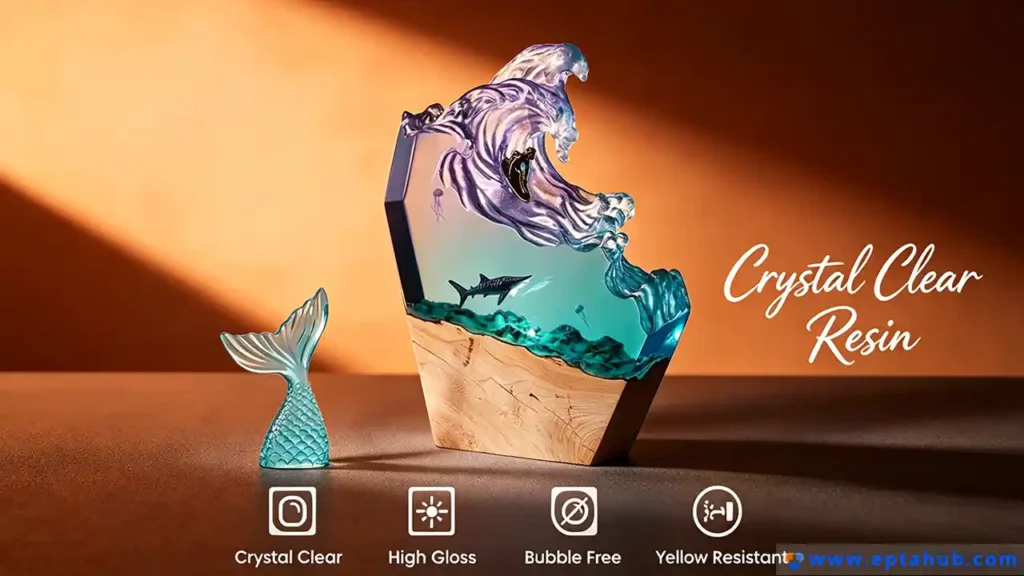
Scientifically, a resin is a highly viscous substance that converts into a rigid polymer. Originally, the term described plant secretions (like tree sap or amber). Today, in the synthetic plastics industry, “resin” refers to any liquid polymer base that requires a catalyst or hardener to cure.
Under the umbrella of “Resins,” you have dozens of distinct chemical families:
- Polyester Resins (Used in cheap fiberglass boat hulls)
- Polyurethane Resins (Used in flexible casting and urethane rubber)
- Silicone Resins (Used for high-heat flexible molds)
- Acrylic Resins (Used in clear plastics like Plexiglass)
- Epoxy Resins (The structural king of the group)
So, asking “What’s the difference between resin and epoxy?” is like asking, “What’s the difference between a vehicle and a Ford F-150?” Epoxy is simply one specific, highly engineered type of resin.
What is “Epoxy”?

Epoxy (specifically, a polyepoxide) is a thermosetting polymer. It is formed by mixing two distinct chemical components: a resin (usually containing bisphenol-A and epichlorohydrin) and a hardener (usually a polyamine).
When these two parts are mixed in a precise ratio, an exothermic (heat-generating) chemical reaction occurs. The molecules cross-link, forming a tightly bound 3D microscopic web. Once this cross-linking happens, the process cannot be reversed. Unlike thermoplastics (like ABS or Polycarbonate) that can be melted down and reshaped, a cured epoxy is permanent. If you heat it up too much, it doesn’t melt—it burns.
Source Validation: The chemical definition and cross-linking behavior of polyepoxides are standard principles of polymer chemistry, extensively documented by the American Chemical Society (ACS) and standard textbooks such as Polymer Science and Technology by Joel R. Fried.
Epoxy vs. Polyester Resin
When a B2B buyer asks “What’s cheaper, epoxy or resin?”, what they are actually asking is: “What is the cost difference between Epoxy and Polyester Resin?”
In commercial manufacturing, Polyester Resin is the default “cheap” resin. It is what most fiberglass tubs, cheap boat hulls, and automotive body fillers (like Bondo) are made of. When you are deciding how to manufacture a composite part at EPTAHUB, the choice between Polyester and Epoxy comes down to three factors: Strength, Shrinkage, and Cost.
1. Mechanical Strength and Adhesion
Epoxy is vastly superior to polyester resin in sheer mechanical strength.
Polyester resins are relatively brittle. They have poor micro-cracking resistance and they do not act as great adhesives. This is why a cheap fiberglass boat hull will easily crack if it hits a dock.
Epoxy, on the other hand, is arguably the strongest adhesive on the planet. Its cross-linked molecular structure allows it to bond aggressively to almost any surface (wood, metal, carbon fiber, glass).
- Industrial Application: If we are laying up a carbon-fiber drone chassis at EPTAHUB, we strictly use high-modulus epoxy. Using polyester resin with carbon fiber is a waste of money, as the resin will shatter long before the carbon fibers reach their yield strength.
2. Dimensional Stability (Shrinkage)
When polyester resin cures, the chemical reaction causes the material to shrink significantly—often by up to 7%.
If you are casting a precision housing for an electronic device, a 7% shrinkage rate will crush the internal circuit boards or warp the entire assembly out of tolerance.
Epoxy has an incredibly low shrinkage rate, typically under 1%. When you pour 10 cubic inches of epoxy into a mold, you get roughly 9.9 cubic inches of cured plastic. This dimensional stability is why epoxy is the mandatory standard for precision industrial potting and tooling.
3. The Economics (Cost per Pound)
Here is where the procurement team steps in.
Polyester resin is a commodity. In bulk industrial drums, polyester resin generally costs between 2.00 USD and 4.00 USD per pound.
Standard industrial-grade epoxy, due to its complex chemical synthesis, starts around 7.00 USD per pound and can easily exceed 20.00 USD per pound for specialized aerospace grades.
- The B2B Reality: If you are manufacturing 10,000 architectural fiberglass columns where weight and extreme structural integrity don’t matter, use polyester. If you are manufacturing a high-pressure pump impeller or a structural aircraft bracket, you pay the premium for epoxy.
Source Validation: General commodity pricing structures for polyester versus epoxy resins fluctuate with the global petrochemical market, but the standard 2x to 5x price multiplier between polyester and epoxy is an accepted industry baseline documented by market research firms like Grand View Research and Mordor Intelligence.
What is Epoxy Resin Used For?
Let’s move past the consumer searches for “resin or epoxy for table top” or “resin vs epoxy for wood”. If you are reading this, you are likely not making a river table. You are designing hardware.
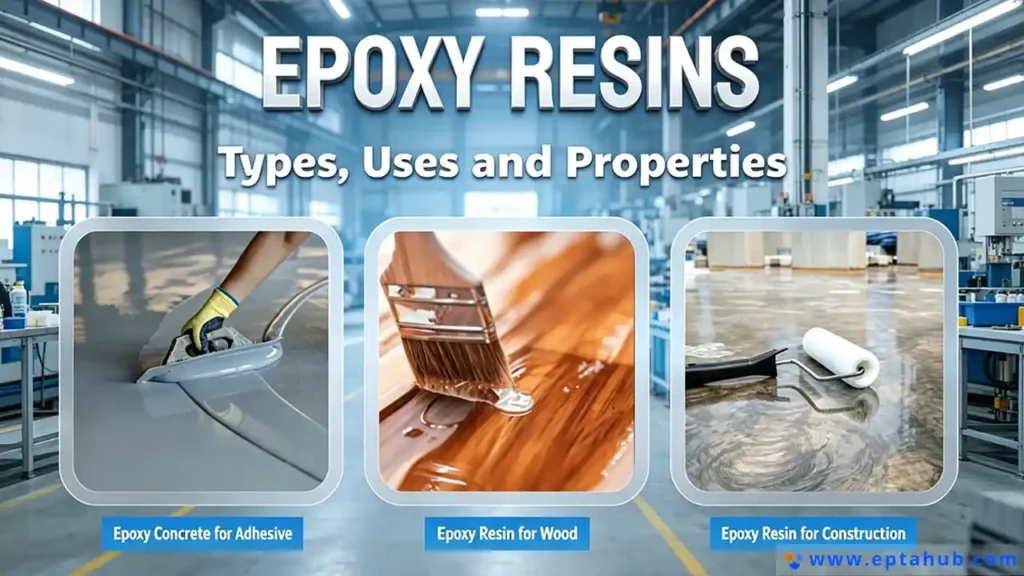
At EPTAHUB, here are the three primary ways we utilize industrial epoxy systems in advanced manufacturing:
1. Electronic Potting and Encapsulation
In the aerospace, automotive, and military sectors, circuit boards (PCBs) cannot simply be placed inside a plastic box. Vibration, moisture, salt spray, and thermal shock will destroy a bare PCB in days.
To solve this, we “pot” the electronics. We place the fully assembled circuit board into an enclosure and fill the entire void with a specialized, low-viscosity liquid epoxy. Once cured, the PCB is permanently encased in a solid block of impact-resistant, waterproof plastic.
- Why Epoxy over Polyurethane? While polyurethane resins are cheaper and more flexible, epoxy provides superior chemical resistance and much higher thermal conductivity (drawing heat away from the processors).
2. Advanced Composites (Carbon Fiber & Kevlar)
Epoxy is the “glue” that makes high-performance composites possible. When you look at a Formula 1 car chassis or the wing of a Boeing 787, you are looking at layers of woven carbon fiber suspended in an epoxy matrix. The carbon fibers provide the tensile strength (preventing stretching), while the epoxy provides the compressive strength and locks the fibers in place.
3. Industrial Tooling and Jigs
Machining custom aluminum holding fixtures for a CNC machine is incredibly expensive. To save our clients money on NRE (Non-Recurring Engineering) costs, EPTAHUB frequently uses aluminum-filled epoxy. We can 3D print a master mold and pour this specialized epoxy to create custom work-holding jigs in 24 hours. Once cured, this epoxy can be drilled and tapped just like solid metal, but at a fraction of the cost of machining raw steel.
Is Epoxy Resin Toxic?
When transitioning a prototype from a small engineering lab to a full-scale assembly line, environmental health and safety (EHS) becomes a massive financial liability. A frequent search query from cautious founders is: “Is epoxy resin toxic?”
The B2B answer is: It depends entirely on what state the epoxy is in.
1. The Uncured State (Highly Hazardous)
Before epoxy is mixed and cured, the individual chemical components are hazardous. The “Hardener” side of an epoxy system is typically an amine-based chemical. Liquid amines are highly corrosive, severe skin irritants, and can cause intense respiratory distress if inhaled in a poorly ventilated space.
Furthermore, repeated skin exposure to uncured liquid epoxy can cause a condition known as “Epoxy Sensitization.” This is a severe, permanent allergic reaction. Once a factory worker becomes sensitized, even the slightest vapor exposure will cause a massive rash or respiratory attack, permanently removing them from that assembly line.
At EPTAHUB, handling uncured industrial epoxy requires strict OSHA-compliant protocols, including nitrile gloves, organic vapor respirators, and localized fume extraction hoods.
2. The Exothermic Cure (The Danger Zone)
When the resin and hardener are mixed, they generate heat. If you mix a large batch of industrial epoxy too quickly in a confined cup, the chemical reaction can undergo a “Thermal Runaway.” The heat accelerates the curing, which generates more heat, until the epoxy physically boils, smokes, and can even melt the plastic mixing container or catch fire.
3. The Cured State (Inert and Safe)
Once the cross-linking chemical reaction is 100% complete and the epoxy has returned to room temperature, the resulting solid plastic is completely inert, non-toxic, and stable. Fully cured epoxy will not leach chemicals into the environment, which is why specialized food-grade epoxies are used to coat the inside of commercial drinking water tanks and canned food linings.
Source Validation: The health hazards of uncured epoxies and amine hardeners, specifically regarding Epoxy Sensitization, are heavily documented by the Occupational Safety and Health Administration (OSHA) and the National Institute for Occupational Safety and Health (NIOSH).
Difference Between Art Resin and Epoxy Resin
Hardware startups often try to cut corners during the prototyping phase. I have seen junior engineers buy a gallon of “Art Resin” from a craft store to pot a high-voltage sensor, assuming that “epoxy is epoxy.” This usually results in a catastrophic failure during testing.
Understanding the difference between art resin and epoxy resin (industrial grade) is critical for your Bill of Materials.
1. Viscosity (Thickness)
- Art Resin: Designed to be thick, like honey. It is formulated to self-level on flat surfaces (like a table top) and cure slowly so bubbles can escape.
- Industrial Epoxy: Can be engineered to be thinner than water. If we are potting a complex PCB at EPTAHUB, the epoxy must have an ultra-low viscosity so it can flow under tiny microchips and into microscopic crevices without trapping air pockets.
2. Thermal Resistance (Tg)
- Art Resin: Typically has a very low Glass Transition Temperature (Tg)—often around 120°F (49°C). If you leave a coaster made of art resin in a hot car, it will get soft and bend.
- Industrial Epoxy: Aerospace and electronic-grade epoxies are formulated with specific chemical structures to withstand extreme heat. A high-temp industrial epoxy might have a Tg of 350°F (176°C) or higher. If you pot a heat-generating processor in cheap art resin, the resin will melt, expand, and rip the components off the circuit board.
3. UV Stability
- Art Resin: Highly engineered with UV inhibitors to prevent it from turning yellow when exposed to sunlight (because visual aesthetics are the only thing that matters for art).
- Industrial Epoxy: Often turns amber or chalky yellow under UV light because industrial manufacturers don’t waste money adding UV inhibitors to structural adhesives that will be hidden inside a metal chassis or covered in paint.
Case Study: The 64,000 USD Potting Failure
To illustrate the importance of specifying the exact type of resin system, let’s look at a rescue project we handled at EPTAHUB last year.
A marine technology startup designed a proprietary underwater sonar module. They needed the internal electronics to be completely waterproofed to survive at a depth of 300 feet. To save money during their initial pilot run of 400 units, their procurement team bypassed a specialized contract manufacturer and simply had their assembly house fill the aluminum housings with a cheap, off-the-shelf polyurethane resin.
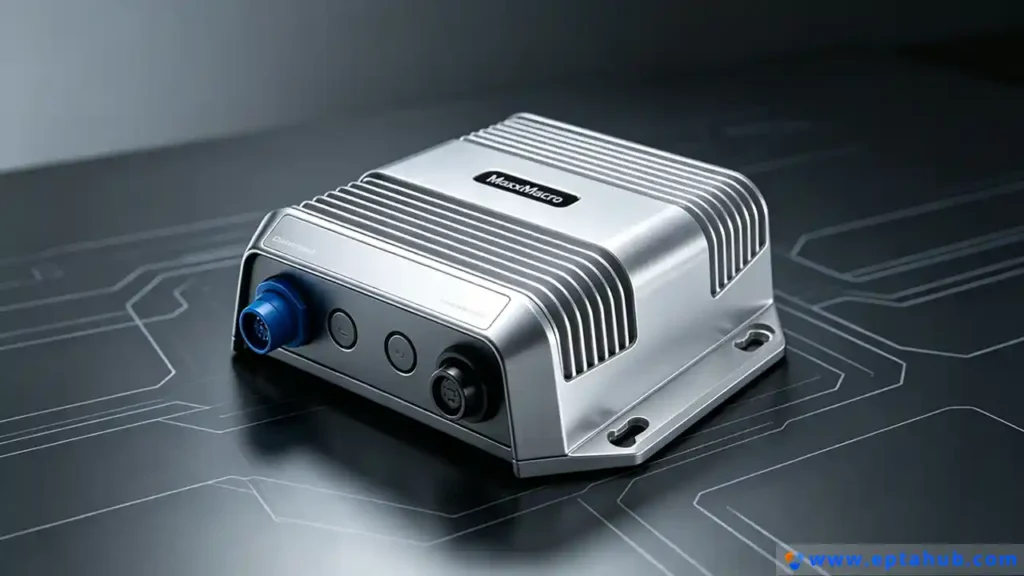
The Problem:
Six months after deployment, the client experienced a 30% field failure rate.
The polyurethane resin they chose was flexible and highly waterproof, but it had a high Coefficient of Thermal Expansion (CTE). In the ocean, the water temperatures fluctuated wildly. Every time the resin got cold, it shrank slightly. Every time it warmed up, it expanded. This microscopic, repetitive expanding and contracting physically ripped the delicate surface-mount resistors off the internal circuit boards.
- Cost of Failed Units: 400 units at 160.00 USD each = 64,000 USD in destroyed inventory (not including the cost of retrieving the failed units from the ocean).
The EPTAHUB Solution:
The client brought the project to our engineering team. We immediately scrapped the polyurethane resin.
- Material Selection: We transitioned them to a highly specialized, thermally conductive Epoxy Resin System.
- Filler Additives: We didn’t just use pure liquid epoxy. We specified an epoxy system that was heavily filled with Aluminum Oxide powder.
- The Engineering Logic: The aluminum oxide filler did two things. First, it acted as a heat sink, pulling heat away from the sonar processors. Second, and most importantly, the dense powder drastically lowered the CTE of the epoxy. The cured epoxy block now expanded and contracted at the exact same rate as the silicon chips inside it.
The Outcome:
We ran the new epoxy-potted assemblies through aggressive thermal shock testing (from -20°C to +80°C). Zero failures. By specifying a highly engineered epoxy rather than a generic “resin,” we stabilized their product line and allowed them to scale their next order to 2,500 units with complete confidence.
FAQ: B2B Questions About Industrial Epoxies
1. Which epoxy resin is the best?
There is no such thing as the “best” epoxy; there is only the right epoxy for the application. If you need structural strength for carbon fiber, a high-modulus laminating epoxy is best. If you need to protect electronics, a thermally conductive potting epoxy is best. If you are bonding two pieces of steel, a toughened, rubber-modified structural epoxy adhesive (like 3M DP420) is the undisputed industry standard.
2. Can you machine cured epoxy on a CNC?
Yes, but it requires specific tooling strategies. Cured industrial epoxy is highly abrasive, especially if it is filled with glass or aluminum oxide. At EPTAHUB, if we have to machine a block of cured tooling epoxy, we use polycrystalline diamond (PCD) coated endmills, run at very high speeds with low feed rates, to prevent the epoxy from chipping or dulling standard carbide tools.
3. Are there different types of epoxy resin for floors vs manufacturing?
Absolutely. A search for “resin vs epoxy flooring” will show you polyaspartic and 100%-solids epoxy coatings designed for high abrasion resistance and UV stability in a warehouse. These flooring epoxies are formulated to cure very slowly in a thin film. If you tried to use a flooring epoxy to “pot” an electronic device in a 3-inch thick cube, it would likely undergo thermal runaway and boil due to the concentrated exothermic mass.
4. How long does industrial epoxy take to cure?
The cure time is dictated by the hardener (the catalyst). A “fast” hardener might gel in 5 minutes (often called 5-minute epoxy), but it will result in a more brittle plastic. A “slow” hardener might take 24 hours to gel and 7 days to reach full mechanical strength, resulting in a much stronger, more heavily cross-linked polymer matrix. In industrial settings, we often use ovens to “post-cure” the epoxy at elevated temperatures (e.g., 150°F for 4 hours) to force the cross-linking process to complete rapidly.
Conclusion: Stop Buying “Resin”
The next time you are drafting a Bill of Materials or sending an RFQ to a manufacturer, look closely at your callouts.
If your drawing simply says “Fill with Resin,” you are leaving a critical engineering decision up to interpretation. A lazy supplier will use the cheapest polyester or polyurethane they can find, and your product will fail in the field.
Understanding the difference between epoxy and resin is about understanding the chemistry of survival. Epoxy is the industrial standard for extreme adhesion, dimensional stability, and chemical resistance.
At EPTAHUB, we treat polymers with the same mathematical rigor as we treat aircraft-grade titanium. We don’t guess on thermal expansion rates, we don’t gamble on exothermic curing curves, and we certainly don’t buy our materials at the craft store.
If you have a hardware project that requires precision potting, custom composite tooling, or structural bonding, stop fighting with ambiguous material specs. Bring your CAD files to EPTAHUB, and let our engineering team specify the exact chemical system your product needs to survive the real world.