










Hello, this is your senior engineer from Eptahub. Let’s discuss a choice I have to make, or help a client make, almost every single week: 304 or 316 stainless steel?
On the surface, they look identical. They feel identical. To the naked eye, they are indistinguishable. Yet, the choice between them can be the difference between a product that lasts a lifetime and one that fails in a matter of months. It can also be the difference between a project that is on-budget and one that is needlessly expensive.
304 is the workhorse of the stainless steel world. It’s the most common, versatile, and widely used grade. 316 is its high-performance sibling, called upon when the environment gets tough.
I can’t tell you how many times I’ve seen drawings that vaguely specify “stainless steel” or RFQs where a buyer defaults to 316 “just to be safe,” wasting a significant amount of money. Conversely, I’ve also been brought in to analyze failures where 304 was used in an application that screamed for 316.
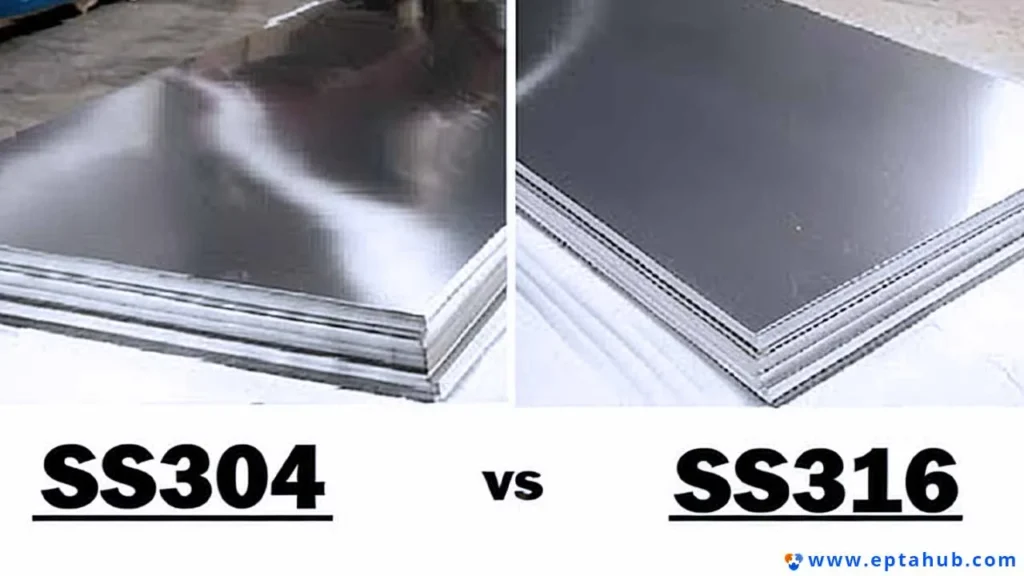
The entire difference in performance, cost, and application between these two powerhouse alloys boils down to one key ingredient. One element on the periodic table.
The Root of All Difference: Chemical Composition
Everything starts here. All the differences in performance and cost can be traced back to the specific “recipe” of each alloy. Both 304 and 316 belong to the austenitic family of stainless steels, which are known for their excellent formability and corrosion resistance. Their base recipe is similar, but 316 has a secret weapon.
Table 1: Nominal Chemical Composition of 304 vs. 316 Stainless Steel (Weight %)
| Element | Symbol | Type 304 (UNS S30400) | Type 316 (UNS S31600) | Engineering Significance |
|---|---|---|---|---|
| Iron | Fe | Balance | Balance | The base metal for both alloys. |
| Chromium | Cr | 18.0 – 20.0% | 16.0 – 18.0% | The “Stainless” element. Forms the passive chromium-oxide layer that resists rust and general corrosion. |
| Nickel | Ni | 8.0 – 10.5% | 10.0 – 14.0% | Stabilizes the austenitic structure (non-magnetic), enhances formability, and increases general corrosion resistance. |
| Molybdenum | Mo | – | 2.0 – 3.0% | THE KEY DIFFERENCE. Drastically enhances resistance to pitting and crevice corrosion, especially from chlorides. |
| Carbon (Max) | C | 0.08% | 0.08% | Low carbon is needed for weldability. “L” grades (304L/316L) have even lower carbon (0.03% max). |
| Manganese (Max) | Mn | 2.0% | 2.0% | Improves hot working properties. |
| Silicon (Max) | Si | 0.75% | 0.75% | A deoxidizing agent used in steelmaking. |
Look closely at that table. The chromium and nickel contents are similar (though 316 typically has a bit more nickel). The revolutionary difference is the 2-3% Molybdenum (Mo) intentionally added to 316.
Molybdenum is the game-changer. This single alloying addition is responsible for nearly all of 316’s enhanced properties and its higher cost. If you remember nothing else, remember this: 316 contains Molybdenum; 304 does not.
Debunking the Strength Myth
A common question I get from junior engineers is, “Should I use 316 because it’s stronger?” For 99% of applications, the answer is no. This is a critical misconception to clear up. While there are minor differences, their mechanical properties at room temperature are remarkably similar. You do not choose 316 for a significant strength advantage over 304.
Table 2: Typical Mechanical & Physical Properties at Room Temperature
| Property | Type 304 | Type 316 | Conclusion for Engineers |
|---|---|---|---|
| Tensile Strength, Ultimate | 515 MPa (75,000 psi) | 515 MPa (75,000 psi) | Virtually identical. Both are strong, but this is not a deciding factor between them. |
| Yield Strength (0.2% Offset) | 205 MPa (30,000 psi) | 205 MPa (30,000 psi) | Virtually identical. This is the point at which the material starts to permanently deform. |
| Hardness (Brinell) | 123 | 129 | Negligible difference. Both are relatively soft and ductile compared to hardened steels. |
| Elongation at Break | 40% | 40% | Virtually identical. Both are extremely ductile and can be stretched significantly before breaking, indicating excellent formability. |
| Density | 8.00 g/cm³ | 8.00 g/cm³ | Identical for all practical weight calculations. |
| Melting Point | 1400 – 1450 °C (2550 – 2650 °F) | 1375 – 1400 °C (2500 – 2550 °F) | Minor difference, but no practical impact on application selection. |
The takeaway from this table is blunt: If your design is failing with 304 due to a lack of strength, switching to 316 will not solve your problem. You would need to consider a different family of stainless steel (like duplex or precipitation-hardening grades) or increase the material thickness.
The decision to pay more for 316 is almost never about strength. It is always about one thing: corrosion resistance.
The True Deciding Factor: A Deep Dive into Corrosion Resistance
This is where the molybdenum in 316 earns its keep.
General Corrosion
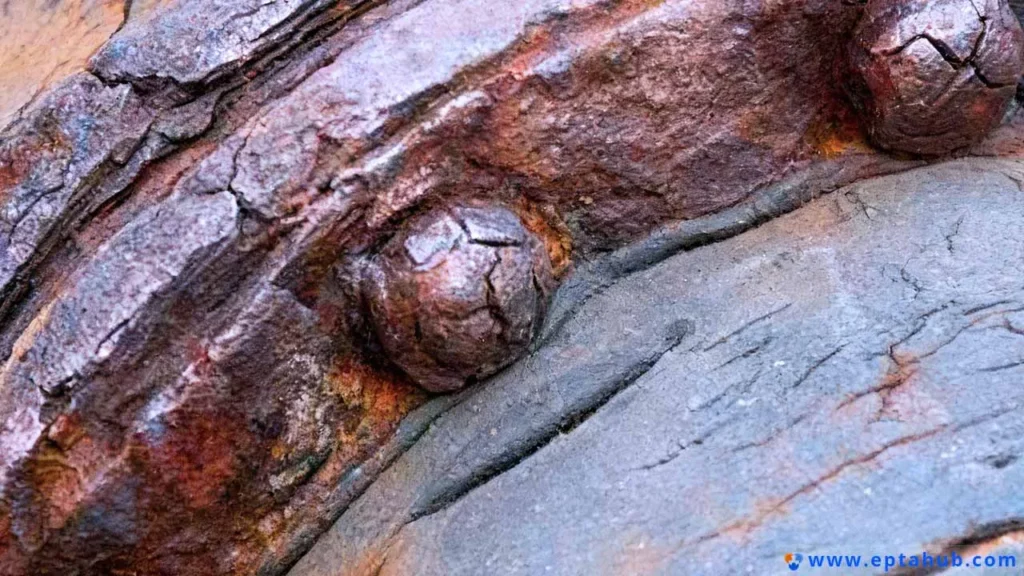
In most atmospheric environments, benign chemical situations, or when in contact with pure water, the performance of 304 and 316 is nearly identical. The chromium-oxide passive layer on 304 is more than sufficient to prevent general rusting and corrosion. For a kitchen sink, a food-prep table, or architectural paneling in a non-coastal city, 304 is perfectly adequate.
The Game-Changer: Chloride Environments
The world is full of chlorides. They are found in:
- Salt water (oceans, brackish water)
- De-icing salts used on roads in winter
- Many industrial chemicals and cleaning agents (including bleach)
- Food products with high salt content (brines, pickles)
- Even human sweat
Chlorides are the arch-nemesis of the standard chromium-oxide passive layer on 304 stainless steel. They attack this protective layer, causing two particularly insidious forms of localized corrosion:
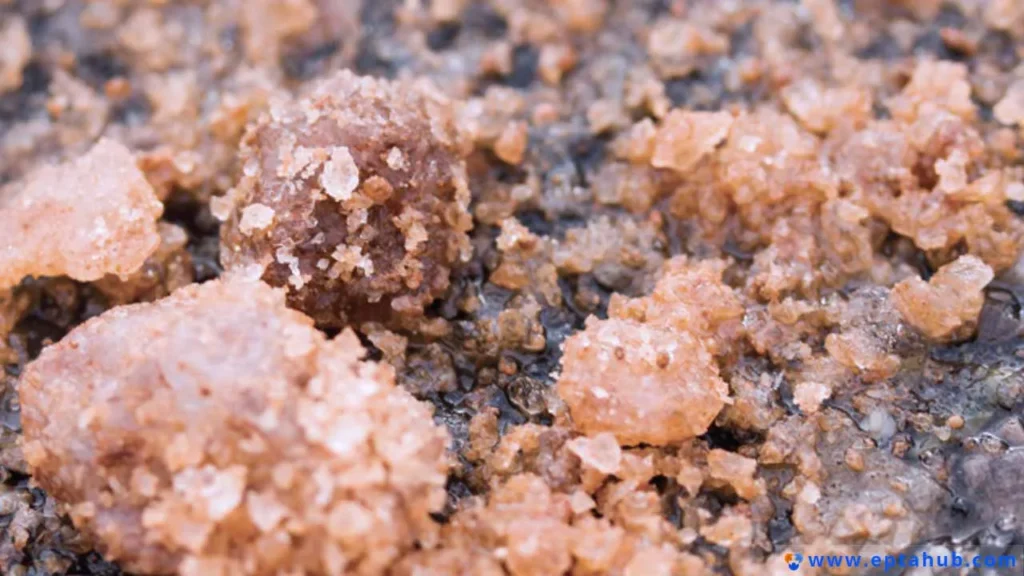
- Pitting Corrosion: This is the formation of small, deep pits on the surface of the steel. While the rest of the surface may look pristine, these pits can quickly penetrate the thickness of the material, leading to leaks or sudden failure. It’s like a tiny drill boring its way through your steel.
- Crevice Corrosion: This occurs in tight, shielded areas where a corrosive solution can become stagnant—for example, under the head of a bolt, in the threads of a fastener, or under a gasket. The solution in the crevice can become highly concentrated with chlorides, leading to rapid, localized attack.
This is where Molybdenum comes to the rescue. The addition of molybdenum to 316 significantly enhances the stability and toughness of the passive layer, making it much more resistant to attack from chlorides. It gives the alloy the ability to “re-passivate” or heal itself more quickly when the protective layer is breached.
Think of it like this: The passive layer on 304 is like a good quality raincoat. It works great in a light shower. The passive layer on 316 is like a high-end Gore-Tex jacket. It’s specifically engineered to withstand a driving, wind-blown storm. The “storm” is the chloride attack.
Manufacturing & Fabrication Considerations
For the engineers and buyers who need to get these materials made into parts, how do they compare on the shop floor?
- Weldability: Both 304 and 316 are excellent for welding. However, a critical point is the existence of the “L” grades: 304L and 316L. The “L” stands for low carbon (0.03% max vs. 0.08%). When welding standard 304/316, the heat can cause chromium to combine with carbon, depleting the chromium at the grain boundaries and making the area next to the weld susceptible to corrosion (a phenomenon called sensitization). The “L” grades have so little carbon that this is prevented. As a best practice, always specify 304L or 316L for any part that will be welded.
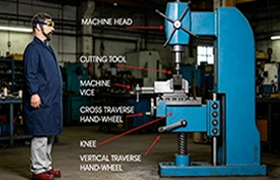
- Machinability: Both are considered more difficult to machine than carbon steel due to their high toughness and work-hardening properties. 316 can be slightly more difficult to machine than 304, but for most shops, the difference is manageable.
- Formability: Both exhibit excellent formability, meaning they can be bent, stamped, and deep-drawn without cracking. This is thanks to their stable austenitic structure, enhanced by the nickel content.
The Deciding Factor for Business: Cost vs. Performance
The most immediate and tangible difference between 304 and 316 is the price.
316 stainless steel is always more expensive than 304 stainless steel.
The price difference can fluctuate based on global commodity markets, but you can typically expect 316 to cost anywhere from 25% to 40% more than 304 for the same form (sheet, bar, tube, etc.).
Why the higher cost? It comes down to two key ingredients from our chemical composition table:
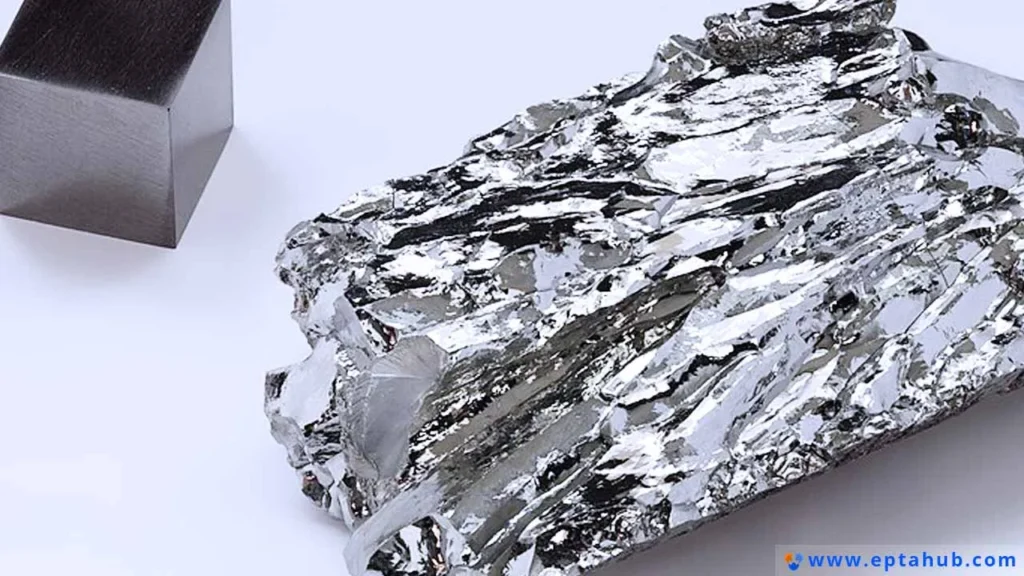
1.Molybdenum (Mo): Molybdenum is an expensive alloying element. Since 304 has none, the 2-3% addition in 316 is a primary cost driver.
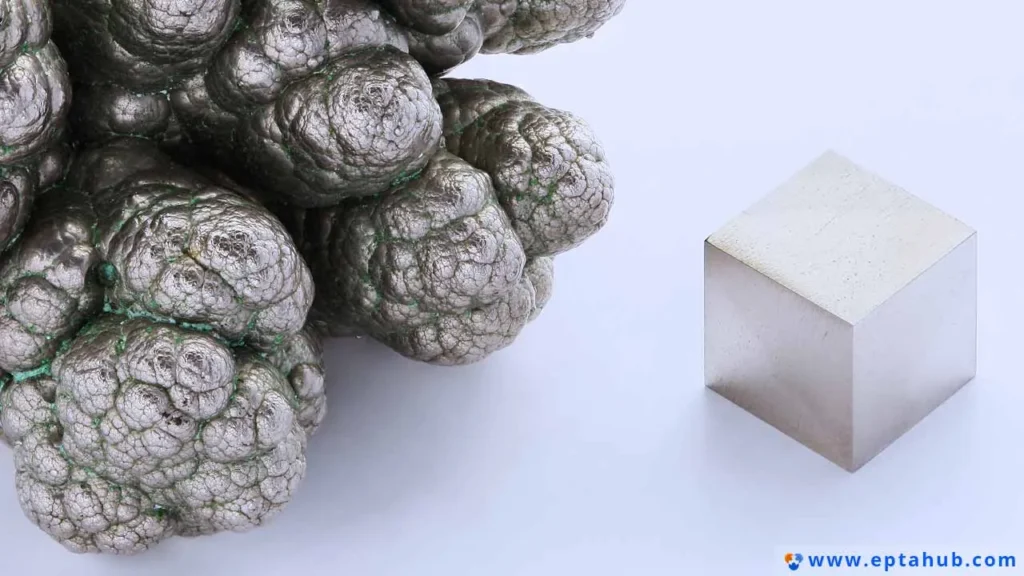
2.Nickel (Ni): Nickel is also a costly commodity. Grade 316 generally requires a higher minimum nickel content (10%) than 304 (8%), which adds to the price.
This cost delta is the entire basis of the decision-making process. The fundamental question you must ask is:
“Is my component’s service environment aggressive enough to justify the 25-40% cost premium for 316?”
- If the answer is no, choosing 316 is an example of “over-engineering.” You are wasting money on performance you do not need.
- If the answer is yes, choosing 304 is a false economy. The money you save upfront will be dwarfed by the cost of premature failure, product recalls, warranty claims, and damage to your brand’s reputation.
The Application Litmus Test: Where to Use 304 vs. 316
Let’s apply our knowledge to common scenarios. This is where theory meets reality.
Choose 304 Stainless Steel for:
- Kitchen Equipment: Sinks, countertops, refrigerators, and food preparation tables. The environment involves water and mild food acids, but chlorides are typically washed away. 304 is the industry standard.
- Architectural Paneling: Building facades, wall panels, and decorative trim in non-coastal environments. It provides excellent aesthetics and atmospheric corrosion resistance.
- General-Purpose Fasteners: Nuts, bolts, and screws for indoor use or in mild outdoor environments.
- Automotive Trim and Exhaust Components: Where heat resistance and mild corrosion resistance are needed, but exposure to road salt is not the primary design driver.
- Storage Tanks for Benign Liquids: Tanks for water, milk, beer, and wine. 304 is perfectly sufficient.
- Cookware: Most stainless steel pots and pans are made from 304 (often marketed as 18/8 or 18/10 stainless, referring to the chromium/nickel content).
You MUST Upgrade to 316 Stainless Steel for:
- Marine Applications: This is the quintessential use case. Any hardware on a boat—railings, fasteners, shackles, anchor components—that will be exposed to salt water or salt spray requires 316. 304 will show tea-staining and pitting corrosion in a very short time.
- Coastal Architecture: Any building within a few miles of the ocean. Salt-laden air will deposit chlorides on surfaces, making 316 essential for facades, railings, and structural components to prevent unsightly staining and corrosion.
- Pharmaceutical and Medical Equipment: Manufacturing equipment for pharmaceuticals often involves chlorides in the process streams. Additionally, the need for sterile, easily cleaned surfaces that resist harsh cleaning agents makes 316 (and especially 316L) the mandatory choice. Surgical instruments and implants are also made from specialized 316-type alloys.
- Chemical Processing Equipment: Tanks, pipes, valves, and vessels that will handle aggressive chemicals, especially those containing chlorides.
- Food Processing with High Salt Content: Equipment for making pickles, processing brines, or handling high-salt sauces. The constant chloride exposure demands 316.
- Outdoor Enclosures in Winter Climates: Electrical boxes, fixtures, and fasteners in regions where de-icing salts are heavily used on roads. The salt spray is highly corrosive and will attack 304.
The Water Bottle Debate: For a reusable water bottle, 304 is perfectly safe and adequate. The trace amounts of chlorine in tap water are not aggressive enough to be a concern. A company might market a bottle as “316” or “medical grade” to imply higher quality, but from a functional standpoint, 304 is sufficient.
How to Tell the Difference: Field and Lab Methods?
You’ve received a shipment of “316” parts, but you have a doubt. How can you verify you got what you paid for?
- Material Test Reports (MTRs): This is the first and most important method. Always demand a certified MTR from your supplier for every heat lot of material. This report is the material’s “birth certificate,” showing the precise chemical analysis from the mill. It is your primary form of quality control.
- X-Ray Fluorescence (XRF) Analyzer: An XRF gun is a handheld device that can provide a non-destructive chemical analysis of a material in seconds. It is the gold standard for on-the-spot verification. By pointing the gun at the part and pulling the trigger, you can see the full elemental composition and confirm the presence of 2-3% Molybdenum.
- Moly-Drop Test Kits: These are low-cost chemical spot test kits. You place a drop of a specific acid solution on the metal. On 304, there will be no reaction or a slight browning. On 316, the presence of molybdenum will cause the drop to turn dark brown or black within a minute or two. This is a quick, qualitative check, but it can be very effective for sorting mixed stock.
There is no visual way to distinguish between 304 and 316. They are not magnetic (in their annealed state) and have the same appearance. You must rely on documentation or testing.
How to Specify with Absolute Clarity?
On your drawings and RFQs, ambiguity is your enemy. Use this checklist to ensure you get exactly what you need.
- Be Specific with the Grade: Never write “Stainless Steel” or “A2 Stainless.” Use the full designation.
- Good: “Material: 304 Stainless Steel”
- Better: “Material: Stainless Steel, Type 304, per ASTM A240”
- Specify “L” Grade for Welded Parts: If the component will be welded, this is non-negotiable to prevent sensitization.
- Correct Specification: “Material: Stainless Steel, Type 316L, per ASTM A240”
- Define the Required Finish: The surface finish can impact corrosion resistance and aesthetics.
- Examples: “Finish: 2B (Mill Finish),” “Finish: #4 (Brushed),” “Finish: Electropolished.”
- Reference the Correct Standard: Specify the material standard for the product form you are buying.
- For sheet/plate: ASTM A240
- For bar/billet: ASTM A276
- For pipe: ASTM A312
- For fasteners: ASTM F593 (for bolts) / F594 (for nuts)
- Demand Material Test Reports (MTRs): Include this as a line item on your purchase order.
- PO Note: “Certified Material Test Reports (MTRs) traceable to the heat lot are required with shipment.”
FAQs
Q: Which is better, stainless steel 316 or 304?
A: “Better” depends entirely on the application. 316 is better in corrosive environments with chlorides (salt water, de-icing salts). 304 is the better, more cost-effective choice for general-purpose applications where this specific threat is not present.
Q: Is 304 or 316 food grade? Which is better?
A: Both 304 and 316 are considered “food grade” and are safe for contact with food. 304 is used for most food applications (cookware, prep tables). 316 is the better choice for processing foods with high salt or acid content, like brines or tomato sauce, to prevent any potential metallic leaching over time.
Q: What is the strongest stainless steel?
A: Neither 304 nor 316 is the strongest. Martensitic (like 440C) and precipitation-hardening (like 17-4 PH) stainless steels are significantly stronger and harder. Duplex stainless steels (like 2205) offer a combination of high strength and excellent corrosion resistance, often superior to 316.
Conclusion: An Informed Choice
The choice between 304 and 316 stainless steel is a perfect microcosm of engineering itself: it’s a trade-off between performance and cost. There is no universally “best” option, only the most appropriate option for a given set of conditions.
By understanding that the entire decision hinges on the presence of chlorides and the power of molybdenum, you can move beyond guesswork. You can analyze your application’s environment, weigh the cost premium against the risk of failure, and make a decision that is both technically sound and economically prudent. At Eptahub, this is the analytical rigor we bring to every material selection, ensuring that the components we deliver are not just well-made, but are made from the precisely correct material for the job.
References
- ASTM International, “ASTM A240 / A240M – 20, Standard Specification for Chromium and Chromium-Nickel Stainless Steel Plate, Sheet, and Strip for Pressure Vessels and for General Applications”. https://www.astm.org/a0240_a0240m-20.html
- NACE International (now AMPP), “Corrosion Basics—An Introduction”. Provides foundational knowledge on corrosion mechanisms like pitting and crevice corrosion. https://www.ampp.org/