










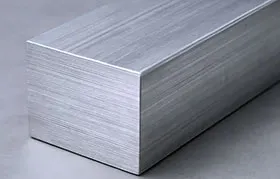
When I receive an RFQ (Request for Quotation) that simply says “Material: Aluminum,” a red flag immediately goes up. As an engineer, you cannot simply specify “aluminum” any more than a chef can simply specify “food.”
So, to answer the fundamental question—what is aluminium metal?—we must look at it through the dual lenses of metallurgy and practical manufacturing. On a chemical level, aluminum (atomic number 13) is a lightweight, silvery-white, non-magnetic, post-transition metal in the boron group. But on the factory floor, it is a highly variable blank canvas. It is a material defined by its exceptional strength-to-weight ratio, its rapid passivation (corrosion resistance), and its ability to be drastically transformed through alloying and heat treatment.
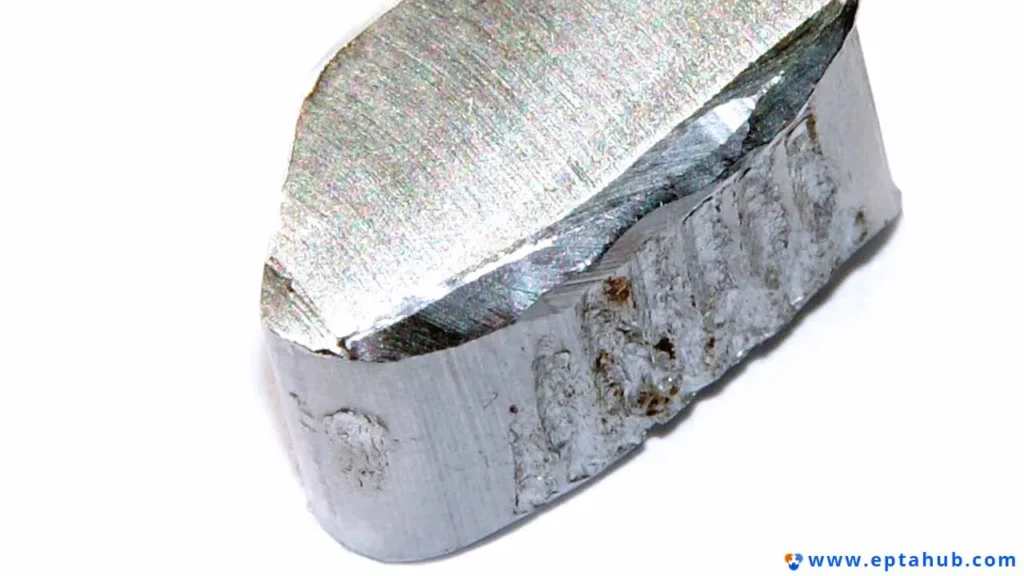
Aluminum or Aluminium?
Before we dive into the metallurgy, we must address a global procurement hurdle that frequently confuses junior buyers and causes ambiguity in international contracts. Look at the search data, and you will see a constant battle: Aluminum or aluminium? Furthermore, queries like aluminum发音 (pronunciation) and aluminum中文 (Chinese for aluminum) highlight the global nature of sourcing this metal.
Let’s clarify this for your next international PO (Purchase Order):
- “Aluminum” (US & Canada): In 1812, the British chemist Sir Humphry Davy, who first isolated the metal, ultimately settled on the name “aluminum.” The American Chemical Society officially adopted this spelling in 1925, and it remains the standard in North American engineering and manufacturing.
- “Aluminium” (The Rest of the World): Shortly after Davy’s naming, other European scientists argued that the name should end in “-ium” to align with other elements like sodium, magnesium, and calcium. The International Union of Pure and Applied Chemistry (IUPAC) officially recognizes “aluminium.”
- Global Sourcing Reality (aluminum中文): Today, a massive percentage of the world’s CNC machining and extrusion takes place in Asia, specifically China. If you are sourcing from Shenzhen or Dongguan, the literal translation on material certs will often be derived from “铝” (pinyin: lǚ).
The Engineering Takeaway: Whether your RFQ says “Aluminum Alloy 6061” or “Aluminium Alloy 6061,” global suppliers know exactly what you mean. The pronunciation (uh-loo-min-um vs. al-yoo-min-ee-um) does not change the physical properties. However, for internal ISO documentation and technical drawings, pick one spelling standard based on your company’s headquarters and enforce it strictly to avoid database duplication in your ERP system.
Is Aluminium a Pure Metal?
A very common foundational question is: Is aluminum a type of metal? Yes, it is classified as a non-ferrous metal (meaning it contains no iron, hence its non-magnetic properties and lack of traditional rust).
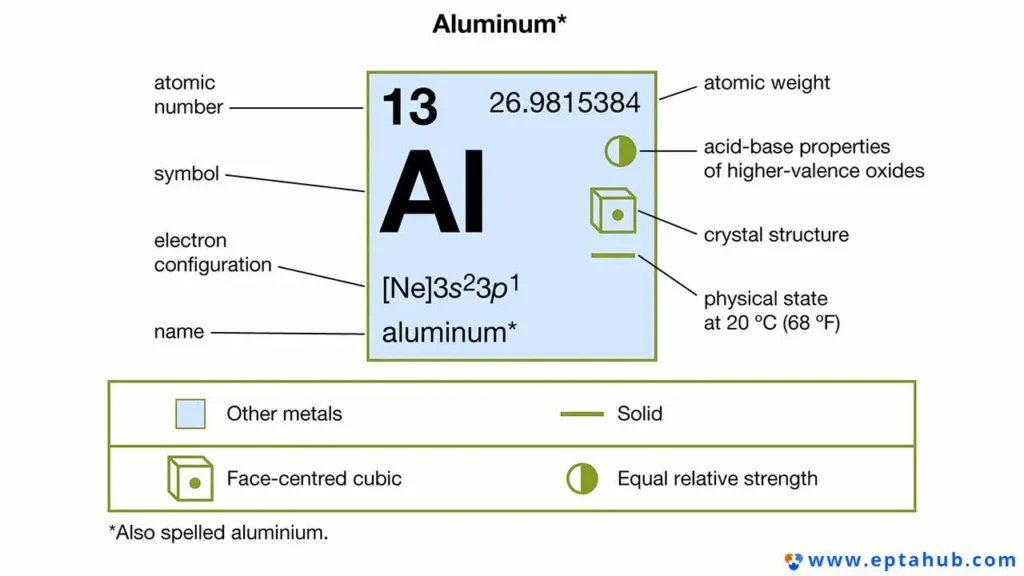
But the more critical engineering question is: Is aluminium a pure metal?
In its rawest commercial form (known as the 1000-series in the International Alloy Designation System), yes, aluminum is manufactured at 99% to 99.9% purity. However, pure aluminum is almost never used for structural engineering.
The Double-Edged Sword of Pure Aluminum
Commercially pure aluminum (like alloy 1050 or 1100) is exceptionally soft, highly ductile, and possesses incredible electrical and thermal conductivity. It also forms a microscopic, tightly adhering layer of aluminum oxide (Al2O3) within milliseconds of being exposed to oxygen. This “passivation layer” is what makes aluminum famously corrosion-resistant.
However, the crystal lattice structure of pure aluminum—a Face-Centered Cubic (FCC) arrangement—allows its atoms to slip past one another very easily. This means pure aluminum has an abysmal yield strength (the point at which it permanently bends). You can literally bend a thin rod of pure 1100-O aluminum with your bare hands.
The Defining Characteristic: Aluminum Density
The single greatest reason we use aluminum is its density. Aluminum density is approximately 2.70 g/cm³ (or 0.0975 lb/in³).
To put this into an engineering perspective: aluminum is roughly one-third the weight of carbon steel or stainless steel (7.8 g/cm³), and one-third the weight of copper (8.9 g/cm³).
When you need to design a drone chassis, an automotive engine block, or an aerospace bracket, minimizing mass while maintaining rigidity is the ultimate goal. Aluminum’s low density is its superpower.
Engineering Table: Pure Aluminum vs. Structural Materials
To illustrate why pure aluminum is functionally useless for load-bearing applications, look at this mechanical comparison:
| Material Grade | Density (g/cm³) | Yield Strength (MPa) | Ultimate Tensile Strength (MPa) | Thermal Conductivity (W/m·K) | Primary Engineering Use Case |
|---|---|---|---|---|---|
| Pure Aluminum (1100-O) | 2.71 | ~35 MPa | ~90 MPa | ~220 | Chemical equipment, heat exchangers, foil. (Too soft for structure). |
| Aluminum Alloy (6061-T6) | 2.70 | ~276 MPa | ~310 MPa | ~167 | Standard structural CNC parts, aerospace, automotive frames. |
| Mild Steel (A36) | 7.85 | ~250 MPa | ~400 MPa | ~50 | Heavy construction, structural I-beams. |
| Pure Copper (C11000) | 8.89 | ~69 MPa | ~220 MPa | ~388 | High-end electrical busbars, thermal heat pipes. |
Notice how alloying aluminum (6061-T6) increases its yield strength nearly 800% over pure aluminum, with virtually zero change to its density.
What Metals Mix With Aluminum?
Because pure aluminum is too soft for structural use, metallurgists must introduce other elements into the aluminum base during the melting phase. This answers the critical search query: What metals mix with aluminum?
When you add precise amounts of other metals (or metalloids like silicon), you create an Aluminum alloy. These foreign atoms embed themselves into the aluminum’s crystal lattice. Because they are different sizes than the aluminum atoms, they create internal stress and “pin” the atomic layers in place, preventing them from slipping. This mechanism is called solid solution strengthening.
As an engineer, you must memorize the primary alloying families. If you just specify “aluminum,” the manufacturer will likely use the cheapest alloy available, which may catastrophically fail in your application.
- Copper (2xxx Series): Adding copper creates alloys with extreme strength, rivaling steel (used heavily in aerospace). However, copper drastically reduces aluminum’s corrosion resistance.
- Manganese (3xxx Series): Adds moderate strength and excellent workability. Used for architectural roofing and beverage cans.
- Silicon (4xxx Series): Lowers the melting point without causing brittleness. This is the primary alloy used for aluminum welding wire and brazing rods.
- Magnesium (5xxx Series): Offers exceptional resistance to marine (saltwater) corrosion and excellent weldability. The go-to metal for boat hulls.
- Magnesium & Silicon (6xxx Series): The most common general-purpose structural alloys (like the famous 6061). They offer a perfect balance of strength, machinability, weldability, and price.
- Zinc (7xxx Series): Combined with a small amount of magnesium, zinc creates the highest strength structural aluminum alloys available (like 7075). Used in military aircraft and high-end bicycle frames.
Engineering Case Study: The “Aluminium Box” Thread Stripping Disaster
To illustrate the dangers of misunderstanding the difference between pure aluminum and aluminum alloys, let’s look at a failure case study from a client who approached eptahub.com to rescue a stalled project.
The Scenario: A startup designing a high-power industrial LED lighting array needed a custom, waterproof housing—essentially a large, finned Aluminium Box. Because the LEDs generated massive amounts of heat, the junior thermal engineer on the project specified “1050-O Aluminum” (99.5% pure aluminum) for the entire enclosure to maximize thermal conductivity.
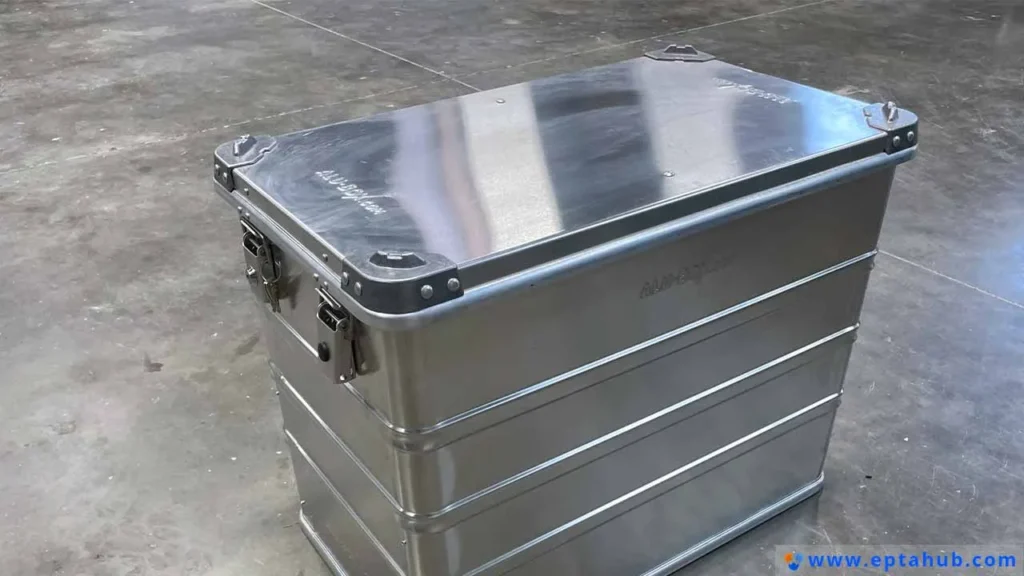
The Failure: The client ordered 500 CNC-machined enclosures from a low-cost supplier. During the final assembly stage, workers had to screw the heavy glass lenses onto the boxes using stainless steel M4 machine screws tapped directly into the aluminum body.
Because 1050-O pure aluminum is incredibly soft and ductile, it is highly susceptible to a phenomenon called galling (where the friction of the screw literally tears the metal apart). At a torque of just 2.0 Nm, the internal threads of the aluminum box stripped out completely. Over 60% of the enclosures were rendered useless on the assembly line. The pure aluminum simply could not hold the mechanical thread tension.
The Engineering Resolution: We redesigned the BOM. We switched the material specification from the pure 1050 series to 6061-T6 Aluminum alloy.
- The Trade-off: Thermal conductivity dropped from ~220 W/m·K to ~167 W/m·K (which thermal simulations proved was still perfectly adequate for cooling the LEDs).
- The Gain: The yield strength jumped from 28 MPa to 276 MPa. The internal threads could now easily handle up to 4.5 Nm of torque without stripping or galling. The product was successfully assembled, saving the company from a total production write-off.
The Lesson: Never sacrifice mechanical integrity for marginal gains in thermal or electrical conductivity unless you have designed secondary fastening methods (like steel thread inserts).
From Precious Metal to Commodity
If you search for the History of aluminum, you will find a fascinating economic paradox that directly impacts modern pricing.
Despite being the third most abundant element in the Earth’s crust (behind oxygen and silicon), aluminum does not exist in nature as a pure, shiny metal. It is locked tightly in a reddish clay ore called bauxite, chemically bonded to oxygen.
In the mid-1800s, separating aluminum from oxygen was so difficult and expensive that aluminum was considered more valuable than gold or silver. Napoleon III famously served his most honored guests using aluminum cutlery, while lesser guests were forced to use mere gold.
Everything changed in 1886 with the invention of the Hall-Héroult process. This process involves dissolving aluminum oxide (alumina) in molten cryolite and passing a massive electrical current through it to separate the pure molten aluminum.
Why does this history matter to a modern technical buyer?
Because the Hall-Héroult process is still how we make aluminum today, and it requires an astonishing amount of electricity.
Therefore, the cost of aluminum commodities is intrinsically tied to global energy prices. When you evaluate long-term supply contracts for raw aluminum extrusion or billet, you are not just buying metal; you are effectively buying packaged electricity. This is why aluminum smelters are historically located next to massive, cheap hydroelectric dams (like in Canada, Iceland, or specific regions of China).
What is Aluminum Used For?
When junior designers ask, “What is aluminum used for?”, the textbook answer is usually “aerospace and soda cans.” But from a procurement and engineering perspective at eptahub.com, the application of aluminum is dictated strictly by the alloy series and the specific manufacturing process required.
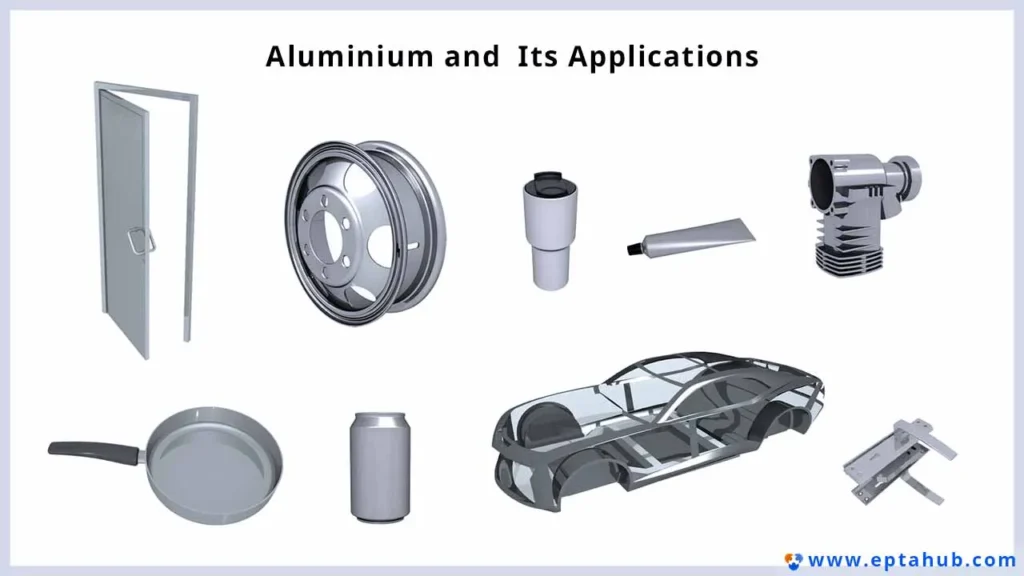
You do not simply buy “aluminum” for a project; you buy a highly specific metallurgical recipe tailored to a mechanical problem. Here is how senior engineers deploy aluminum across modern industries:
1. Aerospace & High-Performance Automotive (The Lightweighting Imperative)
In environments where every single gram costs money (fuel burn in an aircraft or battery drain in an EV), engineers rely on the 2xxx (Copper) and 7xxx (Zinc) series alloys.
- 7075-T6: Often dubbed “aircraft grade,” this alloy has a tensile strength exceeding many mild steels (up to 570 MPa). We use it for high-stress, low-weight applications like airplane bulkheads, military rifle lower receivers, and premium rock-climbing carabiners. The Procurement Catch: 7075 is notoriously difficult to weld and has poor corrosion resistance without specialized coatings like hard-coat anodizing.
2. Architectural & Structural Extrusions (The Blank Canvas)
Take a look at the window frames in your office, the heat sink in your computer, or the structural frame of a 3D printer. These are almost exclusively the 6xxx (Magnesium and Silicon) series, primarily 6061 or 6063.
- Why? Because 6000-series alloys are incredibly easy to push through a heated steel die (the extrusion process). They offer excellent corrosion resistance, take an anodized finish beautifully, and are highly weldable. 6061 is the undisputed backbone of general mechanical engineering.
3. Marine & Caustic Environments (The Survival Metal)
If you are designing a radar mast for a naval ship or a housing that will be exposed to road salt, you must pivot to the 5xxx (Magnesium) series, such as 5052 or 5083.
- Unlike the 6000 series, 5000 series alloys do not rely on heat treatment for strength (they are “work hardened”). They offer unparalleled resistance to saltwater corrosion and maintain their mechanical integrity in sub-zero cryogenic applications.
The Manufacturing Divide: Wrought vs. Cast Aluminum
One of the most expensive mistakes a procurement team can make is confusing wrought aluminum with cast aluminum on a Bill of Materials (BOM). While they are both technically “aluminum,” they are processed differently, behave differently on the CNC machine, and have radically different cost structures.
- Wrought Aluminum (Extruded, Rolled, Forged): This metal is mechanically worked in a solid state. Think of large billets being squeezed through dies (extrusion) or rolled between massive steel drums (sheet metal). Because it is mechanically compressed, wrought aluminum has a highly aligned grain structure, resulting in superior tensile strength, zero internal porosity, and brilliant surface finishes when machined. Common example: 6061-T6 plate.
- Cast Aluminum (Die Casting, Sand Casting): This involves melting the aluminum into a liquid and pouring or injecting it into a mold. It is heavily alloyed with Silicon (often the 3xx.x series, like A380) to make the molten liquid flow like water into complex mold cavities.
The Financial and Engineering Trade-Off
Let’s look at a practical procurement matrix comparing a CNC-machined wrought part vs. a die-cast part:
| Feature | Wrought Aluminum (e.g., CNC 6061-T6) | Cast Aluminum (e.g., Die Cast A380) | Engineering & Procurement Impact |
|---|---|---|---|
| Tooling (NRE) Cost | Very Low (0to0to500 for custom CNC jigs). | Extremely High (10,000to100,000+ for steel dies). | CNC is for prototyping and low-volume. Casting is exclusively for high-volume mass production. |
| Internal Porosity | Zero. Solid, predictable grain structure. | High risk. Trapped gas creates microscopic internal air bubbles. | Cast parts can leak fluids under high pressure and are physically weaker than wrought parts. |
| Surface Finish (Anodizing) | Excellent. Accepts cosmetic color anodizing perfectly. | Very Poor. The high silicon content turns ugly, blotchy gray/black when anodized. | Do not specify cosmetic color anodizing on a cast part; powder coating is required. |
| Unit Price at High Volume | High (Significant material waste as chips, slow machine time). | Very Low (Near net-shape in seconds, minimal waste). | At 10,000+ units, die casting is the only financially viable option for complex geometries. |
Decoding the Specs: The Critical Importance of Heat Treatment (The “T” Temper)
If you send an RFQ to a supplier that requests “6061 Aluminum,” you have issued an incomplete specification. The supplier will invariably ask: “What temper?”
The magic of modern structural aluminum lies in its heat treatment, denoted by the suffix “T” (e.g., T4, T6). This process, known as precipitation hardening, fundamentally alters the atomic structure of the metal.
If you buy 6061 in the “O” state (Annealed/Soft), it has a yield strength of about 55 MPa. It is gummy, will melt onto your CNC end-mills, and cannot hold a load.
If you subject that exact same piece of 6061 to a T6 heat treatment, its yield strength skyrockets to 276 MPa.
How T6 Heat Treatment Works (The Layman-Engineer Explanation)
- Solution Heat Treating: The aluminum is heated to nearly 530°C (just below its melting point). At this extreme temperature, the alloying elements (like magnesium and silicon) completely dissolve into the aluminum, like sugar dissolving in hot coffee.
- Quenching: The glowing hot metal is rapidly plunged into cold water. This sudden temperature drop “freezes” the dissolved atoms in place before they have a chance to separate out.
- Artificial Aging (The “T6” Step): The metal is then placed in a low-temperature oven (around 175°C) for several hours. This controlled heat causes the trapped magnesium and silicon atoms to form microscopic clusters (precipitates) within the aluminum’s crystal lattice. These hardened clusters act like roadblocks, preventing the aluminum atoms from sliding past each other.
The Procurement Rule: For 95% of standard structural CNC machining and structural extrusion, you must explicitly specify T6 (or occasionally T651, which adds a stress-relieving stretching process to prevent the part from warping during machining).
FAQs
Over the years, our technical support desk at eptahub.com has fielded thousands of questions from product managers and junior engineers. Here are the most critical, rapid-fire answers regarding aluminum procurement and design:
Q1: Is aluminum rust-proof? Will it degrade outdoors?
Aluminum does not “rust” because rust is strictly iron oxide, and aluminum contains no iron. However, aluminum absolutely oxidizes. The difference is that when steel rusts, the iron oxide flakes off, exposing fresh metal to decay. When aluminum is exposed to oxygen, it instantly forms a microscopic, rock-hard layer of aluminum oxide. This layer acts as a protective shield, sealing the raw metal underneath from further decay. So yes, it is highly corrosion-resistant, but in harsh marine environments, it will pit and degrade unless properly treated.
Q2: What is Anodizing, and why do engineers specify it almost universally?
Anodizing is an electrochemical process that artificially thickens that natural protective oxide layer we just mentioned. By placing the aluminum in an acid bath and running an electrical current through it, we can grow the oxide layer from a natural 0.005 mils to a highly durable 1.0 mils (or thicker for Hardcoat anodizing). This new porous layer is incredibly hard (approaching the hardness of a diamond) and can absorb colored dyes. Anodizing provides superior wear resistance, prevents electrical conductivity on the surface, and offers a premium aesthetic finish.
Q3: Can aluminum be welded easily?
Yes, but it is vastly more difficult than welding steel. Because aluminum conducts heat so efficiently, the heat from the welding torch rapidly dissipates away from the weld joint. Furthermore, the aluminum oxide layer melts at roughly 2,072°C, while the underlying raw aluminum melts at just 660°C. You must use specialized AC (Alternating Current) TIG welding machines; the AC current acts as a microscopic “cleaning” wave that blasts away the oxide layer so the base metal can fuse. Note: Some alloys, like 7075, are considered unweldable for structural applications.
Q4: Why did my precision aluminum part warp after it was taken off the CNC machine?
This is a classic failure mode. When thick aluminum plates are manufactured at the mill, the rapid cooling processes trap massive internal mechanical stresses inside the metal. When a CNC machine cuts away large pockets of material, those internal stresses are unleashed, and the part twists like a potato chip. If you are machining high-tolerance, thin-walled parts from thick block stock, you must specify T651 temper (which is stress-relieved by stretching at the mill) or utilize cast aluminum tooling plates (like MIC-6), which are inherently stress-free.
Q5: Is aluminum food-safe and medical-safe?
Yes. Bare aluminum is widely used in commercial food preparation. However, highly acidic foods (like tomato sauce or citrus) can react with raw aluminum, altering the taste and pitting the metal. For food and medical environments, aluminum is almost always anodized or coated with a food-safe polymer to prevent this chemical reaction and allow for easy sterilization.
The Engineer’s Verdict: Sourcing Aluminum with Precision
To return to the initial search query—what is metals aluminium?—it is a modern engineering marvel, provided you respect its rules. It is not a single, monolithic material. It is a diverse family of alloys, each engineered to solve specific physical challenges.
When you issue your next RFQ or finalize your CAD drawings, banish the word “aluminum” standing alone.
Speak the language of the supply chain: Specify the alloy series (e.g., 6061 for machining, 5052 for sheet metal bending), dictate the temper (e.g., T6 for strength, O for extreme forming), and declare the manufacturing method (wrought billet vs. die cast). By treating aluminum with this level of technical precision, you eliminate supplier guesswork, drastically reduce your cost-per-part, and guarantee the structural integrity of your final product.
References
To solidify your internal quality control documents and ensure your designs meet global safety standards, please bookmark and review the following authoritative resources. (Always consult the most recent revisions for critical structural engineering).
- The Aluminum Association (AA)
The absolute global authority on aluminum standards, alloy designations, and safe handling practices. The “Teal Sheets” (International Alloy Designations and Chemical Composition Limits for Wrought Aluminum) are mandatory reading for any mechanical engineer.
Link: Aluminum.org – Standards - ASTM International – B209 / B221
ASTM B209 is the standard specification for Aluminum and Aluminum-Alloy Sheet and Plate. ASTM B221 covers Extruded Bars, Rods, Wire, Profiles, and Tubes. These documents define the exact acceptable chemical tolerances and mechanical property minimums you should demand on your material certs.
Link: ASTM.org